
The importance of the life course for residential decisions and migration has been acknowledged in much previous research. Various related studies focus on certain stages of life and life events (Feijten 2005; Kley 2009) but also interdependencies between housing and other life-course trajectories (Willekens 1991; de Bruijn 1999). Fewer studies investigate how earlier residential experiences influence later residential choices (Feijten/Hooimeijer/Mulder 2008; Blaauboer 2011). The bulk of research focuses on moves, their triggers and destination choices despite the fact that moves and particularly long-distance migration are rare. The absence of moves (also called residential inertia) has not been addressed in many studies. Return migration to previous residential locations is mainly examined in studies on international migration (Glorius/Matuschewski 2009; Vadean/Piracha 2009; Nadler/Kovács/Glorius et al. 2016) or within Germany after initial migration from the former German Democratic Republic to the ‘old’ Federal Republic of Germany (Friedrich/Schultz 2008; Fuchs/Weyh 2016; von Blanckenburg 2016), but not for other types of moves. The studies differentiating between staying, leaving and returning often point to the importance of social ties built up over the life course (Fuchs/Weyh 2016; Nadler/Lang/Glorius et al. 2016), especially strong and lasting family ties (Jones/Jamieson 1997). But many of these studies lack household and gendered perspectives in terms of differentiating between male’s and female’s family networks. Some qualitative studies suggest socialisation effects on residential choices through family members (Jones/Jamieson 1997; von Blanckenburg 2016), a factor which is widely neglected in quantitative studies due to the lack of data including intergenerational biographies.
Our study aims to fill these gaps. We examine, firstly, to what extent people stay in, return to or leave their hometown (hereafter referred to as ‘migration type’). We refer to the hometown as the place where most of childhood and adolescence is spent. This place is often of great significance for an individual. Secondly, we study whether earlier residential moves, parental migration type, the partner’s hometown and both partners’ parents’ place of residence shape a person’s migration type, while controlling for gender, age, level of education and hometown population size.
A person’s migration type cannot ultimately be distinguished at any point in life, as she/he may return to her/his hometown at any time in her/his life. We therefore use the time of family formation to define whether someone is a stayer, leaver or return migrant. This life stage is of particular interest, as the location choice in this phase is made very consciously and is considered to be a long-term decision (Feijten/Hooimeijer/Mulder 2008: 153–156; Thomas/Stillwell/Gould 2016: 587). What is more, the location chosen at family formation will be the hometown for the upcoming generation and may influence the future residential location choices of that generation, too.
This paper contributes to recent research in five ways. Firstly, it analyses residential decisions on the couple level by considering both partners’ biographies and family ties, which has rarely been done before (notable exceptions are Blaauboer/Mulder/Zorlu 2011; Løken/Lommerud/Lundberg 2013; Chudnovskaya/Kolk 2017; Albrecht/Döring/Holz-Rau et al. 2019). This allows for a gendered perspective on family ties. Secondly, we investigate socialisation effects through family members by including intergenerational residential biographies due to the unique dataset used. Thirdly, we use the term hometown to refer to the municipality level. There are various studies that reveal the importance of social ties and life-course factors on international migration (de Haas/Fokkema 2011; Yahirun 2014), while other research looks at neighbourhood choices (Clark/Duque-Calvache/Palomares-Linares 2017). But less is known about staying in, returning to and leaving places on a local level. Fourthly, we focus on the Ruhr area, a setting in which our topic has hardly been tackled before. The Ruhr area is a highly populated, polycentric metropolitan region, with large labour and housing markets, a wide range of educational facilities and high transport accessibility. On the other hand, it is perceived as one of the less attractive German metropolitan areas, characterised by a relatively high level of unemployment and a challenging, ongoing process of transformation from an old-industrial to a modern, service-oriented region. Thus, it is a particularly exciting case study from the perspective of leaving, staying and returning. Fifthly, we apply a rigorous split half method for internal validation, which is rarely done in related research.
The topic under study is of great relevance for spatial planning and policy. Firstly, residential moves are a form of spatial mobility that is inextricably linked to spatial development and planning for housing and other sectors. Understanding the factors that shape residential moves is therefore crucial for targeted policies. Secondly, distinguishing between staying in, returning to and leaving the hometown is equally important for policy and planning. ‘Home’ is connected to an individual’s regional and local identity, social cohesion, political participation and active citizenship (Kranepuhl 2008). The economic benefit of returners for local and regional economic and demographic development has been highlighted in various studies, though mostly with reference to international migration and internal migration in developing countries (Piracha/Vadean 2010; Junge/Revilla Diez/Schätzl 2015). Policy makers often hope that both ‘staying’ and return migration may help mitigate demographic decline in rural and economically weak urban areas. But a deeper understanding of these phenomena is relevant for all regions as return migration implies not just in-migration for the region of origin but also leaving another region. From the perspective of this second region, return migration is a special form of out-migration and thus of interest for policy makers, too. In official statistics return migration remains invisible, making it a particularly important topic of research.
The paper is structured as follows. The next section provides a theoretical framework (Section 2). This is followed by a description of the data and the method used (Section 3). The results encompass descriptive findings and multinomial regression models for the three migration types (Section 4). Finally, we discuss theoretical, empirical, methodological and practical conclusions (Section 5).
Following the life-course approach an individual’s biography1 can be seen as consisting of several interdependent trajectories, e.g. employment, residential and household (Willekens 1991: 19–21; de Bruijn 1999: 156; Elder/Johnson/Crosnoe 2003). Further, it is assumed that residential experiences over the life course affect later residential choices (van Dam/Heins/Elbersen 2002: 467; Feijten/Hooimeijer/Mulder 2008: 153; Blaauboer 2011: 1646; Albrecht/Döring/Holz-Rau et al. 2019). Our study mainly contributes to the second aspect and thus to the research strand on mobility biographies and mobility socialisation (Holz-Rau/Scheiner 2015). In the following, we discuss the special role of the hometown in people’s residential biography (Section 2.1), our reasoning for focusing on the stage of family formation (Section 2.2), the role of adults’ ties to their parents and socialisation through parents in residential choice (Section 2.3), and the research on return migration (Section 2.4). These four parts are needed to justify our empirical approach.
The hometown is usually the place where an individual has spent an important life phase and a great amount of time, and where an independent residential biography often starts. Mostly, it is the first residential location and thus the first residential environment which is perceived and appropriated consciously. Over time, strong attachments may have been developed to this place in economic and emotional terms. We draw on the two theoretical concepts of place attachment and location-specific capital to better understand this. These concepts are often discussed separately even though they are closely related (Lewicka 2011: 211).
Location-specific capital is understood as “assets that are more valuable in their current location than they would be elsewhere” (DaVanzo 1981: 46). Through growing up in a certain place, children and adolescents build such assets. This specially refers to friendships and family relations (social capital with a large portion of location-specific capital). But it also includes any kind of local knowledge, such as of the local labour market, housing market, leisure or shopping facilities. Residential decision making is usually biased towards the hometown, as the greatest assets are located there, and leaving comes at high economic, social and psychological costs. Leaving the place of childhood and adolescence often means forgoing the benefits of proximity to parents and other kin, and the economic and social value of hometown networks (Løken/Lommerud/Lundberg 2013: 286). A move to a new place can be seen as an investment involving transaction costs, including information costs and the uncertainty of the outcome. In contrast, moving back to the hometown may imply faster adjustment after the move as previous activity patterns and social capital can be re-activated easily. Thus, moving back also means lower transaction costs but still involves forgoing the location-specific capital of the last residential location (DaVanzo 1981; DaVanzo 1983).
In contrast to this socio-economic point of view, place attachment deals with affect (Low/Altman 1992: 4). Psychological processes based on individual experiences in places during childhood, adult life or significant events in life may create place attachment (Low/Altman 1992: 9). Those individual experiences often involve social interactions with others, e.g. family members, creating lasting memories and linking individuals to places and people. Place attachment interrelates with the individual’s place identity (Hernández/Hidalgo/Salazar-Laplace et al. 2007: 317) and may foster self-esteem, self-worth and self-pride (Low/Altman 1992: 10), though there may be ‘negative place attachment’ originating from negative experiences. Leaving may cause a feeling of rootlessness and alienation while returning may have a positive effect on the individual’s mental well-being and recreate the feeling of home.
The spatial level on which places should be defined is subject to debate. Several studies suggest strong place attachment to cities rather than to the intermediate neighbourhood or city district levels (Hidalgo/Hernández 2001: 279; Hernandez/Hidalgo/Salazar-Laplace et al. 2007: 317; Lewicka 2010: 42). In line with this, Tuan (1975: 156) describes cities as “centers of meaning” that are likely targets of attachment, as they are clearly delineated and worth labelling (Tuan 1975: 157; Lewicka 2011: 212). Both location-specific capital (especially social capital) and place attachment are mostly built through social interactions. Having resided at a place often (but not necessarily) leads to high location-specific capital and strong place attachment, as evidenced by Bonaiuto, Aiello, Perugini et al. (1999: 344–345) and Brown, Perkins and Brown (2003: 268), though causality may be bidirectional. Thus, from an economic and emotional point of view, living in the hometown seems to be beneficial despite possible limitations in the labour market. Yet it should be pointed out that leaving the hometown may involve benefits beyond educational and economic achievements, such as gaining independence from the family of origin, self-actualisation or leaving a deprived environment.
Our study looks at the time of family formation. Union formation (cohabiting or marital) is a significant event in both partners’ residential biographies, marking a point which links their lives (Elder 1994; Bailey/Blake/Cooke 2004; Coulter/van Ham/Findlay 2016) and from which residential decisions are made jointly. Following bargaining theory, the power of each household member depends on their individual socio-economic status, associated with level of education, employment and age, as well as gender role beliefs (Abraham/Auspurg/Hinz 2010; Mader/Schneebaum 2013: 393). Research has confirmed the male partner’s dominant bargaining position in residential decisions (Bielby/Bielby 1992: 1256–1257; Smits/Mulder/Hooimeijer 2003: 611–612; Jürges 2005: 25; Cooke 2008: 172), which is mostly attributed to traditional gender role beliefs, a patriarchal system and gender differences in employment. These often lead to males having a higher level of education and employment, greater age and larger contribution to the household income. Terms that are often associated with this are “tied mover” or “tied stayer” (Mincer 1978: 751). These terms refer to individuals who are dominated by their partners with higher income and better career prospects and who move or stay with their partners despite individual losses.
The birth of a child, especially of the first child, is a significant event in an individual’s and couple’s family biography and is strongly associated with residential decisions (Michielin/Mulder 2008: 2787–2788). Housing requirements change and residential aspirations become more important, including increasing demand for housing space (Lersch 2014: 141) and stronger wishes for home ownership (Beer/Faulkner 2009: 47). Moves are made mostly in advance of the first child’s birth rather than after it (Kulu 2008: 650; Michielin/Mulder 2008: 2787). Households with small children remain in the place of residence for rather a long time compared to households without children (Feijten/Hooimeijer/Mulder 2008: 153–156). Social ties, especially to both partners’ parents, become more important as they provide caregiving (Michielin/Mulder 2007: 673; Blaauboer/Mulder/Zorlu 2011: 608), which is especially important for dual-earner families. This is why residential decisions made at family formation are considered to be more self-determined, conscious and rather long-term (Feijten/Hooimeijer/Mulder 2008: 153–156; Thomas/Stillwell/Gould 2016: 587).
Parents’ residential biographies may affect their (adult) children’s residential biographies in multiple ways. We differentiate between (1) proximity to the parental residential location which may influence the child’s residential decisions and (2) socialisation through parents.
Thus, considering (1) proximity to parents, it is clear that a child’s residential biography starts at a residential location that is usually chosen by the parents. Up to this point, the individuals’ lives are strongly linked to those of their parents (Elder 1994; Bailey/Blake/Cooke 2004). Until the child sets up an independent household, the family typically shares the same residential biography. Moving out of the parental home increases the geographical distance, but still parents’ and adult children’s lives remain closely linked. Besides various other residential needs, the choice of residence considers distance to parental residences and the required proximity for face-to-face encounters. In most related studies the units of analysis are individuals (Rogerson/Burr/Lin 1997; Michielin/Mulder 2007; Michielin/Mulder/Zorlu 2008; Mulder/van der Meer 2009; Isengard 2013; van den Broek/Dykstra/Schenk 2014; Kolk 2017). Only very few studies have examined the residential distance between a couple (as the unit of analysis) and both partners’ parents (Blaauboer 2011; Løken/Lommerud/Lundberg 2013; Chudnovskaya/Kolk 2017; Albrecht/Döring/Holz-Rau et al. 2019). They often look at the elderly parents’ care needs (Malmberg/Pettersson 2007; Bordone 2009; van der Pers/Kibele/Mulder 2014; Lundholm 2015). Less attention has been paid to the role of young parents’ need for childcare (an exception is Løken/Lommerud/Lundberg 2013; Albrecht/Döring/Holz-Rau et al. 2019). Close proximity is a precondition for the provision of childcare. Having children increases proximity to parents (Lawton/Silverstein/Bengtson 1994: 63; Løken/Lommerud/Lundberg 2013: 302). In line with the hypothesis of male dominance within the bargaining of the residential decision-making process, research for two European countries has shown that heterosexual couples live closer to the men’s parents than to the women’s (Blaauboer/Mulder/Zorlu 2011: 603; Løken/Lommerud/Lundberg 2013: 292). However, having young children decreases the distance to the female’s but not the male’s parents (Blaauboer/Mulder/Zorlu 2011: 604–607), suggesting that couples rely more on the support of the woman’s parents for childcare. A higher age of the couple is associated with longer distances. The distance increase is larger to the male’s parents than to the female’s parents. This may suggest that after initial dominance of the male partner, the female’s family ties and bargaining power become more important (Blaauboer/Mulder/Zorlu 2011: 607–608).
A higher level of education is associated with greater intergenerational distance (Lawton/Silverstein/Bengtson 1994: 63; Kolk 2017: 9). Couples move farther away from parents living in rural locations than from parents living in urban locations (Løken/Lommerud/Lundberg 2013: 302). For an adult child the parental home is often but not inevitably equated with the hometown. This distinction is usually neither made in theoretical considerations nor in empirical analysis.
Turning to (2), there is less research on socialisation in residential choices through parents. However, socialisation through parents is a life-long process. Parents may actively or passively shape their children’s aspirations, preferences, knowledge, habitual and more conscious behaviours (Lersch/Luijkx 2015: 328), including marital behaviour and relationship stability (Thornton 1991; Feldhaus/Heintz-Martin 2015), demographic trajectories (Liefbroer/Elzinga 2012), educational achievement and employment careers (Fessler/Schneebaum 2012), and social status attainment and economic wellbeing (Semyonov/Lewin-Epstein 2001). In childhood and adolescence children may experience their parents’ residential decision-making processes and may learn how parents deal with a move, both before and afterwards. The individual’s behaviour in a certain life phase may be influenced by the parents’ earlier behaviour in the same life phase, as they may have faced similar challenges. This effect is called lagged socialisation (Döring/Kroesen/Holz-Rau 2019). Since parents may be asked for advice and serve as role models, earlier parental behaviour may be adopted, even if the individual has not experienced this parental life phase directly or consciously. It has been found “that those, who moved more often as children and adolescents moved more often as adults and were more likely to move in response to several life course transitions” (Myers 1999: 871). Socialisation has been proven for homeownership, too (Helderman/Mulder 2007; Lersch/Luijkx 2015). Myers (1999: 879) finds both direct socialisation effects and indirect effects through status inheritance influencing the number of moves made in an adult’s life period. Open questions remain about which aspects of residential mobility are directly transmitted and which ones are indirectly transmitted through characteristics which influence residential decisions (Jenkins/Maynard 1983: 438; Helderman/Mulder 2007: 237). Lersch and Luijkx (2015: 340–341) conclude that it is still unclear whether aspiration, preferences, knowledge or habitual behaviour are transmitted.
The previous sections highlighted location-specific capital, place attachment and the role played by the hometown in building and maintaining both. Studies on return migration mainly focus on economic issues such as return migrants’ occupational and wage outcome after return migration (Piracha/Vadean 2010) and the effect of return migrants’ (human) capital on the receiving economy (Friedrich/Schultz 2008; Piracha/Vadean 2010; Dustmann/Fadlon/Weiss 2011). Other studies on international return migration stress societal and psychological aspects and deal with questions of cultural and regional identity and reintegration into the receiving (home) society (Sussman 2002; Kranepuhl 2008; Kunuroglu/Yagmur/van de Vijver et al. 2015; Chearbhaill 2016). Leaving and returning can be a strategy to build capital not available in the home region, and then to return this capital to the home region (or town). This can be seen in various migration flows that link economically weak and stronger regions, such as international migration, out- and re-migration from/to rural areas, or East-West migration in Germany (Wiest/Leibert 2013; Junge/Revilla Diez/Schätzl 2015).
Even if the results on the above-mentioned migration forms are not fully transferable to the intraregional and interregional migration in Germany we are focusing on here, there are some notable results. Returners differ from other migrants and resident population in age, education and gender (Wiest/Leibert 2013; Chearbhaill 2016; Nadler/Lang/Glorius et al. 2016). Qualitative studies point to the great importance of the local home, family and an underestimated socialisation effect (Jones/Jamieson 1997: 3; von Blanckenburg 2016: 282–286). Overall, the literature leads us to expect that residential location choices are influenced by earlier relocation experiences and socialisation, the combination of both partners’ hometowns, social and especially family networks, socio-demographics, gendered bargaining processes and the environment (e.g., the labour and housing market, political framework). More precisely, we expect individuals who are male, younger, less educated, originate from larger hometowns and have less experience of previous moves to be more likely to stay in their hometowns. What is more, we assume a similarity in migration types between our respondents and their parents. We also believe that the place attachment and social ties of individuals and their partners are crucial for staying in, returning to or leaving the hometown (for more detailed hypotheses see Figure 3 column B).
A number of research gaps can be identified. Intergenerational mobility biographies are rarely studied, and even more rarely in Germany. They have hardly been considered together with gendered family networks. The effect of socialisation on residential decisions needs to be studied comprehensively, especially quantitatively, including various aspects that may be transmitted from one generation in a family to the next. There is a lack of results on return migrants in the context of internal migration in Germany. The role of ties to the hometown for returning is unclear.
Following the literature, we use data that cover many but not all relevant factors. We take our data from a paper-based survey that includes rich information on residential biography, employment and family biography. The statistical population of this survey comprises first year students in spatial planning at Dortmund University, their parents and grandparents. The data encompasses unique information on both the life course and family members outside the household, which is not provided by other surveys such as the panel SOEP and pairfam.2
First year students were asked to fill out the questionnaire for themselves and, if possible, to interview their parents and one maternal and one paternal grandparent. From 2007, the survey was carried out every year until 2017 (Scheiner/Sicks/Holz-Rau 2014). The data used is in trend form with retrospectively collected information on the life course. This paper uses the data gathered from 2007 to 2012 when a fully consistent survey instrument was used. Until 2011, participation in the survey was compulsory and hence the response rate is over 90 percent. If a student refused to share the information, the questionnaire could remain confidential after proof of completion was provided. In 2012 students participated voluntarily (due to a change in the examination regulations), the response rate thus dropped to around 20 percent (Döring/Albrecht/Holz-Rau 2014: 2). Due to the high overall response rate, we consider the data as representative for the statistical population (first year students in spatial planning at Dortmund University, their parents and grandparents) but clearly not the German (or Ruhr area) population.
The sample used differs from national averages in terms of socio-demographics such as age distribution, level of education and nationality. These deviations can be attributed to the survey design, which defines the sample based on the students. However, key societal trends in Germany such as the expansion of education, barriers in the educational system and increasing female participation in the labour market are reflected in the dataset (Döring/Albrecht/Holz-Rau 2014). The over-representation of highly educated individuals may result in fewer stayers in the sample as highly educated parents may tend to motivate their offspring to leave their places of origin. At the same time, the survey region suggests that stayers may be more prevalent than elsewhere due to the excellent educational facilities. In any case, we are not interested in the representativeness of marginal distributions but in associations between migration type and our explanatory variables.
The information on the residential biography can be divided into two parts. The first part relates to early life before the establishment of an independent household. It includes information on the place where childhood and adolescence were mainly spent, as defined by the respondent (municipality name, number of inhabitants classified in seven categories and country). The age at which the respondent lived there is thus unclear. For the sake of simplification, we call this place the hometown. Moreover, the place of birth, the number of moves in childhood and adolescence, and the main person(s) with whom a respondent grew up are recorded. The second part starts from the last residence before the establishment of an independent household and ends at the time of data collection. The year of relocation, the municipality name and municipality size are gathered for a maximum of 12 residences, along with other attributes not relevant here.
The dataset used contains information on 960 families. Each family consists of up to five persons from up to three generations. The youngest generation in the dataset is represented by students (954 individuals). The middle generation encompasses 926 females and 861 males. The oldest generation is made up of 812 females and 482 males (Döring/Albrecht/Holz-Rau 2014: 3).
Our analysis targets the family formation phase. The units of analysis are couples of the middle generation, as most of the students have not yet reached the family formation stage. Hereafter they are referred to as the couple (cohabitating or married) and female/male partners or just females and males. The family ties included in the analysis refer to ties between the middle generation and the oldest generation, hereafter referred to as the couples’ parents (i.e. students’ grandparents). The investigation period lies at the end of the 1980s when the middle generation started their families. The females are born in 1959 on average (standard deviation 4.8), the males in 1956 (standard deviation 5.8). The couples’ parents’ average year of birth is 1931 (standard deviation 7.0) with mothers and the females’ parents being slightly younger.
One may ask the extent to which decisions made by the end of the 1980s are relevant today. Firstly, we believe that local ties at the time of family formation were then as relevant as for later generations. There is no reason to assume that family ties have lost importance over time. Secondly, return migration to the hometown at the time of family formation cannot yet be studied for the late Gen Y or Gen Z as these generations have not yet all reached this life stage and, thus, data would be restricted. Thirdly, the respondents under study belong to the baby-boomers generation, who are numerously represented in the population and continue to make residential decisions that are path-dependent on their previous residential biographies, which we investigate in this paper.
Due to the survey design, the respondents’ residences are primarily in the Ruhr area (and North Rhine-Westphalia). The Ruhr area is characterised by high population density, accessibility, a high density of educational facilities, and large job and housing markets which may increase the likelihood of staying in the place of origin, compared to more remote regions. For this region, our dataset shows characteristic residential biographies. On the other hand, the area is generally perceived as one of the less attractive German metropolitan areas, characterised by a relatively high level of unemployment and a challenging, ongoing process of transformation from an old-industrial to a modern, service-oriented region. Thus, it is a particularly exciting case study from the perspective of leaving, staying and returning.
| – |
Staying in the hometown (reference)
|
| – |
Returning to the hometown
|
| – |
Leaving the hometown (without returning)
|
Multinomial regressions are similar to binary logistic regression models but allow for dependent variables including more than two categories. We chose stayers as the reference category as it is intuitive for interpretation and numerously represented in the sample. The coefficient B is the logarithmic odds ratio. The odds ratio indicates how the risk of falling in the comparison group (returning or leaving) compared with falling in the reference group (staying) changes with a change of the independent variable (Backhaus/Erichson/Plinke et al. 2016: 308–314). For model quality we present pseudo R‑squares.
We rigidly apply the split half method to validate the model. For this purpose, the sample is randomly divided into two halves based on the families prior to modelling (n = 480 families for each sample). The final model presented is developed with one half of the sample (training sample, trained model) using an iterative process. The second half of the sample is used to test the previously developed model (validation sample, validation model) (Snee 1977; Arlot/Celisse 2010). The results of both significance tests are presented and are used for interpretation. We choose to show the regression coefficient B using the whole sample (training sample and validation sample) as it is estimated more accurately using the entire sample size.
In social sciences this approach is not widely used. It is more common practice to develop a model step by step, adjusting it to the data used. As the model building process is often not accurately documented, it remains unclear whether the models presented are strictly derived from the theory or chosen out of a great number of model variations. Models may vary in the way the variables were processed, the set of independent variables or other model specifications. Researchers may tend to choose the model which confirms their hypotheses or/and allow model building to be strongly driven by data. Such procedures are statistically inappropriate (if not validated with an independent sample), and may lead to a significance bias in published results.
As noted above, we use information on the individuals, their partners, their parents and the partners’ parents. Thus, we use the families with females and males and one female’s and one male’s parent only. This reduces the number of cases from 960 to 317 (169 in the training sample and 148 in the validation sample). The strong reduction is mainly due to students’ grandparents and, in fewer cases, parents being inaccessible or deceased. Out of 317 cases, 290 couples are identified as having at least one joint child and living in the same household at family formation (158 in the training sample and 132 in the validation sample).
All respondents of the middle generation individually stated their number of children and the children’s year of birth. We used this information combined with the years of marriages and divorces to identify whether each couple has joint children and when the children were born. This ensured that the event of a child’s birth appeared in both partners’ lives at the same time.
Defining the family formation phase is not as easy as it seems. We carried out descriptive analyses of the number of moves and length of residence in relation to the first joint child’s birth. Our descriptive results show that most moves are made in the year of the first joint child’s birth or shortly before, rather than after. Moreover, households with small children from our dataset remain in the place of residence more than ten years after relocation, which is rather long compared to moves in other life stages. These results are in line with other empirical studies (Feijten/Hooimeijer/Mulder 2008; Kulu 2008; Michielin/Mulder 2008). This is why we define the family formation phase as a point in time two years after the first joint child’s birth, as by this time most households should have adapted to having a child and chosen a residence for a long period (for more information Albrecht/Döring/Holz-Rau et al. 2019).
We define the migration types based on the hometown as our data show that the hometown is more relevant as a place of residence than the wider home region. Around three-quarters of those living in either the female or male partner’s home region (defined by a 30 km straight-line radius around the home town) at the time of family formation live in the respective home town, and only one-quarter live in the vicinity. We consider the whole residential biography prior to family formation for defining the migration types. As we do not focus on a discrete event such as a move, we do not distinguish between short- and long-distance movers as a person with several moves may fall in both categories. Still, making a distinction between short- and long-distance moves would be of great interest for future research.
To define leavers and returners, we consider all residential locations with an independent household up to family formation. Individuals not living in the hometown at family formation are identified as leavers. Individuals who did not leave the hometown before family formation are categorised as stayers. Individuals who lived in the hometown at family formation but had lived elsewhere as adults are considered returners.
The free-text entries of places were coded at the municipality level for Germany using the territorial status of 31st March 2011. Places abroad were coded on the NUTS‑3 level. The dependent variable was created based on the coded places. The original seven categories of the hometown population size are summarised into three according to the BBSR municipality population types3 due to the small number of cases.
We assume growing up in a major municipality leads to a higher probability of living there at a later life phase, as short distance moves do not involve leaving the municipality due to its larger area.
We define socialisation effects based on similarity (following Myers 1999), i.e. by considering the positive effects of parental migration type on a respondent’s migration type. We use the same definition of migration types in both cases. The parental migration type refers to parental family formation (which was in the late 1950s). Thus, we investigate the lagged socialisation effect (Döring/Kroesen/Holz-Rau 2019). Family ties to the hometown are represented by respondents’ parents living there. We distinguish between the female’s and the male’s parents. We only have information on one parent per respondent.
Training | Validation | ||||||
|---|---|---|---|---|---|---|---|
N | Valid Percent | Mean | N | Valid Percent | Mean | ||
dependent: migration type | Staying | 307 | 41.4 | 252 | 37.7 | ||
Returning | 12.7 | 12.7 | |||||
Leaving | 45.9 | 49.6 | |||||
gender | male | 316 | 50.0 | 264 | 50.0 | ||
female | 50.0 | 50.0 | |||||
age at family formation | 316 | 30.3 | 30.2 | ||||
level of education | Elementary school qualification or none | 316 | 15.2 | 264 | 15.2 | ||
Secondary school qualification level I | 29.7 | 28.0 | |||||
Secondary school qualification level II or higher | 55.1 | 56.8 | |||||
size of the hometown | < 20,000 inhabitants | 310 | 33.2 | 252 | 34.9 | ||
20,000 to 100,000 inhabitants | 23.9 | 20.6 | |||||
> 100,000 inhabitants | 42.9 | 44.4 | |||||
number of moves throughout the life course | 305 | 3.9 | 3.1 | ||||
Parents’ migration type at their family formation | Staying | 255 | 48.6 | 228 | 49.1 | ||
Returning | 5.9 | 6.6 | |||||
Leaving | 45.5 | 44.3 | |||||
Partner’s hometown and parents’ residential location | partner has different hometown; none of the parents live in the hometown | 272 | 8.8 | 214 | 8.4 | ||
partner has different hometown; only female’s parents live in the hometown | 18.8 | 21.0 | |||||
partner has different hometown; only male’s parents live in the hometown | 19.5 | 21.5 | |||||
partner has different hometown; female’s and male’s parents live in the hometown | 2.2 | 1.4 | |||||
partner has the same hometown | 50.7 | 47.7 | |||||
We include gender, age and level of education as socio-demographic and control variables. Due to the small sample, level of education is summarised into three categories whereas age is included as a metric variable.
We begin by presenting three sections of descriptive results on the migration types focusing on gender and generation, couples and parents. The last section introduces model results. The descriptive results and model coefficients are shown for training and validation samples combined, while the significance levels in the model are split into training and validation samples.
Stay | Return | Leave | Total | ||||
|---|---|---|---|---|---|---|---|
% | % | % | % | Count | |||
1 | Respondents (younger generation) | Females | 37.1 | 13.4 | 49.5 | 100 | 283 |
2 | Males | 42.4 | 12.0 | 45.7 | 100 | 276 | |
3 | Total (females and males) | 39.7 | 12.7 | 47.6 | 100 | 559 | |
4 | Respondents’ parents (older generation) | Mothers | 44.3 | 5.7 | 50.0 | 100 | 314 |
5 | Fathers | 57.3 | 7.0 | 35.7 | 100 | 171 | |
6 | Total (mothers and fathers) | 48.9 | 6.2 | 44.9 | 100 | 485 | |
In the older generation it was more common for females to move to the males’ hometowns or even into their parental homes. This was fostered by inheritance of land and enterprises through the male line and supported by traditional gender role beliefs suggesting females were dependent on their husbands. This was coupled with females’ lower level of education and participation in the labour market. Both resulted in females’ weaker position in the bargaining of the residential decision-making process. These inequalities are less pronounced in the younger generations. The higher share of stayers in the older generation may be due to their younger age at marriage and at the birth of the first child (implying that there was less lifetime to leave − and return to − the hometown), or fewer job-related moves. What is more, the marriage market was more focused locally on the hometown than in the following generations. Finally, some individuals were forced to escape their hometowns at the end of the Second World War and could not return.
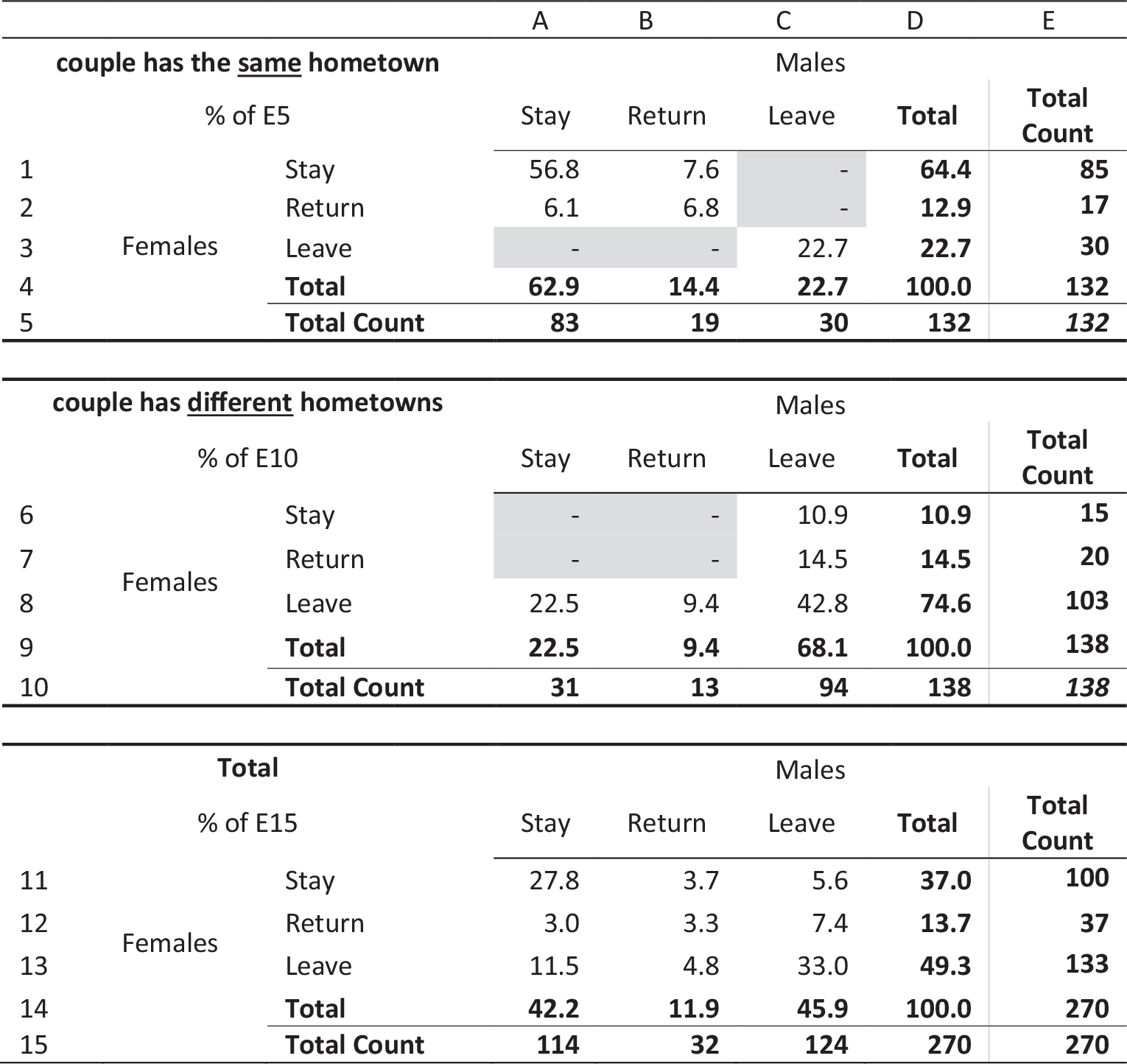
Generally, the most common combinations of migration types are the ones where both partners leave the hometown (33 percent; C13) or both partners are stayers (28 percent; A11). About half of the couples have the same hometown (132 out of 270 couples; see Figure 1 E5 and E15). 57 percent of these couples consist of two stayers (A1). About a quarter (23 percent) of the couples with the same hometown leave their common hometown (C3), while the remaining 77 percent of the couples live in the common hometown (either as stayer or returner). One fifth (21 percent) consists of at least one returned partner (B1, B2 and A2 combined). 86 percent of the couples with the same hometown comprise partners with the same migration types (A1, B2 and C3 combined). This suggests that both individuals’ lives linked early in their lives and the partners have rather ‘short’ residential biographies (i.e. few moves) independently of each other. There are negligible gender differences.
138 couples have different hometowns (E10). These couples are almost twice as likely to be living in neither of the partners’ hometowns compared to the couples with the same hometown (43 percent compared to 23 percent; C8 v. C3). Thus, only 57 percent (100 percent - 43 percent) of the couples live in either the female’s or male’s hometown, compared to 77 percent among couples with the same hometown. This may indicate that place attachment and location-specific capital of both partners combined weigh more than the sum of the individual partners. This may simplify the decision-making process and influence the residential decision in favour of the common hometown. Males are twice as likely to be stayers (22.5 percent; females: 10.9 percent; A8 v. C6) while females are more likely to be leavers (31.9 percent; males: 25.4 percent; A8 + B8 compared to C6 + C7) or returners (14.5 percent; males: 9.4 percent; C7 v. B8). This may point to more complex independent residential biographies of both partners and thus result in a more complex decision-making process. One could argue that the gender differences indicate the weak bargaining position of females in the household that leads to their tied migration. It may also be the case that females are more likely to leave their hometown while unmarried or single and meet a future husband in a new city, which happens to be the male’s hometown because males move less at a younger age (similar results shown for the Netherlands in Mulder and Hooimeijer (2002: 248)). This may result in the couple staying where they met. Such sequences may suggest that females are associated with tied migration and males have greater bargaining power. However, a lack of information on the history of partnerships (timing of coupling, formation of the joint household, timing of leaving the hometown) does not allow such conclusions to be drawn.
The theoretical considerations and descriptive results above suggest the influence of gender, age, level of education, the size of the hometown, life course, the partner and their biography, social ties to parents and parents-in-law, and socialisation.
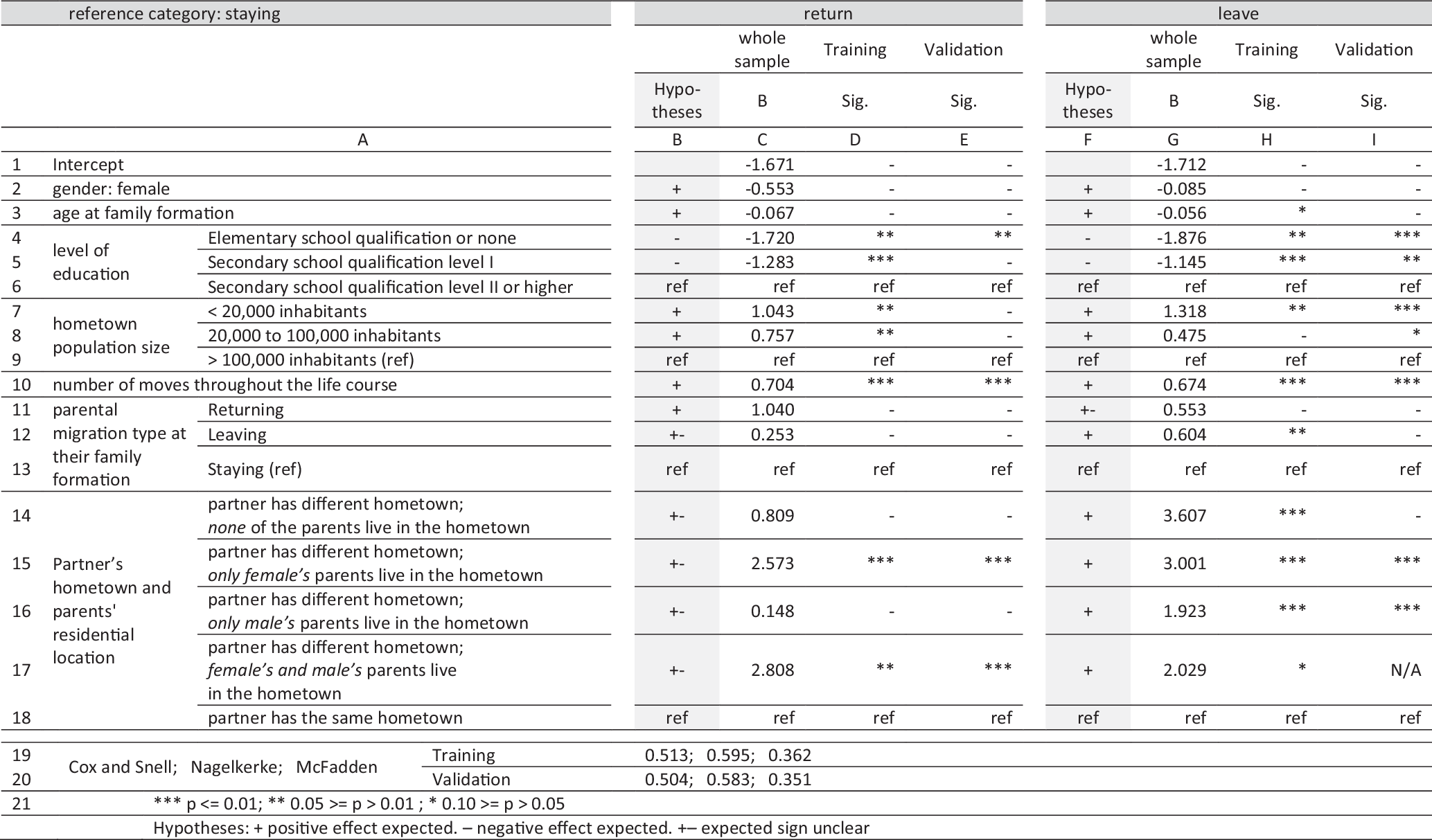
Building this final model was challenging for several reasons. First, the dependent variable is not evenly distributed. The returners make up less than 15 percent in both samples, so testing multiple independent variables leads to very unstable models especially for the returners. Second, some independent variables correlate with each other. This applies to various attributes of the same respondent (e.g. age at family formation and level of education) and to the partner’s (and partner’s parents’) attributes. Third, the small sample size resulting from the sample split led to an undetected empty category in the validation sample that could not be repaired without violating the principle of validation. This is why there is no significance given in Figure 3; i17. These issues called for a well-considered trade-off between a comprehensive model and stable effects.
The model quality given in lines 19 and 20 is relatively high for the problem under study. As expected, the model quality is higher for the training model, as the model was based on the training sample. In the following, ‘significance’ refers to cases when effects are significant in both samples. Other effects are discussed as appropriate though.
The lower the level of education the more likely the respondent is to be a stayer, rather than a returner or a leaver. The reasons may be twofold. First, achieving a higher education degree often requires leaving the hometown. Second, a high level of education often leads to a highly specialised job which may not be available in the hometown. The effect thus underlines the consequences of a highly specialised labour market and the educational infrastructure for residential decisions. It also points to interdependencies of life-course trajectories (educational, residential and employment) and to the importance of experiences and decisions made for the later life course. The effect is highly significant for the leavers and all levels of education. It shows a similar effect for returners but does not achieve significance for the secondary school qualification level I in the validation sample.
It needs to be highlighted that a move means forgoing location-specific capital and place attachment at the hometown, which is rebuilt in the new place of education. Return migration means forgoing the newly built-up capital and place attachment at the place of education. The question remains as to how individuals make sense of the relationship between education, leaving and returning. On one hand, a high level of education may be perceived as an opportunity to leave the hometown and become less dependent on its location-specific capital. On the other hand, it may mean being forced by the labour market to leave the hometown regardless of place attachment and having to give up the benefits of social ties.
Even though gender and age did not show any significant effect, we keep them as control variables in the model to adjust for socio-demographics.
Respondents originating from small municipalities (< 20,000 inhabitants) are significantly more likely to leave than stay (g7, h7, i7). All other regression coefficients (c7, c8, g8) are positive, in line with the hypotheses. Thus, the smaller the hometown, the more likely it is that people leave, at least for some time in their lives. Comparing small and medium-sized municipalities, it turns out that respondents from small municipalities are more likely to be leavers (g7 compared to c7) while respondents from medium-sized municipalities are more likely to be returners (c8 compared to g8). This result is relevant because return migration is mostly associated with rural areas and small communities, where policy makers hope return migration helps to overcome demographic decline. This suggests the heightened attractiveness of large and medium-sized cities in terms of more and a wider range of job opportunities, but also in terms of cultural or social amenities. Deeper insights into the reasons why people leave, stay or return to different-sized hometowns would enrich the discussions on spatial demographic developments such as population decline in rural areas. But one should note that this may be biased as short distance moves from small municipalities end up in a different municipality whereas a move starting in a big municipality is more likely to end in the same municipality.5
The number of previous moves is positively associated with being a returner (c10) and being a leaver (g10) (compared to being a stayer) and is highly significant (d10, e10, h10, i10). The fewer moves a respondent experienced the more likely it is that he or she is a stayer. With an increase in the number of moves, it is more likely that location-specific capital and place attachment are less concentrated in one place and more dispersed across multiple places. What is more, with each move coping strategies for later moves may evolve. This hints at the importance of built-up, location-specific capital and place attachment and learning processes over the life course. Once more, this result highlights that individual residential location has to be seen in the broader context of former residential decisions and paths in life.
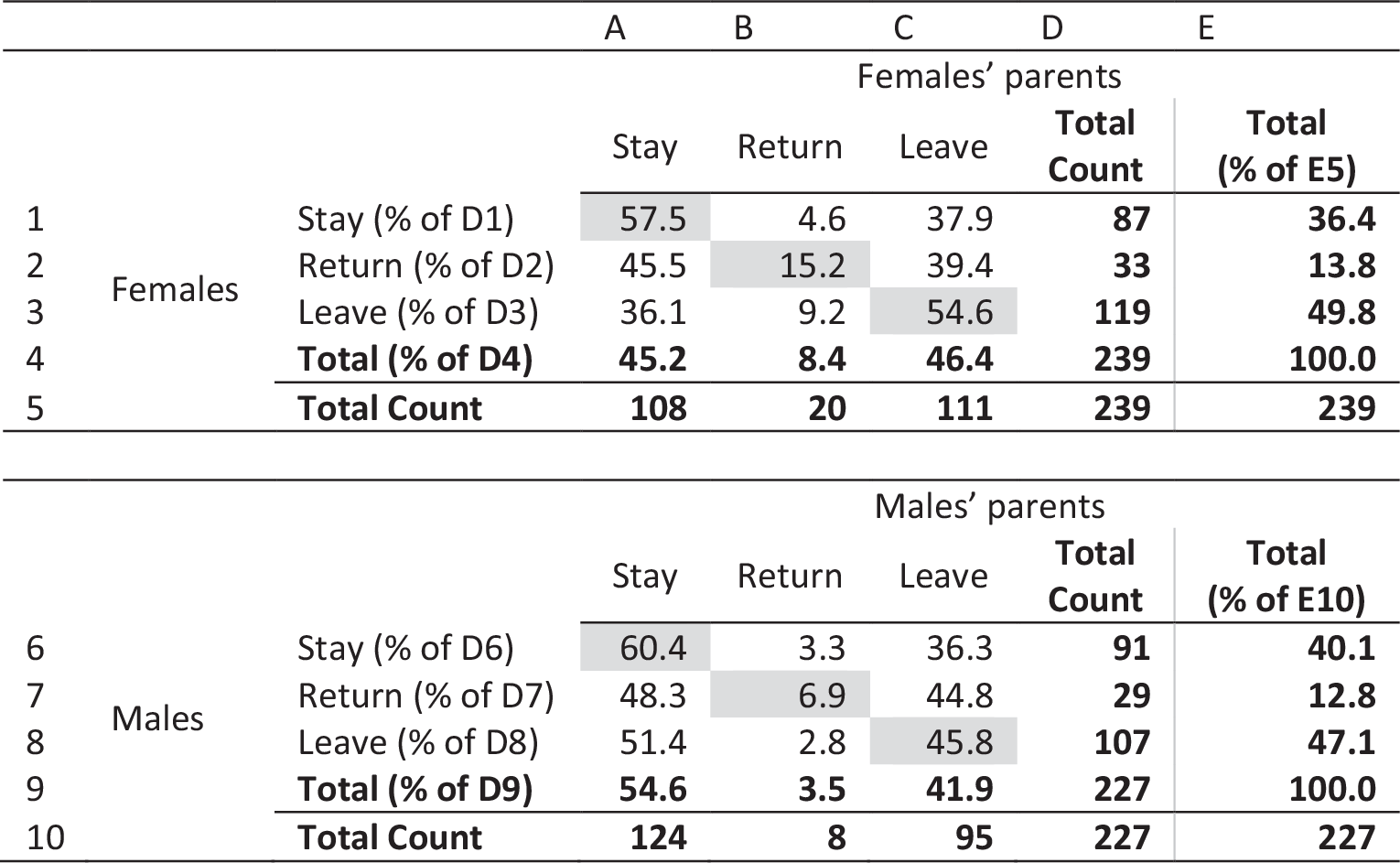
Even though the results are not significant for this variable, we find them remarkable. First, the effects indicate the direction we expect from the hypotheses and descriptive results, and this holds for both the training and the validation sample (not shown here). Secondly, using the whole sample shows the significant positive influence of parental returners on being a returner, and parental leavers on being a leaver (not shown here). Hence, we cautiously suggest that our results point towards intergenerational similarity and lagged socialisation. The respondents tend to make similar residential location choices as their parents did at their own family formation stage. The reason for the lack of significance may be in the birth cohorts represented in our study. The parental generation grew up during the Second World War, so their residential biographies are affected by flight, expulsion and forced resettlement. Many of them were not able to return to or stay in their hometowns as they may have done given the freedom to choose.
Having a partner who originates from the same hometown increases the likelihood of being a stayer (which is in line with the descriptive results). Respondents with a partner from a different hometown are more likely to return to their hometown if their own and their partner’s parents are there (line 17). This does not seem surprising as the respondent probably has location-specific capital in and strong attachments to the hometown and the partner has at least family ties to the place. Comparing the effects of having only one set of parents living in the hometown (lines 15 and 16), the results indicate that respondents are more likely to be leavers than returners when only the female’s parents live in the hometown (g15 is higher than c15). Having only the male’s parents living in the hometown is less associated with being a leaver than having only the female’s parents living there (g16 compared to g15).
It is more likely for the respondent to stay in the hometown if the male’s parents live there than if only the female’s parents live there. This supports the often-claimed male dominance hypotheses. But the female’s parents seem to be more important for return migration (c15 compared to c16). This finding contradicts the male dominance hypothesis. More in-depth interpretation requires information on the timing of coupling, setting up an independent household and cohabitation, and thus more explicit information on tied migration. Our results suggest, however, that while many other studies conclude that male dominance plays a role this may not fully depict the complexity of the interrelations between both partners’ and their families’ biographies.
Two questions are studied in this paper: (A) To what extent do people stay in, return to or leave their hometown by the time of family formation? (B) Which factors influence a person’s migration type? For our paper, we make use of a sample covering two generations per family, most of whom live in the Ruhr Area and surrounding regions.
(A) Of the younger generation studied, about 40 percent stay in, 48 percent leave and about 13 percent return to their hometowns. In the older generation, the share of the stayers is higher, while the share of the leavers is slightly smaller and that of the returners is much smaller. One explanation may be the partner markets, which expand with higher education and greater age of the partners (Lengerer 2001). As the respondents (younger generation) in the dataset are highly educated, they may be more likely to have partners from different hometowns. This may lead to a higher share of leavers in the data used than in the German population. Females are more likely to be leavers, while males are more likely to stay in their hometowns (also found in Wagner 1989: 202). The gender difference is greater in the older generation, which is not surprising, since gender roles and, for example, female participation in the labour market have changed over time (Smits/Mulder/Hooimeijer 2003; Lien 2017).
About half of the couples in the younger generation have the same hometown. Considering the rather urban population in our dataset, this result is in line with Lengerer (2001: 144), who for partnerships beginning in the 1980s shows that 38 % of the partners (in a rural environment) or 83 % (in an urban environment) live in the same town at the time of meeting. These couples are more likely to stay there. Couples with different hometowns are almost twice as likely to be living in neither of the partners’ hometowns as the couples with the same hometown. For these couples, males are twice as likely to be stayers, while females are more likely to be leavers (also found in Wagner 1989: 202).
(B) We found several variables to influence the migration type. The lower the level of education and the greater the hometown population size, the more likely it is that people stay there. Respondents from small hometowns tend to leave them, while those from medium-sized hometowns tend to return (rather than stay away). This seems to indicate the great importance of educational facilities and job opportunities for staying. Similar conclusions on the significance of educational and job opportunities are drawn for returners by Fuchs, Nadler, Roth et al. (2017).
The number of previous moves is positively associated with returning and leaving, in line with Myers (1999). Having a partner who comes from the same hometown makes it more likely to be a stayer. Respondents with a partner from a different hometown are more likely to return to their hometowns if their own and their partner’s parents live there. For returning to the hometown, the female’s parents are more important. Blaauboer, Mulder and Zorlu (2011) also showed that female’s family ties become more relevant at the time of family formation. However, the male’s parents are more important for staying. Taken together, this does not permit a clear conclusion to be drawn on the hypothesis of male dominance in residential choice. Fuchs, Nadler, Roth et al. (2017) argue that men may be less likely to enter stable partnerships after leaving, and may couple with a partner living in the hometown upon return. We conclude that the reasons leading to gender patterns have not been fully disentangled (similarly: Albrecht/Döring/Holz-Rau et al. 2019).
In line with socialisation effects found in previous research (Myers 1999; Lersch/Luijkx 2015; Seyfarth/Osterhage/Scheiner 2021), we find remarkable and consistent similarity in migration types within a family, as respondents of the younger generation are more likely to have parents with the same migration type, even though such socialisation effects were not significant. We suspect that the socialisation effect may be still greater in subsequent generations, since the parents’ generation in our data had less freedom in residential choice (e.g., to return to the hometown) due to the Second World War and its aftermath. They were thus not able to realise their preferences to the same extent but still transmit this preference to their children. So far, it remains unclear whether the effects found in our data are an indirect outcome of socialisation, for example affecting educational and work achievements (Fessler/Schneebaum 2012) and the age and timing of childbearing (Liefbroer/Elzinga 2012), or are due to direct transmission resulting in similar residential decisions. As socialisation has not been studied much quantitatively in the context of residential decisions, investigating socialisation and showing similarities between family generations makes an important contribution to research.
Even though the data used have some limitations, they encompass rich information on residential biographies of families and couples, which is unique for the topic under study. Although the data are socially selective, the results are plausible and complement the findings of other studies well. Regarding the theoretical approach, our results point to interdependencies of life-course trajectories (educational, employment and residential) and to the importance of experiences and decisions for the later life course. The concepts of location-specific capital and place attachment also need to be combined with the life-course approach. They are built, spatially distributed, may fade out and be re-established over the life-course and are crucially shaped by the residential biography and vice versa. We find linked intergenerational biographies combined with the concepts of location-specific capital and place attachment enriching for a deeper understanding of a household’s decision-making (and bargaining) process.
Taken overall, our results show that residential decisions are made as a trade-off between both partners’ place attachment and family ties. We suggest three directions for future research.
To improve understanding of gender differences in residential household decisions, we first suggest focusing on partnership, intergenerational family and residential biography, and possibly employment biography, in combination (see Birg/Flöthmann/Reiter 1991 for earlier work in this vein). To enable the proper interpretation of gender differences, which go beyond the straightforward conclusion of male dominance, both partners’ partnership, intergenerational family and residential biographies need to be disentangled and put into context with employment biographies. When, where and how are lives (of partners and family members) linked and how do the life-course trajectories of individuals interweave with each other? Answering this question requires information on the timing and chronology of relevant life events and on the lives the respective individuals are linked with. This may refer to, e.g., elderly kin or children, whether from an existing or previous partnership.
Second, there is a need to better understand how socialisation impacts on residential decisions and how effects are transmitted. The paths of socialisation are not yet fully understood in terms of theoretical considerations as well as empirical work. We hence suggest making use of psychological concepts. This refers to the question of whether certain attitudes or behaviours are more directly transmitted via learning processes or more indirectly through characteristics such as aspiration, preference, knowledge or habit, which in turn influence residential decisions (Jenkins/Maynard 1983: 438; Helderman/Mulder 2007: 237).
We third find evidence that spatial characteristics are important for the migration type. Spatial research should be more closely linked with life-course research (Hörschelmann 2011). We assume socialisation occurs through the spatial environment which is experienced over the life course on various scales (neighbourhood, city, region), and which may shape later residential decisions. Moreover, residential decisions over the life course must be seen within the historical and spatial context of the time. For both, we recommend incorporating life-course data with longitudinal spatial data, although the reconstruction of historical states and trends may be a considerable challenge.
Concerning the methodological approach, we conclude that sample splitting is a valuable approach for model validation. Even though sample splitting reduces the sample size and may lead to difficulties in the model building process (such as empty categories) and less significant results, we still recommend this approach. We find that the model building process should be subject to more in-depth reflection and that model validation should be considered more often in future research.
Our results are important for planning and policy. So far, results on return migration are mostly used by developing countries or rural regions, and in the German context by a few authorities in the eastern or rural parts of Germany. Contrary to what policy makers have assumed or focused on so far, our results suggest that return migration may be more relevant for medium-sized municipalities. The results highlight the consequences of a highly specialised labour market and educational infrastructure for residential decisions. This indicates the heightened attractiveness of large and medium-sized cities in terms of more and a wider range of job opportunities, but also in terms of cultural or social amenities. Considering the generations under study and recent developments (educational expansion and specialisation of the labour market), we assume that expanding educational facilities and strengthening job opportunities in economically weak regions may help reduce out-migration and, especially in larger cities, return migration to (more rural) places of origin after studying. We argue that for planning authorities and policy makers deeper insight into their out- and in-migration processes would be highly beneficial. Return migration not only implies in-migration to the region of origin but also leaving another region. From the perspective of this second region, return migration is a special form of out-migration and of interest for policy makers, too.
We assume that the importance of factors such as location-specific capital and place attachment to the hometown, family ties and socialisation for migration and, thus, economic development are underestimated. On one hand, regions and municipalities with decreasing populations may use the results to develop demographic strategies to maintain their population or attract migrants who previously left but may still have strong ties. For a metropolitan area such as the Ruhr area this suggests focusing on motivating people to stay, e.g. by supporting educational facilities and the labour market, and by raising awareness about the existing qualities of the region. On the other hand, for authorities with increasing populations it is important to know whether the immigrants possess local ties and capital or not. These issues should be broadly discussed in terms of social cohesion, local identity and the labour market.
References
| Abraham, M.; Auspurg, K.; Hinz, T. (2010): Migration Decisions Within Dual-Earner Partnerships: A Test of Bargaining Theory. In: Journal of Marriage and Family 72, 4, 876–892. https://doi.org/10.1111/j.1741-3737.2010.00736.x |
| Albrecht, J.; Döring, L.; Holz-Rau, C.; Scheiner, J. (2019): Residential Location Choices of Couples Considering both Partners’ Residential Biographies and Family Ties. In: Comparative Population Studies 44, 107–136. https://doi.org/10.12765/CPoS-2019-12en |
| Arlot, S.; Celisse, A. (2010): A survey of cross-validation procedures for model selection. In: Statistics Surveys 4, 40–79. https://doi.org/10.1214/09-SS054 |
| Backhaus, K.; Erichson, B.; Plinke, W.; Weiber, R. (2016): Multivariate Analysemethoden. Eine anwendungsorientierte Einführung. Berlin. |
| Bailey, A.J.; Blake, M.K.; Cooke, T.J. (2004): Migration, care, and the linked lives of dual-earner households. In: Environment and Planning A 36, 9, 1617–1632. https://doi.org/10.1068/a36198 |
| Beer, A.; Faulkner, D. (2009): 21st century housing careers and Australia’s housing future. Melbourne. = AHURI Final Report 128. |
| Bielby, W.T.; Bielby, D.D. (1992): I Will Follow Him: Family Ties, Gender-Role Beliefs, and Reluctance to Relocate for a Better Job. In: American Journal of Sociology 97, 5, 1241–1267. https://doi.org/10.1086/229901 |
| Birg, H.; Flöthmann, E.-J.; Reiter, I. (1991): Biographische Theorie der demographischen Reproduktion. Frankfurt am Main. = Forschungsberichte des Instituts für Bevölkerungsforschung und Sozialpolitik IBS, Universität Bielefeld 18. |
| Blaauboer, M. (2011): The Impact of Childhood Experiences and Family Members outside the Household on Residential Environment Choices. In: Urban Studies 48, 8, 1635–1650. https://doi.org/10.1177/0042098010377473 |
| Blaauboer, M.; Mulder, C.H.; Zorlu, A. (2011): Distances between Couples and the Man’s and Woman’s Parents. In: Population, Space and Place 17, 5, 597–610. https://doi.org/10.1002/psp.648 |
| Bonaiuto, M.; Aiello, A.; Perugini, M.; Bonnes, M.; Ercolani, A.P. (1999): Multidimensional Perception of Residential Environment Quality and Neighbourhood Attachment in the Urban Environment. In: Journal of Environmental Psychology 19, 4, 331–352. https://doi.org/10.1006/jevp.1999.0138 |
| Bordone, V. (2009): Contact and Proximity of Older People to their Adult Children: A Comparison between Italy and Sweden. In: Population, Space and Place 15, 4, 359–380. https://doi.org/10.1002/psp.559 |
| Brown, B.; Perkins, D.D.; Brown, G. (2003): Place attachment in a revitalizing neighborhood: Individual and block levels of analysis. In: Journal of Environmental Psychology 23, 3, 259–271. https://doi.org/10.1016/S0272-4944(02)00117‑2 |
| Chearbhaill, R.N. (2016): ‘You’ll Have to Start Learning Irish Now’: Irish Return Migration and the Return of the Second Generation to the Connemara Gaeltacht Region. In: Nadler, R.; Kovács, Z.; Glorius, B.; Lang, T. (eds.): Return Migration and Regional Development in Europe. London, 195–212. https://doi.org/10.1057/978-1-137-57509-8 |
| Chudnovskaya, M.; Kolk, M. (2017): Educational Expansion and Intergenerational Proximity in Sweden. In: Population, Space and Place 23, 1, e1973. https://doi.org/10.1002/psp.1973 |
| Clark, W.A.V.; Duque-Calvache, R.; Palomares-Linares, I. (2017): Place Attachment and the Decision to Stay in the Neighbourhood. In: Population, Space and Place 23, 2, 1–16. https://doi.org/10.1002/psp.2001 |
| Cooke, T.J. (2008): Gender role beliefs and family migration. In: Population, Space and Place 14, 3, 163–175. https://doi.org/10.1002/psp.485 |
| Coulter, R.; van Ham, M.; Findlay, A.M. (2016): Re-thinking residential mobility: Linking lives through time and space. In: Progress in Human Geography 40, 3, 352–374. https://doi.org/10.1177/0309132515575417 |
| DaVanzo, J. (1981): Repeat Migration, Information Costs, and Location-Specific Capital. In: Population and Environment 4, 1, 45–73. https://doi.org/10.1007/BF01362575 |
| DaVanzo, J. (1983): Repeat Migration in the United States: Who Moves Back and Who Moves On? In: The Review of Economics and Statistics 65, 4, 552–559. https://doi.org/10.2307/1935923 |
| de Bruijn, B.J. (1999): Foundations of Demographic Theory. Choice, Process, Context. Amsterdam. |
| de Haas, H.; Fokkema, T. (2011): The effects of integration and transnational ties on international return migration intentions. In: Demographic Research 25, 755–782. https://doi.org/10.4054/DemRes.2011.25.24 |
| Döring, L.; Albrecht, J.; Holz-Rau, C. (2014): Generationsübergreifende Mobilitätsbiografien – Soziodemografische Analyse der Erhebung. Dortmund. = Arbeitspapiere des Fachgebiets Verkehrswesen und Verkehrsplanung 30. |
| Döring, L.; Kroesen, M.; Holz-Rau, C. (2019): The role of parents’ mobility behavior for dynamics in car availability and commute mode use. In: Transportation 46, 3, 957–994. https://doi.org/10.1007/s11116-017-9823-x |
| Dustmann, C.; Fadlon, I.; Weiss, Y. (2011): Return migration, human capital accumulation and the brain drain. In: Journal of Development Economics 95, 1, 58–67. https://doi.org/10.1016/j.jdeveco.2010.04.006 |
| Elder, G.H. (1994): Time, Human Agency, and Social Change: Perspectives on the Life Course. In: Social Psychology Quarterly 57, 1, 4–15. https://doi.org/10.2307/2786971 |
| Elder, G.H.; Johnson, M.K.; Crosnoe, R. (2003): The Emergence and Development of Life Course Theory. In: Mortimer, J.T.; Shanahan, M.J. (eds.): Handbook of the Life Course. New York, 3–19. |
| Feijten, P. (2005): Life events and the housing career. A retrospective analysis of timed effects. Delft. |
| Feijten, P.; Hooimeijer, P.; Mulder, C.H. (2008): Residential Experience and Residential Environment Choice over the Life-course. In: Urban Studies 45, 1, 141–162. https://doi.org/10.1177/0042098007085105 |
| Feldhaus, M.; Heintz-Martin, V. (2015): Long-term effects of parental separation: Impacts of parental separation during childhood on the timing and the risk of cohabitation, marriage, and divorce in adulthood. In: Advances in Life Course Research 26, 22–31. https://doi.org/10.1016/j.alcr.2015.07.003 |
| Fessler, P.; Schneebaum, A. (2012): Gender and Educational Attainment Across Generations in Austria. In: Feminist Economics 18, 1, 161–188. https://doi.org/10.1080/13545701.2012.657661 |
| Friedrich, K.; Schultz, A. (eds.) (2008): Brain drain oder brain circulation? Konsequenzen und Perspektiven der Ost-West-Migration. Leipzig. = forum ifl 8. |
| Fuchs, M.; Nadler, R.; Roth, D.; Theuer, S.; Weyh, A. (2017): Rückwanderung von Erwerbspersonen – aktuelle Deutschlandzahlen im regionalen Vergleich. In: Nationalatlas aktuell 11, 4. http://aktuell.nationalatlas.de/wp-content/uploads/17_04_Rueckwanderung.pdf |
| Fuchs, M.; Weyh, A. (2016): Rückwanderung von Beschäftigten nach Ostdeutschland: Räumliche Muster und soziodemographische Strukturen. In: ifo Dresden berichtet 23, 3, 19–27. |
| Glorius, B.; Matuschewski, A. (2009): Rückwanderung im internationalen Kontext: Forschungsansätze und -perspektiven. In: Zeitschrift für Bevölkerungswissenschaft 34, 3‑4, 203–225. https://doi.org/10.1007/s12523-010-0043-0 |
| Helderman, A.; Mulder, C. (2007): Intergenerational Transmission of Homeownership: The Roles of Gifts and Continuities in Housing Market Characteristics. In: Urban Studies 44, 2, 231–247. https://doi.org/10.1080/00420980601075018 |
| Hernández, B.; Hidalgo, M.C.; Salazar-Laplace, M.E.; Hess, S. (2007): Place attachment and place identity in natives and non-natives. In: Journal of Environmental Psychology 27, 4, 310–319. https://doi.org/10.1016/j.jenvp.2007.06.003 |
| Hidalgo, M.C.; Hernández, B. (2001): Place Attachment: Conceptual and Empirical Questions. In: Journal of Environmental Psychology 21, 3, 273–281. https://doi.org/10.1006/jevp.2001.0221 |
| Holz-Rau, C.; Scheiner, J. (2015): Mobilitätsbiografien und Mobilitätssozialisation: Neue Zugänge zu einem alten Thema. In: Scheiner, J.; Holz-Rau, C. (eds.): Räumliche Mobilität und Lebenslauf. Wiesbaden, 3–22. https://doi.org/10.1007/978-3-658-07546-0_1 |
| Hörschelmann, K. (2011): Theorising life transitions: geographical perspectives. In: Area 43, 4, 378–383. https://doi.org/10.1111/j.1475-4762.2011.01056.x |
| Isengard, B. (2013): „Der Apfel lebt nicht weit vom Stamm“: Wohnentfernungen zwischen Eltern und ihren erwachsenen Kindern in Europa. In: Comparative Population Studies 38, 2, 263–289. https://doi.org/10.4232/10.CPoS-2013-09de |
| Jenkins, S.P.; Maynard, A.K. (1983): Intergenerational Continuities in Housing. In: Urban Studies 20, 4, 431–438. https://doi.org/10.1080/00420988320080791 |
| Jones, G.; Jamieson, L. (1997): Young People in Rural Scotland: Getting Out and Staying On. Edinburgh. |
| Junge, V.; Revilla Diez, J.; Schätzl, L. (2015): Determinants and Consequences of Internal Return Migration in Thailand and Vietnam. In: World Development 71, 94–106. https://doi.org/10.1016/j.worlddev.2013.11.007 |
| Jürges, H. (2005): The Geographic Mobility of Dual-Earner Couples: Does Gender Ideology Matter? Berlin. = DIW Discussion Papers 474. |
| Kley, S. (2009): Migration im Lebensverlauf. Der Einfluss von Lebensbedingungen und Lebenslaufereignissen auf den Wohnortwechsel. Wiesbaden. |
| Kolk, M. (2017): A Life-Course Analysis of Geographical Distance to Siblings, Parents, and Grandparents in Sweden. In: Population, Space and Place 23, 3, e2020. https://doi.org/10.1002/psp.2020 |
| Kranepuhl, S. (2008): Regionale Identität als Instrument der Regionalentwicklung. Identitätsstiftende Maßnahmen von Politik und Verwaltung. In: Friedrich, K.; Schultz, A. (eds.): Brain drain oder brain circulation? Konsequenzen und Perspektiven der Ost-West-Migration. Leipzig, 113–122. = forum ifl 8. |
| Kulu, H. (2008): Fertility and Spatial Mobility in the Life Course: Evidence from Austria. In: Environment and Planning A 40, 3, 632–652. https://doi.org/10.1068/a3914 |
| Kunuroglu, F.; Yagmur, K.; van de Vijver, F.J.R.; Kroon, S. (2015): Consequences of Turkish return migration from Western Europe. In: International Journal of Intercultural Relations 49, 198–211. https://doi.org/10.1016/j.ijintrel.2015.10.004 |
| Lawton, L.; Silverstein, M.; Bengtson, V. (1994): Affection, Social Contact, and Geographic Distance Between Adult Children and Their Parents. In: Journal of Marriage and Family 56, 1, 57–68. https://doi.org/10.2307/352701 |
| Lengerer, A. (2001): Wo die Liebe hinfällt – ein Beitrag zur ‚Geographie‘ der Partnerwahl. In: Klein, T. (ed.): Partnerwahl und Heiratsmuster. Soziostrukturelle Voraussetzungen der Liebe. Wiesbaden, 133–162. https://doi.org/10.1007/978-3-663-11009-5_6 |
| Lersch, P.M. (2014): Geburten und die Wohnraumversorgung von Familien: Anpassungen der Wohnung im zeitlichen Verlauf. In: Zeitschrift für Soziologie 43, 2, 131–149. https://doi.org/10.1515/zfsoz-2014-0205 |
| Lersch, P.M.; Luijkx, R. (2015): Intergenerational transmission of homeownership in Europe: Revisiting the socialisation hypothesis. In: Social Science Research 49, 327–342. https://doi.org/10.1016/j.ssresearch.2014.08.010 |
| Lewicka, M. (2010): What makes neighborhood different from home and city? Effects of place scale on place attachment. In: Journal of Environmental Psychology 30, 1, 35–51. https://doi.org/10.1016/j.jenvp.2009.05.004 |
| Lewicka, M. (2011): Place attachment. How far have we come in the last 40 years? In: Journal of Environmental Psychology 31, 3, 207–230. https://doi.org/10.1016/j.jenvp.2010.10.001 |
| Liefbroer, A.C.; Elzinga, C.H. (2012): Intergenerational transmission of behavioural patterns: How similar are parents’ and children’s demographic trajectories? In: Advances in Life Course Research 17, 1, 1–10. https://doi.org/10.1016/j.alcr.2012.01.002 |
| Lien, S.-c. (2017): Wohnstandort und räumliche Mobilität im Kontext steigender Frauenerwerbstätigkeit. Wiesbaden. https://doi.org/10.1007/978-3-658-15858-3 |
| Løken, K.V.; Lommerud, K.E.; Lundberg, S. (2013): Your Place or Mine? On the Residence Choice of Young Couples in Norway. In: Demography 50, 1, 285–310. https://doi.org/10.1007/s13524-012-0142-8 |
| Low, S.M.; Altman, I. (1992): Place Attachment. A Conceptual Inquiry. In: Altman, I.; Low, S.M. (eds.): Place Attachment. Boston, 1–12. = Human Behavior and Environment 12. https://doi.org/10.1007/978-1-4684-8753-4_1 |
| Lundholm, E. (2015): Migration and Regional Differences in Access to Local Family Networks Among 60-year olds in Sweden. In: Journal of Population Ageing 8, 3, 173–185. https://doi.org/10.1007/s12062-015-9117-z |
| Mader, K.; Schneebaum, A. (2013): Zur geschlechtsspezifischen Intrahaushaltsverteilung von Entscheidungsmacht in Europa. In: Wirtschaft und Gesellschaft 39,3, 361–403. |
| Malmberg, G.; Pettersson, A. (2007): Distance to elderly parents. Analyses of Swedish register data. In: Demographic Research 17, 679–704. https://doi.org/10.4054/DemRes.2007.17.23 |
| Michielin, F.; Mulder, C.H. (2007): Geographical distances between adult children and their parents in the Netherlands. In: Demographic Research 17, 655–678. https://doi.org/10.4054/DemRes.2007.17.22 |
| Michielin, F.; Mulder, C.H. (2008): Family events and the residential mobility of couples. In: Environment and Planning A 40, 11, 2770–2790. https://doi.org/10.1068/a39374 |
| Michielin, F.; Mulder, C.H.; Zorlu, A. (2008): Distance to Parents and Geographical Mobility. In: Population, Space and Place 14, 4, 327–345. https://doi.org/10.1002/psp.509 |
| Mincer, J. (1978): Family Migration Decisions. In: Journal of Political Economy 86, 5, 749–773. https://doi.org/10.1086/260710 |
| Mulder, C.H.; Hooimeijer, P. (2002): Leaving home in the Netherlands: Timing and first housing. In: Journal of Housing and the Built Environment 17, 3, 237–268. https://doi.org/10.1023/A:1020264417389 |
| Mulder, C.H.; van der Meer, M.J. (2009): Geographical Distances and Support from Family Members. In: Population, Space and Place 15, 4, 381–399. https://doi.org/10.1002/psp.557 |
| Myers, S.M. (1999): Residential Mobility as a Way of Life: Evidence of Intergenerational Similarities. In: Journal of Marriage and Family 61, 4, 871–880. https://doi.org/10.2307/354009 |
| Nadler, R.; Kovács, Z.; Glorius, B.; Lang, T. (eds.) (2016): Return Migration and Regional Development in Europe. London. https://doi.org/10.1057/978-1-137-57509-8 |
| Nadler, R.; Lang, T.; Glorius, B.; Kovács, Z. (2016): Conclusions: Current and Future Perspectives on Return Migration and Regional Development in Europe. In: Nadler, R.; Kovács, Z.; Glorius, B.; Lang, T. (eds.): Return Migration and Regional Development in Europe. London, 359–376. https://doi.org/10.1057/978-1-137-57509-8 |
| Piracha, M.; Vadean, F. (2010): Return Migration and Occupational Choice: Evidence from Albania. In: World Development 38, 8, 1141–1155. https://doi.org/10.1016/j.worlddev.2009.12.015 |
| Rogerson, P.A.; Burr, J.A.; Lin, G. (1997): Changes in Geographic Proximity between Parents and their Adult Children. In: International Journal of Population Geography 3, 2, 121–136. https://doi.org/10.1002/(SICI)1099-1220(199706)3:2%3C121::AID-IJPG60%3E3.0.CO;2‑I |
| Scheiner, J.; Sicks, K.; Holz-Rau, C. (2014): Generationsübergreifende Mobilitätsbiografien – Dokumentation der Datengrundlage. Dortmund. = Arbeitspapiere des Fachgebiets Verkehrswesen und Verkehrsplanung 29. |
| Semyonov, M.; Lewin-Epstein, N. (2001): The Impact of Parental Transfers on Living Standards of Married Children. In: Social Indicators Research 54, 2, 115–137. https://doi.org/10.1023/A:1011081529592 |
| Seyfarth, E.; Osterhage, F.; Scheiner, J. (2021): Auch dauerhaft urban? Empirische Untersuchung kurz- und langfristiger Wohnumfeldwünsche junger Erwachsener als Beitrag zur Reurbanisierungsdebatte. In: Raumforschung und Raumordnung | Spatial Research and Planning 79, 5, 453–469. https://doi.org/10.14512/rur.88 |
| Smits, J.; Mulder, C.H.; Hooimeijer, P. (2003): Changing Gender Roles, Shifting Power Balance and Long-distance Migration of Couples. In: Urban Studies 40, 3, 603–613. https://doi.org/10.1080/0042098032000053941 |
| Snee, R.D. (1977): Validation of Regression Models: Methods and Examples. In: Technometrics 19, 4, 415–428. https://doi.org/10.1080/00401706.1977.10489581 |
| Sussman, N.M. (2002): Testing the cultural identity model of the cultural transition cycle: sojourners return home. In: International Journal of Intercultural Relations 26, 4, 391–408. https://doi.org/10.1016/S0147-1767(02)00013‑5 |
| Thomas, M.; Stillwell, J.; Gould, M. (2016): Modelling Mover/Stayer Characteristics across the Life Course Using a Large Commercial Sample. In: Population, Space and Place 22, 6, 584–598. https://doi.org/10.1002/psp.1943 |
| Thornton, A. (1991): Influence of the Marital History of Parents on the Marital and Cohabitational Experiences of Children. In: American Journal of Sociology 96, 4, 868–894. |
| Tuan, Y.-F. (1975): Place: An Experiential Perspective. In: Geographical Review 65, 2, 151–165. https://doi.org/10.2307/213970 |
| Vadean, F.P.; Piracha, M. (2009): Circular Migration or Permanent Return: What Determines Different Forms of Migration? Bonn. = IZA-Discussion Paper 4287. |
| van Dam, F.; Heins, S.; Elbersen, B.S. (2002): Lay discourses of the rural and stated and revealed preferences for rural living. Some evidence of the existence of a rural idyll in the Netherlands. In: Journal of Rural Studies 18, 4, 461–476. https://doi.org/10.1016/S0743-0167(02)00035‑9 |
| van den Broek, T.; Dykstra, P.A.; Schenk, N. (2014): Regional Economic Performance and Distance Between Parents and Their Employed Children – A Multilevel Analysis. In: Population, Space and Place 20, 3, 222–234. https://doi.org/10.1002/psp.1757 |
| van der Pers, M.; Kibele, E.U.B.; Mulder, C.H. (2014): Intergenerational proximity and the residential relocation of older people to care institutions and elsewhere. In: Ageing and Society 35, 7, 1429–1456. https://doi.org/10.1017/S0144686X14000300 |
| von Blanckenburg, C. (2016): History, Memory and Remigration: Familial Cultures of Memory as a Background to the Return of Entrepreneurs to East Germany. In: Nadler, R.; Kovács, Z.; Glorius, B.; Lang, T. (eds.): Return Migration and Regional Development in Europe. London, 261–289. https://doi.org/10.1057/978-1-137-57509-8 |
| Wagner, M. (1989): Räumliche Mobilität im Lebensverlauf. Eine empirische Untersuchung sozialer Bedingungen der Migration. Stuttgart. |
| Wiest, K.; Leibert, T. (2013): Wanderungsmuster junger Frauen im ländlichen Sachsen-Anhalt – Implikationen für zielgruppenorientierte Regionalentwicklungsstrategien. In: Raumforschung und Raumordnung 71, 6, 455–469. https://doi.org/10.1007/s13147-013-0257-4 |
| Willekens, F.J. (1991): Understanding the Interdependence between Parallel Careers. In: Siegers, J.J.; de Jong-Gierveld, J.; van Imhoff, E. (eds.): Female Labour Market Behaviour and Fertility. A Rational-Choice Approach. Berlin, 11–31. |
| Yahirun, J.J. (2014): Take Me “Home”: Return Migration among Germany’s Older Immigrants. In: International Migration 52, 4, 231–254. https://doi.org/10.1111/imig.12009 |
Footnotes
| 1 | We are aware of the conceptual difference between life course and biography. But here we use these terms interchangeably. |
| 2 | SOEP (German Socio-Economic Panel) does not provide information on family members outside the household. Pairfam (Panel Analysis of Intimate Relationships and Family Dynamics) does not encompass such rich information on the residential biography of the couples’ parents. |
| 3 | https://www.bbsr.bund.de/BBSR/DE/forschung/raumbeobachtung/Raumabgrenzungen/deutschland/gemeinden/StadtGemeindetyp/StadtGemeindetyp.html (20.12.2021). |
| 4 | All three models (training, validation and both samples combined) can be provided by the authors upon request. |
| 5 | Based on own calculations using area and population data of all municipalities in Germany and North Rhine-Westphalia provided by Statistisches Bundesamt: https://www.destatis.de/DE/Themen/Laender-Regionen/Regionales/Gemeindeverzeichnis/Administrativ/Archiv/GVAuszugJ/31122010_Auszug_GV.xlsx?__blob=publicationFile (23.11.2021). |