
The impact of demographic change has been observed at the European level and is reflected upon in several European strategy papers (European Commission 2018; European Commission 2020). A main concern in these policy papers is access to services of general interest (SGI) in areas where population densities are in decline. The European Commission defines the terminology SGI as “services that public authorities of the Member States classify as being of general interest and therefore subject to specific public service obligations” (European Commission 2011: 3). Countries like Scotland and Sweden seem to be ahead with developing approaches for guaranteeing public services also in sparsely populated regions.
In this paper, we examine cases of services of general interest provision that seem to work in a rural depopulating context over time. The paper has a specific focus on the area of post-school education since this form of service of general interest plays a significant role in the liveability of a place. In some rural areas, it can even be a decisive factor for staying or moving away (Boström/Dalin 2018). Local opportunities for professional training generate know-how, increase a region’s innovative strength and allow new economic sectors to establish (Breznitz/Lawton Smith/Bagchi-Sen 2022); they are thus of importance for the local economy.
This paper presents one case study each from Sweden and Scotland, focusing on examples of post-school education. The first case study analyses the Swedish Akademi Norr, an institution which for over 20 years has been providing higher education in sparsely populated communities of northern Sweden. The second case study analyses the Scottish community-project GrowBiz, which offers educational opportunities for supporting micro-entrepreneurship in rural areas of Scotland.
Both examples show how local resources can be used to create better access to post-school education in sparsely populated areas. As such, they should be of interest for shrinking areas across Europe. Our interpretation is that the stability of these cases over time is due to the ability of local actors to co-locate local resources in a sensible way. The aim of the paper is thus to contribute with a structured understanding of how local actors co-locate local resources in order to provide services of general interest in a rural depopulating context over time. To allow a more systematic analysis of our data, we use an analytical framework originally developed to understand resources that are generated through informal planning practices in rural areas.
The paper is structured as follows: First, the paper provides an overview of the heterogeneous developments in rural areas and demonstrates the importance of post-school education against the background of shrinking populations. This is followed by an introduction to the concept of resources. Furthermore, the approach of the qualitative case study is presented and the two projects Akademi Norr and GrowBiz are introduced. The subsequent presentation of results is embedded in the analytical framework of the concept of resources and describes diverse approaches of the two case studies in detail. The concluding discussion embeds the results in the implementation scope and opportunities for rural areas.
The literature on shrinkage has grown considerably in recent decades. In a recent research overview, Syssner (2022) describes how the trends of globalisation, urbanisation and de-industrialisation have confronted parts of European peripheries with difficult circumstances. Shrinkage – in terms of population decline, ageing, and diminishing commercial and public services – form, as Syssner puts it, part of the lived experiences in great parts of the European peripheries.
Yet, the term shrinkage itself deserves further clarification as it is often connotated in a one-dimensional and solely negative way. Copus, Kahila, Dax et al. (2021: 288–292) argue that shrinkage, or rather demographic decline, has to be placed in a broader context of socio-economic change, relating to levels of economic activity, sectoral structures, governance capacity etc. In this respect, Syssner (2022: 100) calls for greater clarity, asking: “[W]hat is it that is shrinking, declining, or disappearing when scholars talk about shrinkage […]; where – in what localities or at what scale – can shrinkage be observed; and […] when did it all happen?” Furthermore, she suggests that research efforts are needed to understand how and for what reasons resources have been distributed in space. Research, it is argued, could also contribute by explicating the conditions for everyday life and work in shrinking, rural territories and demonstrating how shrinkage is dealt with by various policy actors.
This paper is explicitly linked to the call for studies on how the consequences of shrinkage are dealt with by policy actors at various scales and in various contexts. As pointed out by Bontje (2004), Martinez-Fernandez, Audirac, Fol et al. (2012), Wiechmann and Pallagst (2012), Sousa and Pinho (2015), Schatz (2017) and Syssner (2020), demographic decline has long been overlooked in local policy and planning. Several studies have explicated how local and regional policy actors have failed to develop comprehensive strategies or plans for how to cope with decline (Lang 2012; Wiechmann/Pallagst 2012; Bernt/Haase/Großmann et al. 2014; Hospers 2014; Schatz 2017; Syssner 2020).
Even if depopulation is most prominent in sparsely populated rural areas, research on shrinkage and depopulation has until recently had a strong urban bias. Given that, several voices have called for more research attention to be paid to shrinking rural regions. Importantly, there is no uniform definition and delimitation of rural areas at hand. Rather, several typologies are offered at various national and international levels (Küpper/Milbert 2020: 82). This implies that we are dealing with a pronounced heterogeneity of ruralities, and in this sense, rural areas today can only be meaningfully addressed in the plural (Mose 2018).
Many European countries are facing severe challenges of demographic change and especially the shrinkage of rural areas complicates the living conditions of depopulating communities. A growing spatial polarisation between urban and rural areas can be identified (Lang/Haunstein 2017; Copus/Kahila/Dax et al. 2021). The regional differences in development are particularly evident in the ten new member states in central and eastern Europe. However, other countries in western, southern and northern Europe are also affected by conspicuous shrinkage processes evident at regional and local levels (Copus/Kahila/Dax et al. 2021).
Analysed countries | Germany | Scotland | Sweden | ||||||
|---|---|---|---|---|---|---|---|---|---|
Type of territory e) | |||||||||
Key indicators (2009-2019) | Urban | Intermediate | Rural | Urban | Intermediate | Rural | Urban | Intermediate | Rural |
Population density a) f) | 235 | 70 | 25 | ||||||
Share of national population b) c) d) | 35 % | 42 % | 23 % | 41 % | 42 % | 15 % | 39 % | 41 % | 20 % |
Population change b) c) d) | 0.9 % | 0.8 % | -0.8 % | 5 % | 2.9 % | 1.8 % | 8.3 % | 3.9 % | 0.1 % |
Average old age coefficient b) c) d) g) | 34 | 37 | 35 | 27 | 34 | 38 | 28 | 39 | 46 |
Old age coefficient change b) c) d) | 0.1 % | 4.8 % | 3.9 % | 10.6 % | 21.3 % | 21.1 % | 6.7 % | 12.9 % | 13.9 % |
Population projections to 2028 predict a widening of disparities between urban and rural areas in Scotland. Above-average population growth is predicted for urban areas in the east of the country and the Central Belt, while most rural areas in the Highlands and Lowlands, as well as the Western Isles and the Shetland Islands, will experience population declines.1 Similarly, in Sweden, population disparities will also be exacerbated by 2040. As such, the most populated county, Stockholm County, is projected to increase the most, both in number and percentage of people. In contrast, in eight counties the population is expected to decrease with the largest decline being expected for the rural counties of Västernorrland and Norrbotten in the upper north (Statistiska centralbyran 2021).
There is no question that the projected developments will have far-reaching consequences for the maintenance of services of general interest. Maintaining and adapting these services is of crucial importance for the future development of rural areas. To name but a few, the services include local supply, transport, health and care, emergency response and post-school education (see Tent/Brad/Klöden et al. 2021).
Post-school education includes all educational activities that follow compulsory schooling. A distinction can be made between formal (e.g. obtaining institutionally supervised qualifications), non-formal (e.g. continuing education) and informal (e.g. individual interests such as music courses, cooking classes) educational opportunities; this is strongly linked to the concept of life-long learning (Dib 1988).
Post-school educational opportunities are important on both individual and societal levels. They contribute to social participation and have an impact on regional development (Peer/Penker 2016). The availability of educational opportunities is an important aspect of the regional quality of life, influencing the decision of young people in particular to leave or stay in a region, and having a positive impact on regional economic development (Postlep/Blume/Hülz 2020). In the short term, learner spending generates additional regional value added. In the long term, improved innovation and entrepreneurship can contribute to the creation of new businesses in the region (Breznitz/Lawton Smith/Bagchi-Sen 2022).
People from rural areas who seek vocational training, or seek to continue their education after school, often have to travel or migrate to urban areas. This means additional costs for learners, which can be a barrier to achieving higher education while at the same time pushing people in search of education to leave their home region. In rural regions already facing a shrinking and ageing population, the resulting loss of young people reinforces and accelerates this process. People who are educated outside their home regions do not always return or do not have knowledge and skills that match the working conditions and local requirements in rural areas (Gareis/Diller 2020).
Indeed, new educational concepts have sought to decentralise post-school learning opportunities and provide higher education and training in rural areas. Especially during and in the aftermath of the Covid-19 pandemic, face-to-face contact between learners and teachers was complemented by digital tools that enable distance learning independent of location. A well-established example, which functioned well even before the pandemic, is the University of the Highlands and Islands (UHI) in Scotland. This decentralised educational institution can demonstrate cumulative effects for regional development. First, it offers students in rural areas an alternative to having to leave home to pursue education (and also attracts students for specific ‘niche’ courses) (Rennie 2003). Second, retaining and attracting students in these rural areas provides more opportunities for social interaction and improved quality of life, including access to learning opportunities not normally available locally in person (Biggar Economics 2020).
Providing access to post-school education at the local level is a critical contribution to rural and regional development, supporting vibrant, diverse communities, improving regional infrastructure, and generating local employment and the associated expenditure that this creates (Postlep/Blume/Hülz 2020). This is a critical contribution in a region with higher age demographics (see Table 1) and numerous logistical challenges.
In this paper, we examine cases of post-school education in Scotland and Sweden that seem to work in a rural depopulating context over time. Our interpretation is that the long-term stability of these cases is due to the ability of local actors to co-locate local resources in a sensible way. In our endeavour to offer a structured understanding of how local resources are co-located by local actors, we draw on a resource-based view and utilise an analytical framework that has been previously employed for understanding how resources are used and generated through informal planning practices in rural areas. The framework allows us to develop a more structured understanding of how local actors co-locate local resources in order to provide services of general interest in a rural depopulating context over time.
In its broadest sense, a resource can be understood as “any asset that an organization might draw on to help it achieve its goals and perform well” (Bryson/Ackermann/Eden 2007: 704). The framework employed here, however, sorts resources into the broader categories of financial, material, human and organisational resources (Syssner/Meijer 2017). By following this analytical model, we seek to structure our analysis efficiently.
Financial resources could be “[c]ash, investments, and endowment” (Brown/Andersson/Jo 2016: 2892) derived through taxation, through profits, or – as often in rural development processes – through a diversity of external funding sources (Syssner/Meijer 2017: 463). A material resource, Syssner and Meijer (2017: 463) suggest, could comprise physical objects and facilities – in terms of land and raw material (Brown/Andersson/Jo 2016) or in terms of equipment, infrastructure and machines (Bathelt/Glückler 2005: 1547; Pee/Kankanhalli 2016: 189). In the category of human resources, Syssner and Meijer (2017: 463) include formal knowledge, skills and competencies, but also experiences and insights gained by those living and operating in an area (Pee/Kankanhalli 2016: 189). Organisational resources, to conclude, are understood “as those structures that can be employed by individuals to achieve their own goals” (Bathelt/Glückler 2005: 1555) and that enable planning and coordination (Pee/Kankanhalli 2016: 189), for example by the formation of mutual expectations and goals (Bathelt/Glückler 2005: 1555).
This study uses a qualitative comparative case study approach to investigate two models for decentralised post-school educational provision in Sweden and in Scotland. For a long time, comparative social sciences revolved around the idea that comparisons are to be made either between cases that are similar in as many respects as possible or between cases that are different in as many respects as possible. The logic is that similar outcomes in cases that differ, or dissimilar outcomes among cases that are alike, can help identify those factors that decide an outcome, and thus carry some sort of explanatory power (Peters 1998; Syssner 2006; Landman 2008).
In this paper, we suggest that a two-case comparison should consider a comparison of cases that are different. Indeed, even if there are parallels between cases, real world cases are so diverse that they will be largely dissimilar (Peters 1998; Syssner 2006). For a comparison of dissimilar cases to make sense, however, the cases included need to share the property that is to be compared (Sartori 1991). In our study, it is the models for post-school educational provision that are to be compared, and our notion is that these models appear in contexts that exhibit a multitude of social, political and geographical differences.
The intent of the study that this paper is a result of, was to learn from experiences gained in Sweden and in Scotland, and also to identify approaches to rural development that might work for rural areas across Europe. By observing similar matters in different settings, we will be more attentive towards similarities as well as differences in the Scottish and Swedish models of providing post-school education. This in turn helps us to reflect on the contexts in which these models emerge and work. By comparing two cases, we lower the risk of both false particularisation (i.e., the belief that all cases are unique and different), and of false universalism (i.e., the belief that all cases are equal and work in the same way) (for an overview, see Syssner 2006).
Finally, in this paper, we combine the comparative case study approach with a resource base perspective. By doing so, we can contribute a more structured understanding of how local actors co-locate local resources in order to provide post-school education in Scottish and Swedish rural depopulating contexts over time.
Several studies have, as demonstrated above, shown that local and regional governments have largely failed to develop strategies or plans on how to cope with depopulation and decline. But even if there is an absence of formal explicit and transparent frameworks, policies or strategies on how to cope with decline, local and regional actors do act in relation to shrinkage (Béal/Fol/Miot et al. 2019; Syssner 2020). Local governments take decisions intended to adapt their organisations and services to new demographical conditions, even if they are not codified or communicated as a formal adaptation policy (Syssner/Siebert 2020). Our paper deals with two examples of how local and regional actors seek to develop models for post-school education under conditions of depopulation and sparsity, although they are not yet being framed as parts of a comprehensive policy for adaptation or as planning for shrinkage.
Our study stems from a larger collaborative research project carried out by several German research institutions, analysing the provision of services of general interest in exemplary European rural areas and examining their transferability to Germany2. Based on this collaboration, we have investigated innovative and well-established projects of post-school education in rural areas in Sweden and Scotland. The selected educational projects differ in their specific orientations and cover a spectrum of educational offers, ranging from informal to formal learning opportunities. The Swedish community network Akademi Norr serves as an example of formal learning opportunities, while the Scottish community-based project GrowBiz is particularly active within the non-formal education sector.
The final selection of the exemplary projects was multi-criteria based. Amongst others, Akademi Norr was selected due to its long developmental progress and its stable financial situation. GrowBiz was chosen for its continuing and dynamic development and its fundraising ability. Additional selection criteria comprised the extensive spatial coverage of both projects on the one hand and their connections to existing structures on the other.
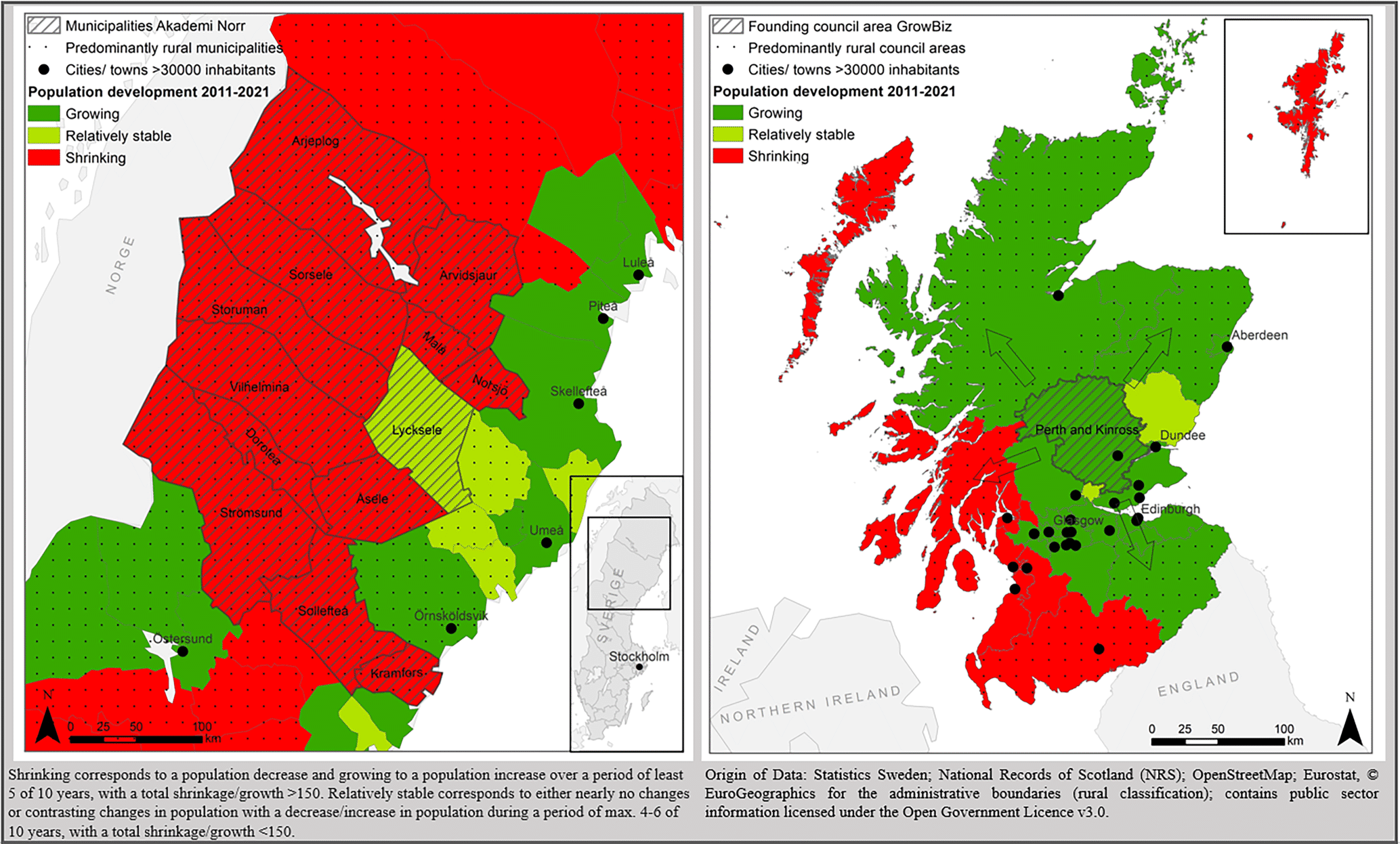
GrowBiz was founded in 2007 with the aim of offering individual training and further education opportunities for rural micro-enterprises. The target group includes existing micro-enterprises as well as people who want to start their own businesses. The GrowBiz concept is based on a bottom-up approach and was initially developed by a board of 25 volunteers and a project manager. The organisation originated in the Council of Perth and Kinross area. Since then, its reach has been gradually extended to other areas of rural Scotland, particularly through the expansion of other digital services. GrowBiz supports lifelong learning opportunities through a wide range of different educational services: training events, online workshops and networking events. In 2019/2020, 750 companies participated in the GrowBiz offer, and 50 companies were supported on the path to start-up. The companies are from the tourism/leisure sectors, arts/creative services and care sector, amongst others. Support focused on all facets of running a successful business: marketing, digital skills, business plans, legal issues, etc. (Scottish Government 2022: 28). GrowBiz excels at highlighting the specific needs of rural areas and developing tailored solutions for each client through its peer-to-peer support.
Akademi Norr | Akademi Norr Project Manager | IP‑1 |
Head of Learning Centre Arjeplog Municipality | IP‑2 | |
Head of Learning Centre Arvidsjaur Municipality | IP‑3 | |
Head of Learning Centre Sollefteå Municipality | IP‑4 | |
Vice-Principal Umeå University | IP‑5 | |
Regional Manager of Region 10 (association of 10 municipalities) | IP‑6 | |
Scientist from Nordregio International Science Centre | IP‑7 | |
Staff of Rural Networks Sweden | IP‑8 | |
GrowBiz | Project Manager GrowBiz | IP‑9 |
Project Assistance GrowBiz | IP-10 | |
Chairman GrowBiz | IP-11 | |
LEADER Regional Manager for the Perth and Kinross Region | IP-12 | |
Staff and former user of GrowBiz | IP-13 | |
User of GrowBiz | IP-14 | |
Researcher SRUC | IP-15 |
The interview partners directly related to the case studies are shown in regular font. The external experts from the Swedish and Scottish contexts for education and rural areas are shown in italics.
Our qualitative comparative case study approach, examining two models of decentralised post-school educational provision in Sweden and Scotland, demonstrates how local actors co-locate local resources in order to provide services of general interest over time. To allow a more structured understanding of the two cases – Akademi Norr and GrowBiz – the results are presented along four main resource types: human, financial, material and organisational resources.
Akademi Norr plays a central role in the coordination of tertiary education in the region – particularly facilitated by its human resources. With regard to these, a decisive position is fulfilled by the head of Akademi Norr, who was described as highly motivated and committed by all interviewees. They acknowledged that he brought new ideas to the work of the institution and continued expanding contacts and networks within the regional educational landscape. His work is complemented by three further employees, who work with specific thematic focuses (e.g. training of medical staff). Furthermore, the individual learning centres located in the different municipalities are staffed with municipal personnel, usually 0.5 to 1 person per centre. The interviews highlight that the personal commitment of these staff members largely marks both the success and the acceptance of the individual learning centres. Flat hierarchies allow for a close exchange between the local learning centres and the regional and head institution of Akademi Norr. This enables e.g. the expression of novel needs or the implementation of new ideas.
Despite a high proportion of e‑learning offers, human resources also play a crucial role with regard to the teaching itself. They facilitate both the personal support offered in the learning centres and the on-site elements of a learning programme. Finally, the personal exchange among the learners themselves appears to increase their motivation and willingness to study. “[..] And they were also very good in terms of service. Because they not only brought the students access to these video links, but also really supported the students” [IP-5].
Akademi Norr was initiated by local politicians and has received a great deal of monetary and idealistic support. Still today, the mayors of the participating municipalities are represented on the steering group of Akademi Norr and contribute their knowledge to the institution’s strategic work. Additional human resources enable Akademi Norr to carry out surveys on local needs. Building on this information, targeted educational offers can be developed in cooperation with local companies.
Human resources represent the core element of the GrowBiz project. Referring to the ideas of the economist Ernesto Sirolli on propagating local economic development (Sirolli 2012), the Scottish government showed its willingness to test this approach. As a consequence, a community panel was formed in the Perth and Kinross Region. This panel worked out an initial development strategy by applying a bottom-up approach. However, it also appeared to be crucial to hire a full-time project manager in order to guide further administrative processes.
Still, the development of GrowBiz has always been accompanied by a board of directors working on a voluntary basis. Amongst other activities, they are involved in the mentoring programme and provide knowledge transfer. Generally, these board members (e.g. a former employee of Scottish Enterprise (Scotland’s national economic development agency) bring along a great deal of prior knowledge with regard to the different areas of GrowBiz’ activities, especially due to their own experience of self-employment. In the interviews, these volunteers were characterised as highly motivated, committed and passionate about their work. Furthermore, it was stated that they wished to return something to the region’s people while contributing to its sustainable economic development. It is particularly this outstanding commitment of volunteers within the peer-to-peer support and mentoring programme that makes the GrowBiz approach unique. The peer-to-peer support enables individual counselling and effective learning. Mentors also design and organise the learning sessions. “And I think because you’re not getting paid there’s no problem about saying also somebody else is in better place to help you with that. Because it’s not about losing clients, financial clients. It’s just about helping somebody and giving them the right level of knowledge” [IP-12].
Additionally, an essential role was attributed to the project leader of GrowBiz, who was described by all interviewed partners as highly committed and full of passion for the project’s aims. When entering the project, this project leader brought in prior knowledge that is regarded as having been crucial for the subsequent development of the project strategy and the acquisition of funding. Besides, her leadership was described as inclusive and empowering, achieving the effective involvement of the whole team. Also, it was stated that within GrowBiz, efforts are made to induct junior leadership and to share responsibilities equally.
Besides voluntary commitment, the GrowBiz team consists of 20 to 25 persons with freelance contracts. This means that, although they work for GrowBiz, all staff members are self-employed and thus may incorporate this experience directly into the organisation’s work.
Another human resource is found with local politicians, who have been committed to the successful implementation of GrowBiz at political levels. Here, personal connections to individual politicians of the Scottish government were described as relevant for raising their awareness about/appreciation of the country’s rural communities.
Akademi Norr’s financial resources range from municipal to national to international funds. Funds from the Swedish government financed the initial technical equipment of the learning centres. However, the technical transferability of learning sequences was only possible due to the earlier expansion of broadband infrastructure, funded by the European Union since the beginning of the 1990s. The municipalities are responsible for the day-to-day operation of the learning centres and hence finance both staff and the building infrastructure. Furthermore, in line with their respective number of inhabitants, they pay contributions to the strategic work of Akademi Norr. Still, municipal financial resources are limited, and decisions about funding are shaped by political priorities. “Every municipality will pay a fee to Akademi Norr for running things and to get things back. So there is always a discussion about money. Of course” [IP-4].
The interviewees attested Akademi Norr to have the ability to successfully navigate between funding opportunities. To date, the Akademi Norr’s working team largely depends on the funding they obtain. Therefore, further fundraising appears necessary in order to promote future developments of the Akademi Norr beyond its current daily business.
The financial foundation of the GrowBiz project is described as diverse, as a “cocktail of financial resources” [IP-9]. During the establishment phase, the Scottish government provided initial funding in form of a challenge fund (a form of market and incentive-based financing facility). In the subsequent years, funding for further development was obtained from the European LEADER funding programme. This funding enabled a significant increase in staff at GrowBiz. The GrowBiz’ concept of hiring self-employed people also promotes relative financial independence, as the scope of the working contracts may be broadened or reduced, depending on the current availability of financial resources. “One of the core things like how GrowBiz works is that GrowBiz doesn’t have any employees […]. Most of these contractors are employed in short-term contracts and what this does is it gives us flexibility in many different ways. […] we don’t have the financial burden of having long-term employees” [IP-11].
GrowBiz relies on a flexible development strategy that allows the organisation to adapt to different funding criteria on the one hand, while on the other also taking into account long-term developments. That means any adjustments to funding guidelines in order to raise financial resources may not be at the expense of the organisation’s long-term sustainability. GrowBiz is not structured to rely on mainstream funding, however, the need to continuously acquire new funding sources was also evaluated as positive, as it has led to dynamic and innovative developments of the organisation itself.
Today, the main sources of funding are grants from the Scottish government, local authorities, institutions such as the Cairngorms National Park, regeneration funds (related to Covid-19), local foundations and trusts. In addition, in the coming years, further focus is intended to be put on new funding sources such as private sponsorship from companies.
The successful establishment of Akademi Norr has been fostered by public relations materials, including flyers, welcome letters, newspaper articles, the website and an increased social media presence. During the early years of Akademi Norr, necessary software was developed and purchased with the help of cooperating universities. Today, it is particularly the online study programmes provided by these universities that are adopted. Sector-specific designs, for example in the medical sector, are developed in cooperation with private education providers. Study materials are provided by the municipalities.
Overall, the crucial material resource of Akademi Norr consists of the infrastructure and design of its learning centres. This includes, on the one hand, technical equipment (workstations, PCs, printers, screens, etc.), which is a prerequisite for distance learning, and, on the other, physical rooms that enable in-person meetings of students. As the learning centres are linked to existing structures (including both buildings and their administration) such as e.g. the business development department, these local material resources can be used more efficiently.
In relation to the other resource types, the material resources that have contributed to the successful establishment of GrowBiz play a minor role. Since many of the staff are able to work from their home offices, there is no need for large office premises. Since the beginning of the Covid-19 pandemic, learning and training opportunities have almost exclusively taken place online. Usually, the platform Zoom has been used for that purpose. Networking events and face-to-face workshops are held at the premises of self-employed GrowBiz network members, so that changing venues and inexpensive premises appear to be always available. The decentralised GrowBiz model is thus made possible by both changing and flexible on-site locations, and a broad use of online offers.
For internal teamwork, the use of online platforms has proven to be particularly useful with, for example, an “online community room” where news can be exchanged. Finally, through its website but also with the support of local newspapers, GrowBiz apparently has been able to achieve highly transparent public relations, which was evaluated as important for the organisation’s success.
The way in which Akademi Norr is organised across administrative boundaries initially represented an innovative form of professional cooperation. This joint educational strategy arose from the vision of linking the strengths of several municipalities in order to achieve better results for the regional landscapes of tertiary education. Within this strategy, Akademi Norr provides the anchor point for all further cooperations with companies, universities and private education providers. Thereby, its project manager appears to be a leading force for broadening networks and establishing new partnerships with municipalities beyond the current associations. “He has created a much bigger cooperation between different organisations. He is communicating Akademi Norr in a different way than they did before. Both via their webpage and also just him meeting and talking to people” [IP-3].
Weekly meetings are held between the head and the team of Akademi Norr. Additionally, monthly, the staff of the learning centres may contribute their ideas and wishes, and every second month the steering group comes together for strategic planning. In this way, a transparent and clear vision of future developments may be built and shared by all participants. At the same time, each learning centre may define individual priorities according to local needs. This promotes a better congruence between educational supply and demand, while at the same time requiring greater organisational efforts when cross-community education projects are to be designed. Finally, the close exchange with universities allows newly enrolled students to be informed about the learning opportunities at Akademi Norr.
The organisational core of GrowBiz lies in its strong bottom-up approach that involves the integration of local knowledge, and during the beginning of the organisation’s development the advisory community panel held monthly meetings. The voluntary board members meet six times per year. The board particularly monitors GrowBiz’ long-term strategy and does risk evaluation and management. The self-employed staff is responsible for issues of the daily business. Regular team meetings and the writing of monthly activity reports contribute to internal communication and to transparency. “There are always team meetings, there are always points to feedback and to improve something and I think that’s what kind of helps us innovate and adapt. […] We write monthly reports that go out to the whole team so everyone has an idea of what everyone’s been up to and what’s been achieved which I think is pretty useful” [IP-13].
Additionally, GrowBiz has access to a strong structural network. For example, the head of GrowBiz is also the chair of the LEADER Local Action Group in Perth and Kinross, which has enabled her to have up-to-date insights into the funding landscape. Furthermore, she is an ambassador for the rural economy within the Scottish government and thus also involved in political processes. Although at the time of its foundation GrowBiz focused primarily on the administrative area of Perth and Kinross, its operative scope has expanded to the national level since 2017. On the organisational level, this development needed to go along with the simultaneous expansion of distance learning services, which has challenged GrowBiz’ ambition of maintaining its local community spirit.
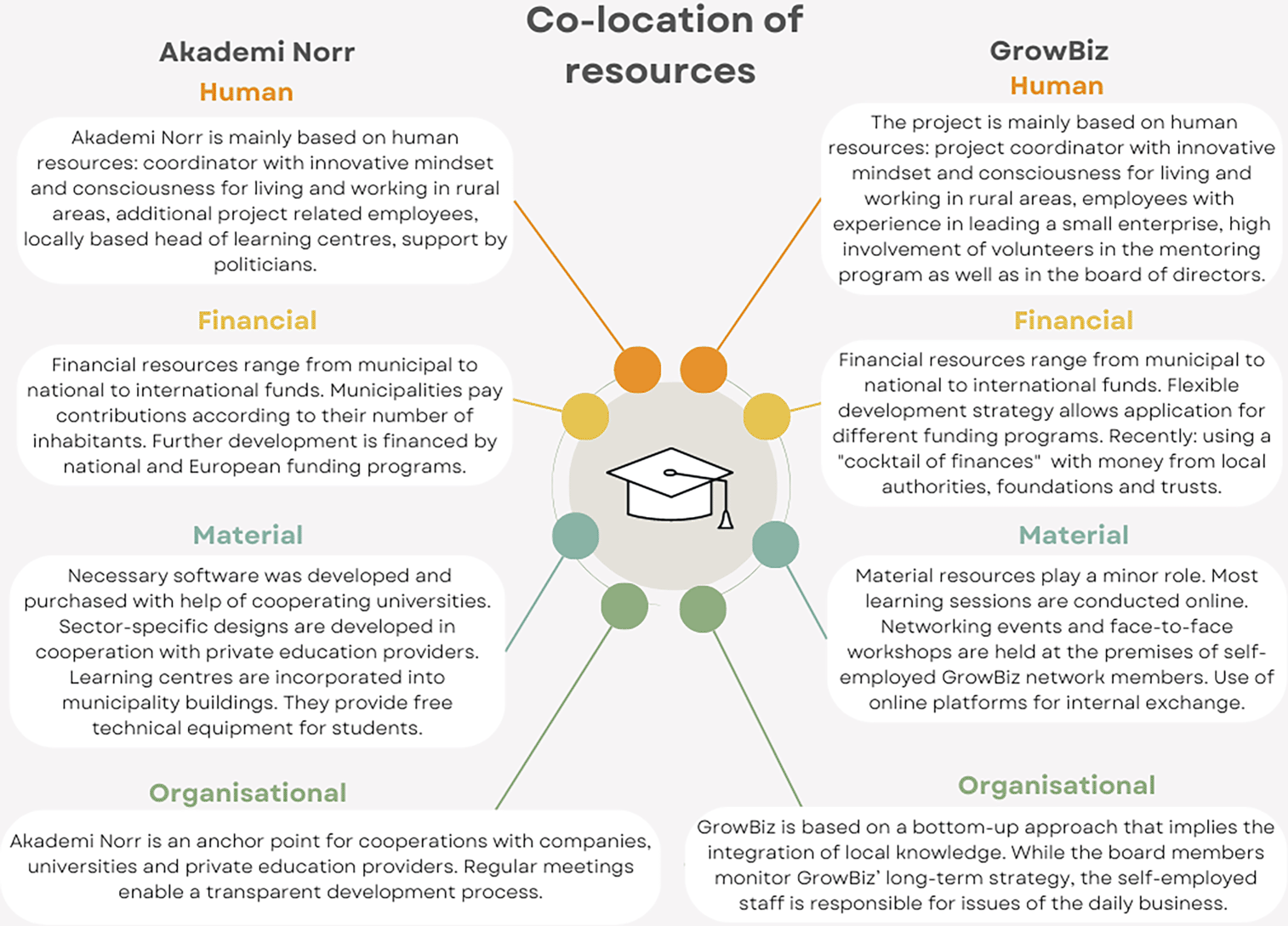
This comparative case study on two post-school education projects in Scotland and Sweden has – in combination with our analytical framework – made it possible to provide a structured understanding of how local actors co-locate local resources in order to provide services of general interest in a rural depopulating context over time.
For both projects, the provision and long-term safeguarding of the human resources studied was of particular importance. Several aspects are at stake here. Central is the role of a professional project leader who identifies strongly with the project’s goals and is committed to its success. Such a leader seems almost indispensable for the management of future administrative processes. Equally important can be the commitment of volunteers, be it as idea generators, project initiators or supporters such as board members. Bottom-up approaches, in particular, rely heavily on the voluntary commitment of people who are willing to get involved and offer their time and knowledge, even over longer periods. In response, volunteers demand recognition and appreciation. Also worth mentioning is the significant role of local and regional politicians, e.g. mayors or local councillors of the participating municipalities, who can act as promoters and ambassadors of a project. The importance of charismatic “leaders” has been shown for many rural networks, although this also implies that there is a risk that they may become too dominant (Mose/Jacuniak-Suda/Fiedler 2014). The use of human resources in education projects is shown to be particularly worthwhile, as in turn new human resources are generated in terms of labour-market-oriented qualifications for rural regions (Hamm/Koschatzky 2020: 35). Through the coordination and facilitation work of Akademi Norr, a new network of municipal business offices, industry organisations and the regions of Västerbotten and Norrbotten has been established, which helps to define the future qualification needs of skilled workers and thus contributes to the establishment of future education programmes. Successfully attracting and retaining skilled workers is often a challenge in rural areas. Constant changes in labour market demands exacerbate this, while also pointing to the increasing importance of lifelong learning opportunities (Tent/Brad/Klöden et al. 2021). The opportunity to learn locally needed skills is seen as equally important (Jonda 2009). At the same time, the provision of higher education and vocational training is regarded as an important factor for regional economic prosperity (Batterbury/Hill 2005: 38–40; Arbo/Benneworth 2007: 15; Kwiek 2012: 78–79). By absorbing external knowledge and bringing it into the region, institutions such as universities can promote local innovation (Peer/Penker 2016). The siting of educational institutions in rural areas is therefore considered a decisive location factor for regional development (Hamm/Koschatzky 2020; Tent/Brad/Klöden et al. 2021).
Equally important is the provision of funding. The analyses of the projects studied show that mixed funding approaches seem to be a common and recommendable practice. Municipalities (as the geographical location of the projects) are usually not in a position to provide funding on a large scale, but rural development programmes at government level can often offer suitable funding opportunities. In addition, European programmes such as LEADER can provide additional funding, even if it is limited in duration. Particular attention should also be paid to new sources of funding, including private sponsorship from companies expressing interest in a particular project. As the GrowBiz project has shown, sponsors themselves were able to benefit from the project’s activities. In the case of Akademi Norr, companies expressly participate with the aim of acquiring new skilled workers. Furthermore, extracurricular education seems to be an area of activity that is recognised and valued because it also benefits the local economy. This is illustrated by the way in which the use of funding can in turn release new financial resources in rural regions. A study on the efficiency of the decentralised University of the Highlands and Islands shows these effects for the Scottish context, revealing that 3,100 staff members and over 38,000 students generate over £ 560 million in gross value added (in 2019) for the region and support over local 6,200 jobs (Biggar Economics 2020: 63). According to calculations, around 86 % of the university’s gross value added remains in the Highlands and Islands, resulting in a multiplier effect of around £ 4 for every £ 1 received (Biggar Economics 2020: 65). Kratz and Lenz (2015) showed in their study in the German context that the value added by universities in rural regions is significantly stronger than in metropolitan regions. Smaller educational initiatives, such as the GrowBiz and Akademi Norr projects studied in this paper, can also have an impact on regional development. The importance of GrowBiz for regional development is also reflected in the proportion of small and medium-sized enterprises in rural areas. This is three times higher in rural areas (36 %) than in the rest of Scotland (13 %) (Scottish Government 2021: 51). In a study by Steiner and Atterton (2014), the contribution of these rural businesses to the resilience of rural communities was also demonstrated. This is also reflected in the close links with the local LEADER region in the case of GrowBiz and the cooperation with Region 10 (regional development association of ten of the 13 municipalities represented; see also IP 6 in Table 1) in the case of the Swedish Akademi Norr.
The use of material resources plays a subordinate role. The provision of infrastructure, such as premises, may be relevant, but experience, especially after the Corona pandemic, has shown that more and more employees are willing to (also) work from home offices, which is especially important in rural regions with long distances and a wide geographical distribution of people. Decentralised, but at the same time digitally and personally networked, rural educational institutions (e.g. the UHI; Mose 2022: 47–48) or the generally advanced use of digital methods in education (Rennie/Greller/Mackay 2002; Rennie 2003) represent exemplary approaches to overcoming traditional educational barriers in peripheral regions.
In terms of organisational resources, cross-border cooperation is crucial for projects with a decentralised character. It will most likely provide a greater pool of experiences and ideas to be shared, and forms of cooperative action will result in greater political visibility and strength. In addition, joint strategies in post-school education can offer the possibility to combine different (financial) resources that would otherwise remain separate and not be taken into account. With the gradual expansion of a project’s geographical catchment area, the possibilities for distance learning must also be expanded. This, however, also requires the thorough exploitation of the possibilities opened up by digitalisation. The provision of digital access is of central importance both for internal project communication and for the expansion of educational cooperation (Dauser/Fischer/Lorenz et al. 2021).
In summary, the two examples from Sweden and Scotland offer valuable insights into how to identify, develop and safeguard various resources that are crucial for successful project initiatives. In terms of transferability, most of the findings seem applicable to the situation in peripheral and less densely populated rural areas with shrinking populations all across Europe.
The findings of our research are of both scientific and political interest since there is general agreement – in research as well as among local and regional development actors – that educational institutions are important for regional development. Several voices stress that these institutions contribute to economic development through training and qualification opportunities (Highlands and Islands Enterprise 2018), and that educational opportunities as well as job prospects are the main motives for (young) adults to leave rural areas and move to urban centres (Boström/Dalin 2018). A 2018 report on young people in the Highlands and Islands showed that more young people want to stay in the region and find improved educational and job conditions. An expert (IP-7) also reported that a lot of young people want to stay in the northern municipalities of Sweden. While young Scots are more positive about the image of the Highlands and Islands (Highlands and Islands Enterprise 2018), young Swedes still feel pressured to justify their decision to stay (Hjort 2023). In other studies, people beyond the age of 30 who are willing to settle in rural regions are referred to as being dependent on further education and retraining offers in order to be able to open up new professional perspectives locally (e.g. IP‑4 and IP-13). Moreover, it is widely acknowledged that institutions such as universities and colleges bring new knowledge to a region and, together with local businesses, can stimulate new innovations (Peer/Penker 2016). Still, post-school education has been highly centralised in many European countries over the past decades, often resulting in highly unequal access to education. In contrast, the decentralised models for post-school education analysed here offer interesting insights into establishing new ways to maintain crucial infrastructure for services of general interest. Against this backdrop, the experiences from Akademi Norr and GrowBiz on how local resources can be co-created by local actors over time to safeguard educational services in a rural depopulating context is of great interest. Our results indicate that the use of human resources in the field of coordination and strategic planning can lead to a breaking down of traditional structures. For the maintenance and redesign of post-school educational opportunities in rural regions, it is therefore advisable to invest some of the limited financial resources in human resources, as this can bring about strong changes towards a more efficient design of organisational structural resources.
The analytical framework employed has helped provide a more structured understanding of how local actors co-locate local resources in order to provide services of general interest. Yet, it should be noted that the framework provided by Syssner and Meijer (2017) stresses that resources must be understood as being relational, contextual and situational. In short, this implies that whether something is regarded a resource – may it be in human, financial, material or organisational terms – is due to the context and the situation. It also implies that resources emerge in relations between actors and in response to specific needs. Accordingly, neither Akademi Norr nor GrowBiz provide a one-size-fits-all solution for how to provide services of general interest in depopulating rural areas. Still, the cases provide valuable examples on how educational institutions can emerge and survive in settings with limited resources.
Given the shrinking societies in Europe, new strategies are needed to maintain services of general interest. Post-school educational opportunities play a central role in this. They train skilled workers locally, offer entrepreneurs personnel prospects for the future and, finally, also contribute to the innovative regional development of the entire region.
Interestingly, it turns out that human resources are particularly important. Ironically, this resource is often rare in sparsely populated regions, however, the projects also show the significance of the strong networking of the project leaders and the close cooperation of the actors. Also striking is the strong identification with the task and the high intrinsic motivation of those involved. It is therefore evident that communication and networking among education actors in particular must be promoted. A high level of appreciation for voluntary commitment must be ensured as the number of inhabitants decreases. A great opportunity for sparsely populated regions is also the increasing decentralisation of the world of work. Thus, the two examples of GrowBiz and Akademi Norr demonstrate that educational personnel can live nationwide and still provide high quality education locally. In conclusion, when establishing education projects, the financial resources available should be invested much more in the promotion of personnel and networking opportunities than in the infrastructure of buildings.
Against the background of shrinking rural regions, the findings from the two case studies are also relevant for the German context. Many communities in structurally weak areas remote from agglomerations have lost up to a fifth of their inhabitants in just over a quarter of a century. Statistical forecasts on the development of the workforce assume that the spatial concentration process affecting the labour force will continue until 2040 under the influence of demographic change (Maretzke/Hoymann/Schlömer et al. 2021).
The case studies analysed here provided valuable information on the implementation of educational projects in settings with limited resources. Subsequent research projects could therefore look in detail at their transferability to Germany (and likewise other countries) to increase understanding further. In this context, it will be of crucial importance to record the available resources in rural communities in Germany and to analyse their distribution based on the foreign case studies, before finally linking them efficiently with each other.
The establishment of education providers can ultimately lead to a turning point in the local quality of life and open up new perspectives for rural areas. Against the backdrop of the demographic forecasts, many regions across Europe will have to use the limited resources in a well-considered way and adopt new approaches to maintaining services of general interest.
References
| Akademi Norr (2022): Akademi Norr. En koordinerad kraftsamling 2020-2022. n.p. |
| Arbo, P.; Benneworth, P. (2007): Understanding the Regional Contribution of Higher Education Institutions: A Literature Review. Paris. = OECD Education Working Papers 9. https://doi.org/10.1787/161208155312 |
| Bathelt, H.; Glückler, J. (2005): Resources in Economic Geography: From Substantive Concepts towards a Relational Perspective. In: Environment and Planning A: Economy and Space 37, 9, 1545–1563. https://doi.org/10.1068/a37109 |
| Batterbury, S.; Hill, S. (2005): Assessing the Impact of Higher Education on Regional Development. Using a Realist Approach for Policy Enhancement. In: Higher Education Management and Policy 16, 3, 35–52. https://doi.org/10.1787/hemp-v16-art22-en |
| Béal, V.; Fol, S.; Miot, Y.; Rousseau, M. (2019): Varieties of Right-Sizing Strategies: Comparing Degrowth Coalitions in French Shrinking Cities. In: Urban Geography 40, 2, 192–214. https://doi.org/10.1080/02723638.2017.1332927 |
| Bernt, M.; Haase, A.; Großmann, K.; Cocks, M.; Couch, C.; Cortese, C.; Krzysztofik, R. (2014): How does(n’t) Urban Shrinkage get onto the Agenda? Experiences from Leipzig, Liverpool, Genoa and Bytom. In: International Journal of Urban and Regional Research 38, 5, 1749–1766. https://doi.org/10.1111/1468-2427.12101 |
| Biggar Economics (2020): Economic Impact Assessment of the University of the Highlands and Islands. A report to the University of the Highlands and Islands. Midlothian. |
| Bontje, M. (2004): Facing the Challenge of Shrinking Cities in East Germany: The Case of Leipzig. In: GeoJournal 61, 1, 13–21. https://doi.org/10.1007/s10708-005-0843-2 |
| Boström, L.; Dalin, R. (2018): Young people’s opinion on rural Sweden. In: International Education Studies 11, 6, 45–58. https://doi.org/10.5539/ies.v11n6p45 |
| Breznitz, S.M.; Lawton Smith, H.; Bagchi-Sen, S. (2022): The Contribution of Students to Regional Economies: Reframing the Regional Innovation Systems Approach. In: Regional Studies 56, 6, 885–891. https://doi.org/10.1080/00343404.2022.2053097 |
| Brodda, Y. (2010): New Regional Development Concepts for Rural Peripheries. Experiences from Three European Case Studies (2001-05). Göttingen. |
| Brown, W.A.; Andersson, F.O.; Jo, S. (2016): Dimensions of Capacity in Nonprofit Human Service Organizations. In: Voluntas: International Journal of Voluntary and Nonprofit Organizations 27, 6, 2889–2912. https://doi.org/10.1007/s11266-015-9633-8 |
| Bryson, J.M.; Ackermann, F.; Eden, C. (2007): Putting the Resource-Based View of Strategy and Distinctive Competencies to Work in Public Organizations. In: Public Administration Review 67, 4, 702–717. https://doi.org/10.1111/j.1540-6210.2007.00754.x |
| Copus, A.; Kahila, P.; Dax, T.; Kovács, K.; Tagai, G.; Weber, R.; Grunfelder, J.; Meredith, D.; Ortega-Reig, M.; Piras, S.; Löfving, L.; Moodie, J.; Fritsch, M.; Ferrandis, A. (2021): European Shrinking Rural Areas: Key Messages for a Refreshed Long-Term Vision. In: Terra. Revista de Desarrollo Local 8, 280–309. https://doi.org/10.7203/terra.8.20366 |
| Dauser, D.; Fischer, A.; Lorenz, S.; Schley, T. (2021): Digital und regional vernetzt – Ansätze zur Optimierung der Lernortkooperation in der beruflichen Bildung. Ein Leitfaden zum Online-Selbstcheck. Bielefeld. https://doi.org/10.3278/9783763970032 |
| Dib, C.Z. (1988): Formal, non-formal and informal education: concepts/applicability. In: AIP Conference Proceedings 173, 1, 300–315. https://doi.org/10.1063/1.37526 |
| European Commission (2011): Communication from the Commission to the European Parliament, the Council, the European Economic and Social Committee and the Committee of the Regions: A Quality Framework for Services of General Interest in Europe. COM(2011) 900 final. Brussels. |
| European Commission (2018): The 2018 Ageing Report: Economic & Budgetary Projections for the 28 EU Member States (2016-2070). Brussels. https://doi.org/10.2765/615631 |
| European Commission (2020): European Commission adopted Report on the Impact of Demographic Change in Europe. Brussels. |
| Gareis, P.; Diller, C. (2020): Räumliche Aspekte der Studierendenmobilität. Stand der Forschung, eigene regionalstatistische Untersuchungen und die These vom „Bologna-Drain“ und möglichen Auswirkungen auf eine nachhaltige Hochschul- und Regionalentwicklung. In: Postlep, R.-D; Blume, L; Hülz, M. (eds.): Hochschulen und ihr Beitrag für eine nachhaltige Regionalentwicklung. Hannover, 260–286. = Forschungsberichte der ARL 11. |
| Hamm, R.; Koschatzky, K. (2020): Kanäle, Determinanten und Hemmnisse des regionalen Transfers aus Hochschulen. In: Postlep, R.-D; Blume, L; Hülz, M. (eds.): Hochschulen und ihr Beitrag für eine nachhaltige Regionalentwicklung. Hannover, 24–75. = Forschungsberichte der ARL 11. |
| Highlands and Islands Enterprise (2018): Enabling our next generation. Young people and the Highlands and Islands. Maximising opportunities. Inverness. |
| Hjort, E. (2023): Marginalisation through the eyes of the othered: Young adults choosing to live in rural Northern Sweden. In: Journal of Rural Studies 97, 601–609. https://doi.org/10.1016/j.jrurstud.2023.01.011 |
| Hospers, G.-J. (2014): Policy Responses to Urban Shrinkage: From Growth Thinking to Civic Engagement. In: European Planning Studies 22, 7, 1507–1523. https://doi.org/10.1080/09654313.2013.793655 |
| Jonda, B. (2009): Wenn man gegen den Strom schwimmt und auf Kultur und Weiterbildung setzt. In: Neu, C. (ed.): Daseinsvorsorge. Eine gesellschaftswissenschaftliche Annäherung. Wiesbaden, 186–205. https://doi.org/10.1007/978-3-531-91876-1_11 |
| Kratz, F.; Lenz, T. (2015): Regional-ökonomische Effekte von Hochschulabsolventen. In: Beiträge zur Hochschulforschung 37, 2, 8–27. |
| Küpper, P.; Milbert, A. (2020): Typen ländlicher Räume in Deutschland. In: Krajewski, C; Wiegand, C.-C. (eds.): Land in Sicht. Ländliche Räume in Deutschland zwischen Prosperität und Peripherisierung. Bonn, 82–97. |
| Kwiek, M. (2012): Universities, Regional Development and Economic Competitiveness: The Polish Case. In: Pinheiro, R.; Benneworth, P.; Jones, G.A. (eds.): Universities and Regional Development: A Critical Assessment of Tensions and Contradictions. New York, 69–85. |
| Landman, T. (2008): Issues and Methods in Comparative Politics. London. https://doi.org/10.4324/9780203929780 |
| Lang, T. (2012): Shrinkage, Metropolization and Peripheralization in East Germany. In: European Planning Studies 20, 10, 1747–1754. https://doi.org/10.1080/09654313.2012.713336 |
| Lang, T.; Haunstein, S. (2017): Wachsende Regionale Polarisierung in Europa. In: Nationalatlas aktuell vom 27. September 2017. |
| Maretzke, S.; Hoymann, J.; Schlömer, C.; Stelzer, A. (2021): Raumordnungsprognose 2040. Bonn. = BBSR-Analysen kompakt 04/2021. |
| Martinez-Fernandez, C.; Audirac, I.; Fol, S.; Cunningham-Sabot, E. (2012): Shrinking Cities: Urban Challenges of Globalization. In: International Journal of Urban and Regional Research 36, 2, 213–225. https://doi.org/10.1111/j.1468-2427.2011.01092.x |
| Mose, I. (2018): Ländliche Räume. In: ARL – Akademie für Raumforschung und Landesplanung (ed.): Handwörterbuch der Stadt- und Raumentwicklung. Hannover, 1323–1334. |
| Mose, I. (2022): Die schottischen Highlands and Islands. Wandlungsprozesse einer ländlichen Peripherie. In: Geographische Rundschau 74, 6, 44–49. |
| Mose, I.; Jacuniak-Suda, M.; Fiedler, G. (2014): Regional Governance-Stile in Europa. Eine vergleichende Analyse von Steuerungsstilen ausgewählter LEADER-Netzwerke in Extremadura (Spanien), Warmińsko-Mazurskie (Polen) und Western Isles (Schottland). In: Raumforschung und Raumordnung 72, 1, 3–20. https://doi.org/10.1007/s13147-013-0268-1 |
| Pee, L.G.; Kankanhalli, A. (2016): Interactions Among Factors Influencing Knowledge Management in Public-Sector Organizations: A Resource-Based View. In: Government Information Quarterly 33, 1, 188–199. https://doi.org/10.1016/j.giq.2015.06.002 |
| Peer, V.; Penker, M. (2016): Higher Education Institutions and Regional Development. A Meta-Analysis. In: International Regional Science Review 39, 2, 228–253. https://doi.org/10.1177/0160017614531145 |
| Peters, B.G. (1998): Comparative Politics. Theory and Methods. London. https://doi.org/10.1007/978-1-349-26926-6 |
| Postlep, R.-D.; Blume, L.; Hülz, M. (eds.) (2020): Hochschulen und ihr Beitrag für eine nachhaltige Regionalentwicklung. Hannover. = Forschungsberichte der ARL 11. |
| Rennie, F. (2003): The use of flexible learning resources for geographically distributed rural students. In: Distance Education 24, 1, 25–39. https://doi.org/10.1080/01587910303052 |
| Rennie, F.W.; Greller, W.; Mackay, M. (2002): Review of International Best Practice in Service Delivery to Remote and Rural Areas. Edinburgh. |
| Sartori, G. (1991): Comparing and Miscomparing. In: Journal of Theoretical Politics 3, 3, 243–257. https://doi.org/10.1177/0951692891003003001 |
| Schatz, L. (2017): Going for Growth and Managing Decline: The Complex Mix of Planning Strategies in Broken Hill, NSW, Australia. In: Town Planning Review 88, 1, 43–57. https://doi.org/10.3828/tpr.2017.5 |
| Scottish Government (2021): Rural Scotland Key Facts 2021. Edinburgh. |
| Scottish Government (2022): Integrated, place based business support pilot: Evaluation. Edinburgh. |
| Sirolli, E. (2012): How to Start a Business & Ignite Your Life: A Simple Guide to Combining Business Wisdom with Passion. New York. |
| Sousa, S.; Pinho, P. (2015): Planning for Shrinkage: Paradox or Paradigm. In: European Planning Studies 23, 1, 12–32. https://doi.org/10.1080/09654313.2013.820082 |
| Statistiska centralbyran (2021): Den Framtida Befolkningen i Sveriges Län Och Kommuner 2021-2040. Demografiska rapporter 2021. Örebro. |
| Steiner, A.; Atterton, J. (2014): The contribution of rural businesses to community resilience. In: Local Economy 29, 3, 228–244. https://doi.org/10.1177/0269094214528853 |
| Syssner, J. (2006): What Kind of Regionalism? Regionalism and region building in Northern European peripheries. Frankfurt am Main. |
| Syssner, J. (2020): Pathways to Demographic Adaptation. Perspectives on Policy and Planning in Depopulating Areas in Northern Europe. Cham. https://doi.org/10.1007/978-3-030-34046-9 |
| Syssner, J. (2022). What can geographers do for shrinking geographies? In: Fennia – International Journal of Geography 200, 2, 98–119. https://doi.org/10.11143/fennia.120536 |
| Syssner, J.; Meijer, M. (2017): Informal Planning in Depopulating Rural Areas. In: European Countryside 9, 3, 458–472. https://doi.org/10.1515/euco-2017-0027 |
| Syssner, J.; Siebert, C. (2020): Local Governments and the Communication of Demographic Decline in Sweden and Germany: Who, What and Why? In: Journal of Depopulation and Rural Development Studies 29, 79–105. https://doi.org/10.4422/ager.2020.01 |
| Tent, N.; Brad, A.; Klöden, J.; Adam Hernández, A.; Bannert, J.; Gebauer, A. (2021): A Review of the Challenges and Strategies of Delivering Services of General Interest in European Rural Areas. In: Europa XXI 41, 77–105. https://doi.org/10.7163/Eu21.2021.41.4 |
| Wiechmann, T.; Pallagst, K.M. (2012): Urban Shrinkage in Germany and the USA: A Comparison of Transformation Patterns and Local Strategies. In: International Journal of Urban and Regional Research 36, 2, 261–280. https://doi.org/10.1111/j.1468-2427.2011.01095.x |
Footnotes
| 1 | https://www.nrscotland.gov.uk/statistics-and-data/statistics/statistics-by-theme/population/population-projections/sub-national-population-projections/2018-based (26.07.2023). |
| 2 | The InDaLE project (Innovative Ansätze der Daseinsvorsorge in ländlichen Räumen – Lernen von Erfahrungen anderer europäischer Länder für Deutschland) (2020-2022), funded by the Federal Ministry for Food and Agriculture in Germany, sought to understand the factors that favour the long-term establishment of innovative projects for services of general interest in rural areas; see https://www.indale.org/de/ (27.07.2023). |