
Cities are growing rapidly, thus urban policy faces the challenges of urban transformation and enabling social welfare and justice (Hovik/Giannoumis 2022: 2). Since a major part of the world’s population lives in cities, an important role is played by local and urban governance (Silva 2020: 2), which has witnessed a collaborative and participatory turn in recent decades (Dean 2018: 180). Citizen participation as the involvement and engagement of citizens in decision-making processes has been key in the context of sustainable planning and lifestyles since the 1970s (Amado/Santos/Moura et al. 2010: 102; Meschede 2020: 201; Turken/Eyuboglu 2021: 173). Citizens are most influenced by the urban environment and should be strongly integrated in the governance process (Bastos/Fernández-Caballero/Pereira et al. 2022: 14; Legard/Hovik 2022: 168). Collaborative and cooperative planning thus relies on citizen participation to enable innovative solutions for shaping cities (Lahode/Schaumann 2022: 292). Overall, citizen participation formats can lead to greater transparency of planning processes for the public as well as better decision- and policy-making by local politics and administration (Caddy 2005: 126; Meschede 2020: 202).
Against this background and in view of the relevance of the various levels of governance in Germany, local participatory governance plays a central role in the German planning system (Walk 2008: 45). Yet, participatory planning processes are flawed in practice and associated with various problems including a lack of interest and trust, inequalities, selectivity and participation barriers for underrepresented groups (Evans-Cowley/Hollander 2010: 397; Morais 2022: 5; Akmentina 2023). Due to the criticism of analogue citizen participation, the use of digital technologies to improve digital participation in planning processes is a key step towards greater citizen empowerment (Silva 2020: 7). Digital participation processes have the potential to be cheaper and more efficient and can lower barriers to participation as they are easier to access (Kubicek/Aichholzer 2016: 16). In Germany, digital participation is booming, especially since public resistance against Stuttgart 211 (Martini/Fritzsche 2015: 123) and most recently due to social distancing during the Covid-19 pandemic (Hovik/Giannoumis 2022: 1). Despite the practical relevance of such approaches, there is a strong fragmentation of topic-related empirical studies (Kubicek/Aichholzer 2016: 11; Freschi/Rony/Norbjerg 2009: 65).
| – | How is the digital participation landscape in Germany shaped regarding the areas of application, the use of methods and the spatial distribution? |
| – | How do socio-economic and demographic characteristics of German districts impact the application of digital and multi-channel participation processes? |
The paper is structured as follows. In the first section, we present the evolution of participation in the context of urban and regional governance, the legal framework and the existing challenges. On this basis, we discuss the digitalisation of citizen participation, its chances and associated risks. In the empirical part of the paper, we first provide an overview of the research design and the data before we present the status quo of digital participation in Germany, its spatial distribution patterns and determinants in the findings section. Finally, we conclude with a discussion and summary.
First, we briefly define the concept of citizen participation. According to Hovik and Giannoumis (2022: 3), citizen participation in general refers to “voluntary contributions or involvement of citizens in public decision-making”, although they do not address the governance levels of participation. In the context of Germany, however, the various federal, state, regional and local levels of governance in the planning system, with the central significance of the local level, must be taken into account. Jiang, Geertman and Witte (2019: 249) refer to the local level by describing participatory planning as raising awareness for local challenges and the involvement of citizens in local decision-making processes. At the urban level, Morais (2022: 3) addresses the dimensions of participation as institutionalised and non-institutionalised participation. Institutionalised participation processes are organised top-down, such as citizen assemblies, while non-institutionalised participation describes rather bottom-up protests and events.
In this paper, we understand citizen participation as the involvement and engagement of citizens in planning and decision-making processes at different governance levels. Since the 1980s, hierarchical administrative structures of governments have increasingly evolved into agile forms of governance networks to accommodate the collective needs of the local population (Taylor 2012: 15; Silva 2020: 2). This evolution is also referred to as participatory governance within the collaborative or participatory turn (Dean 2018: 180). In Germany, this participatory governance was fostered at the local level in the 1990s through the introduction of direct elections, direct-democratic elements such as referendums, and deliberative democracy in the form of local agenda processes (Walk 2008: 21).
Participation has multiple functions and effects for cities and regions and their citizens. Silva (2020: 2) describes citizen participation as a process that improves the results of planning, reduces costs, increases transparency and builds trust. Citizens are directly affected by the developments in their city and can therefore provide specific suggestions for their environment (Bastos/Fernández-Caballero/Pereira et al. 2022: 14; Lahode/Schaumann 2022: 292). Thus, participation enables an openness to new ideas and perspectives. A kind of intermediary arena between political power and civil society emerges (Meschede 2020: 201; Sierra/Ott 2022: 45). Thus, an active commitment arises, giving the population a sense of empowerment (Kang 2014: 412). Transformative and collective ideas need to emerge for cities to address urban issues, as highlighted during the Covid-19 pandemic (Morais 2022: 1). Participation enables citizens to value the resources used in planning processes and thus new sustainable activities and planning processes can emerge (Amado/Santos/Moura et al. 2010: 102). In this way, cities and regions can take new paths towards sustainable transformation through new participatory planning processes (Amado/Santos/Moura et al. 2010: 107).
The relevance of participation and cooperative policy-making has been recognised globally and discussed through conferences and agreements (i.e. Local Agenda, Sustainable Development Goals) since the 1970s (Turken/Eyuboglu 2021: 173). In Germany, the Federal Building Code (Baugesetzbuch) currently contains guidelines for the implementation of formal participation in planning processes. These include meetings, public displays and written comments. Informal participation, such as future workshops, is not legally regulated, but can be implemented in addition to formal participation in planning (Kaczorowski 2014: 87). Nevertheless, in order to strengthen various forms of participation, the state and federal ministries have published a growing number of handbooks on institutionalisation in recent years (Sippel 2015: 32).
Over time, participation has been further enhanced by various innovations. However, challenges remain in practice. Unequal distribution of power in face-to-face participation is a central problem. Participation is often only one-way and is used to inform and legitimise finalised decisions (Evans-Cowley/Hollander 2010: 399). Moreover, it is challenging for the administration to integrate disadvantaged and less articulate population groups into the process (Ertiö 2015: 303). Citizens are thus excluded from the actual decision-making and are ascribed a spectator role (Nyseth/Ringholm/Agger 2019: 14; Carvajal Bermúdez 2022: 160). The will for more transparent and constant communication is growing (Fathejalali/Jain 2019: 217). In contrast, a lack of interest in participation and trust in politics and the administration is evident among citizens (Akmentina 2023).
Fiscal crises and the associated limited governmental resources lead to a decline in citizen participation and deficits in the implementation of participation results on a local level in Germany (Holtkamp/Bathge 2012: 47). Furthermore, the results of participation are not adequately embedded in planning and thus do not directly influence the process (Morais 2022: 23–24). In addition, the intensity of participation is usually insufficient. In planning processes, the focus is mainly on providing information or allowing citizens to identify urban deficits, while the active involvement of citizens in the process is not a priority (Bastos/Fernández-Caballero/Pereira et al. 2022: 10). In this context, already in 1969, Arnstein identified different levels of participation with her “Ladder of Citizen Participation”, while criticising that only a minor part of participation is designed to actively involve citizens in the decision-making process and there is no guarantee that their opinions are taken into account (Arnstein 1969).
In light of the shortcomings of conventional participation described above, new forms of participation have developed in recent years through digitalisation. In the past two decades, the spread of information and communication technologies (ICT) and the development of new media have led to new collective narratives and public discourses in cities (Graziano 2020: 582) and a transformation of the process for developing urban spaces (Turken/Eyuboglu 2021: 171). The information and consultation process has been diversified through the introduction of digital participation. Digital participation (or e‑participation) involves the use of digital tools for the implementation of citizen participation, mediated by information and communication technologies and primarily the internet (Al-Dalou/Abu-Shanab 2013: 1; Hovik/Giannoumis 2022: 3). Macintosh (2004: 3) defines three levels of e‑participation: e‑enabling describes the provision of information such as websites or newsletters; e‑engaging refers to consultation via surveys, discussion forums and the like; and e‑empowering means the active participation of the population in order to influence planning by, for example, e‑petitions (Mandarano/Meenar 2015: 462; Martini/Fritzsche 2015: 125). This connects to Arnstein’s (1969) ladder of participation.
Meanwhile, digital participation is constantly evolving through new technologies and faster and cheaper data availability (Antoniou/Potsiou 2021: 38; Turken/Eyuboglu 2021: 169; Akmentina 2023). The use of social media by public administrations is a growing trend (Sobaci 2016: 3). Access to high-speed internet is a prerequisite. Hence, especially in highly developed countries with widespread high-speed internet and modern public administrations, digital participation and e‑government are developing rapidly (Donders/Hartmann/Kokx 2014: 58). Nevertheless, digital citizen participation has so far been used less commonly than assumed (Lebezova/Ovcharenko 2022: 79). In Germany, the demand for digital participation tools was accentuated by Stuttgart 21 and the restrictions on physical contacts during the Covid-19 pandemic. Here, the local level in particular serves as a field of experimentation (Martini/Fritzsche 2015: 123; Hovik/Giannoumis 2022: 1). Wiktorska-Swiecka (2023: 226) observes for Berlin that the pandemic developed a window of opportunity to rethink participatory formats and enabled a transformation towards new participatory governance as the “new normal”, also by means of information and communication technologies. Hanninger (2023: 99) finds that Covid-19 was a kind of “digitalisation catalyst” for some Bavarian municipalities.
In the future, digital participation processes will continue to evolve and be increasingly used. The support of and combinations with analogue formats takes centre stage (Turken/Eyuboglu 2021: 179), with digital participation viewed as a complement rather than a substitute (Freschi/Rony/Norbjerg 2009: 64). Combinations of digital and analogue formats are known as blended, hybrid or multi-channel participation and are commonly employed in planning practice, both in the development of comprehensive planning processes and in the capacity building of citizens (Akmentina 2023).
Digital participation offers many advantages over traditional participation. Cheaper and more efficient methods and platforms can be used, thus saving time and costs for governments and administrations (Kubicek/Aichholzer 2016: 16; Sobaci 2016: 11). Moreover, new forms of participation through interactive methods on the internet can potentially address and activate new population groups that are otherwise reluctant to participate, such as young people (Nyseth/Ringholm/Agger 2019: 14). It can also overcome barriers to participation, as digital approaches are more flexible and easier to access (Kubicek/Aichholzer 2016: 16). Due to time-space independencies, more people can be reached (Martini/Fritzsche 2015: 124; Turken/Eyuboglu 2021: 169; Lahode/Schaumann 2022: 291). In this way, citizens are better integrated in political decision-making processes because they are also better connected to politics, and information and communication technologies enable a better understanding of the processes (Al-Dalou/Abu-Shanab 2013: 1). The inclusivity of planning processes can thus be increased and previously excluded population groups can be mobilised (Legard/Hovik 2022: 169). Overall, digital participation can promote social cohesion (Damurski 2012: 40). In addition, more diverse forms of feedback opportunities and data have emerged, including public geoinformation systems (Akmentina 2023). With visual tools, language is not a general barrier (Evans-Cowley/Hollander 2010: 400). New possibilities such as gamification enable a playful engagement with planning topics and urban problems and increase motivation to participate (Muehlhaus/Eghtebas/Seifert et al. 2023: 345). Moreover, digital technologies are increasingly being used to optimise participation in urban design (Turken/Eyuboglu 2021: 179). So-called digital co-design or co-creation is characterised by design concepts being created by non-experts through gaming setups and virtual reality, with support from experts and planners. One example of a holistic digital co-design system is U_CODE (Stelzle/Naumann/Holmer et al. 2020: 85). This creates a larger knowledge base by crowdsourcing local knowledge, ideas and the creativity of citizens or non-experts, allowing urban design to become an iterative, agile process (Münster/Georgi/Heijne et al. 2017: 2396–2397). Mobile apps allow constant participation over a long duration, thus covering an entire decision-making process (Fathejalali/Jain 2019: 216).
In contrast, digital participation is also associated with various new challenges that cannot be solved and that do not affect analogue participation. Research findings indicate that citizens who already engage in participation are more likely to use digital participation offerings (Carvajal Bermúdez 2022: 162). A study by Legard and Hovik (2022: 178) shows that while the age and gender of participants represent the entire population well, people with low income and education levels and a migration background are underrepresented. In addition, the problem of the digital divide has to be mentioned on several levels. Firstly, cities and regions must have sufficient broadband internet available for implementation (Sobaci 2016: 13). Accordingly, the synergy of citizen participation and digitalisation is limited in rural areas, as a lack of internet connectivity is an obstacle in these regions (Stein/Pentzold/Peter et al. 2022: 259). Secondly, users rely on sufficient internet access. This can create a division between population groups with internet access and those without (Evans-Cowley/Hollander 2010: 406; Donders/Hartmann/Kokx 2014: 58). Disparities can be assumed regarding age and other social, cultural and financial conditions. A lack of political interest among citizens also has a negative impact on the use of digital participation, meaning that the “democratic divide” does not dissolve and may even intensify (Brake 2008: 65). In addition, digital participation is associated not only with cost-efficiencies but also with a high level of effort. Establishing the platforms is time-consuming and costly (Turken/Eyuboglu 2021: 177). Besides time resources, human resources also flow into digital participation, especially with initial costs. Specific staff must be hired or trained for this purpose (Sobaci 2016: 13–14). Therefore, digital participation is potentially a problem for municipalities and districts with limited financial and human resources. A key social and political hurdle to the implementation of digital participation in Germany is scepticism towards the digitisation strategies of local governments due to concerns and fears about privacy and digital automation; this requires solutions such as educational work (Wirtz/Kubin 2021: 289–290). Great care is also needed to ensure security and privacy in digital participation processes (Antoniou/Potsiou 2021: 42), and to prevent fake news, cyber-attacks and discrimination (Sobaci 2016: 14).
More research is needed to understand how technological developments and digitalisation in cities affect organisational structures and citizens (Mello Rose 2022: 21) and what the contextual factors are where citizens participate digitally (Hovik/Giannoumis 2022: 4). Furthermore, barriers to the use of digital participation on the user and supplier sides are rarely considered in research. Kubicek and Aichholzer (2016: 11) identify a twofold evaluation gap of missing success criteria and comparable empirical studies. In addition to the local level, other levels such as the regional level should also be considered. Here, transdisciplinary, empirical research projects can bring new insights (Freschi/Rony/Norbjerg 2009: 66).
In order to describe the digital participation landscape in Germany and to analyse the determinants for the implementation of digital participation, we applied both data-exploring and hypothesis-testing quantitative analyses. In a first step, the aim was to collect data on digital participation processes at different governance levels in order to examine participatory elements at different scales and to address the German planning system accordingly. For this purpose, we consulted the websites of all federal states, regional planning authorities, districts and administratively independent cities or those with over 5,000 inhabitants to assess whether and, if so, which and how many, digital participation processes have been offered by the respective administrative bodies. The basis of the study therefore comprised 2,437 cases (16 federal states, 69 regional planning authorities, 294 districts and 2,058 cities). In this paper, we focus on the processes in districts and cities in order to examine local types of digital participation in the context of spatial planning and development. We utilised the websites of the urban and district administrations as a database, as they are an important source of information regarding policy priorities and the services provided (Neumann/Linder/Desmarais 2022). We assume that relevant information must be freely and easily accessible for citizens via the websites. Citizens are able to access information or to directly participate online. Accordingly, we use the free availability of information through an internet search to study digital participation.
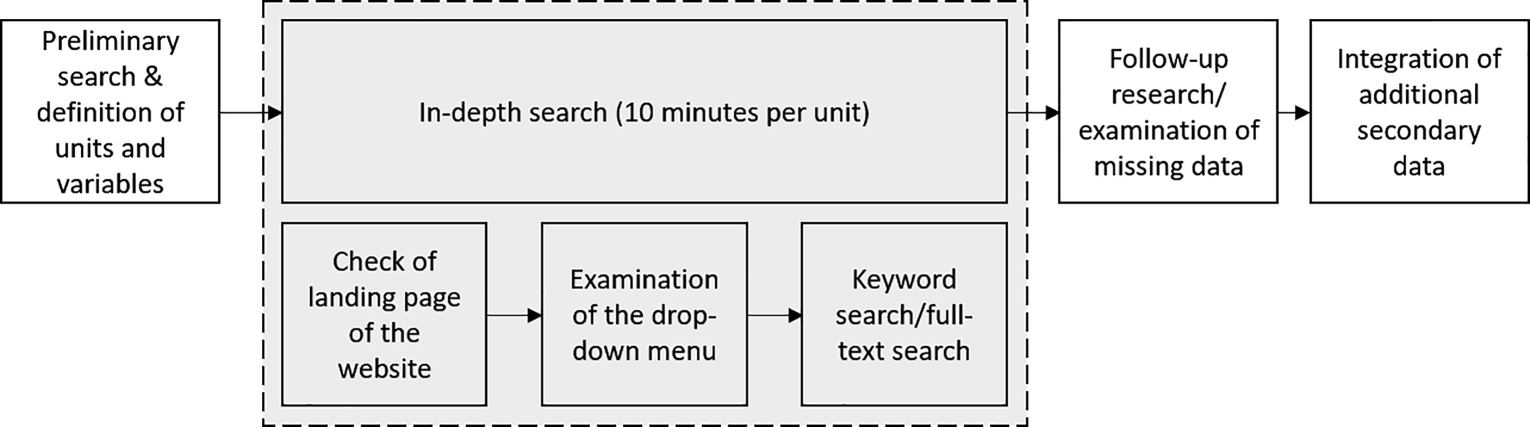
The research was divided into a preliminary search, in-depth research of the processes by means of the websites of the respective administrations, and follow-up research and examination of missing data between June and September 2022. In order to ensure consistent data collection across all investigated units, we defined a standardised procedure with a limited in-depth research period of 10 minutes per unit. In a first step, we checked the landing page of the administration’s website for ongoing participation processes. In a second step, we examined the drop-down menu of the website for relevant topics, such as participation or urban development. In a third central step, research focused on keywords like (digital/online) (citizen) participation, workshop, information event, assembly, survey, reporting of shortcomings and other methods in the German language. We also examined external participation portals. The federal states are predominantly responsible for these portals and publish the various participation processes of different administration levels. After the follow-up, we collected the results in a dataset to determine duration, affected area, planning field, stage in the planning process, participants, methods used, participation intensity, channel, contact person and URL. By categorising the planning area, we wanted to examine whether specific sectoral planning or administrative units are affected (transport, environment, integration, digitalisation, finance, tourism, sport and culture, economy, education), whether participation takes place within integrated concepts (e.g. urban development concepts), or whether the reconstruction or new construction of specific areas is addressed (urban planning), which also includes formal land-use planning processes. In addition, the classification by variables helped to analyse which stakeholder groups were specifically involved (participants). By using the variables ‘stage in the planning process’ and ‘methods’, we were able to examine the intensity of participation (whether only information is provided, whether citizens are consulted in processes or whether they can actively influence the process).
Besides the descriptive analysis of the content and spatial distribution of digital participation processes, we investigated determinants of the number of processes per 100,000 inhabitants, and the participation density in the districts and administratively independent cities (cities that by definition do not belong to a district and act independently). The analysis of cities is limited to a descriptive presentation, as data for a regression at this level are not comprehensively available, which would limit the satisfactory explanatory power of the models. We derived the following hypotheses from the conceptual framework of this paper:
This first hypothesis refers to the problem of the digital divide, which addresses the crucial factor of sufficient broadband access for digital participation (Sobaci 2016: 13). This depends on both regional location (Stein/Pentzold/Peter et al. 2022: 260) and individual internet access (Evans-Cowley/Hollander 2010: 406).
While digital participation is discussed as a more cost-efficient method on the one hand (Kubicek/Aichholzer 2016: 6), on the other hand the implementation of digital participation processes is associated with considerable effort and especially high initial costs (Sobaci 2016: 13–14; Turken/Eyuboglu 2021: 177). Since public financial problems can be considered a negative determinant for participation in general (Holtkamp/Bathge 2012: 47) and specifically for digital participation, this is tested for districts with Hypothesis 2.
Hypothesis 3 addresses the democratic divide and solutions due to digital participation. Since citizens with a generally low level of political interest participate less in spatial planning and development (Brake 2008: 65), new digital interaction and presentation tools create the potential to better involve less active citizens (Nyseth/Ringholm/Agger 2019: 14), which could motivate those responsible to offer more digital participation.
While Legard and Hovik (2022: 178) showed that low-income, less educated and migrant populations are underrepresented in digital as well as in traditional participation, the assumption is that new ways of participation through interactive forms and opportunities of providing information via the internet can reach and activate citizens who have not participated before (Nyseth/Ringholm/Agger 2019: 14). Accordingly, with Hypothesis 4 we aim to test whether digital participation has the motivation and potential to reduce social selectivity.
Name | Area | Description | n | Min | Max | Mean | Std. dev. |
|---|---|---|---|---|---|---|---|
Dependent variable | |||||||
Digipart | Number of digital participation processes per 100,000 inhabitants | 399 | 0.00 | 24.80 | 2.2316 | 2.74396 | |
Independent variables | |||||||
Foreign | Population | Share of population without German citizenship in %a | 399 | 2.1 | 36.6 | 10.827 | 5.3979 |
Migration | Population | Total net migration per 1,000 inhabitantsa | 399 | -6.3 | 17.8 | 4.664 | 3.2766 |
Graduates_ high school | Education | Share of school leavers with higher education entrance qualification in %a | 399 | 0.0 | 67.5 | 33.730 | 10.6108 |
Leavers_ without_qual | Education | Share of school leavers without lower secondary school qualification in %a | 399 | 1.2 | 14.4 | 6.202 | 2.5037 |
Stud | Education | Number of students at universities per 1,000 inhabitantsa | 399 | 0.0 | 379.6 | 28.723 | 52.2335 |
Employ | Economy | Employees subject to social insurance at place of residence per 100 working-age inhabitants in %a | 399 | 45.0 | 71.3 | 62.238 | 4.3615 |
Unemploy | Economy | Share of unemployed among civilian labour force in %a | 399 | 1.4 | 16.4 | 5.170 | 2.7434 |
GDP | Economy | Gross domestic product in € 1,000 per inhabitanta | 399 | 16.6 | 188.3 | 38.569 | 16.9886 |
Pub_dept | Finance | Public debt in € per inhabitanta | 399 | 0.0 | 9808 | 1487.1 | 1447.541 |
Highspeed_int | Digitisation | Share of households with broadband coverage at 50 Mbit/s in %a | 399 | 36.8 | 100 | 86.159 | 11.4498 |
Turnout | Politics | Share of all votes (valid and invalid) among eligible voters in % (federal elections 2021)c | 399 | 63.4 | 85.5 | 76.281 | 4.0001 |
Controls | |||||||
Pop_dens | Location | Inhabitants per km2a | 399 | 35.6 | 4777 | 540.87 | 716.3469 |
Dummy_loc | Location | Spatial location type according to BBSR (1 very central, 2 central, 3 peripheral)b | 399 | ||||
Ave_age | Population | Average age of the population in yearsa | 399 | 40.4 | 50.8 | 44.827 | 1.9549 |
Dev_funding | Finance | Proposed federal subsidies for urban development in € per inhabitanta | 399 | 3.1 | 716.6 | 133.57 | 105.9465 |
Women_council | Politics | Share of women with seats in district councils in %a | 399 | 8.7 | 60.0 | 28.513 | 8.0690 |
Vote_CDU/CSU | Politics | Share of votes for CDU/CSU in % (federal election 2021)c | 399 | 11.8 | 39.2 | 25.015 | 6.3740 |
Vote_SPD | Politics | Share of votes for SPD in % (federal election 2021)c | 399 | 12.7 | 43.4 | 25.673 | 6.4942 |
Vote_green | Politics | Share of votes for Bündnis 90/The Greens in % (federal election 2021)c | 399 | 0.0 | 36.0 | 12.835 | 5.8888 |
Vote_AfD | Politics | Share of votes for AfD in % (federal election 2021)c | 399 | 2.9 | 32.5 | 11.345 | 5.8960 |
Vote_FDP | Politics | Share of votes for FDP in % (federal election 2021)c | 399 | 6.7 | 18.9 | 11.089 | 2.2369 |
Vote_left | Politics | Share of votes for DIE LINKE in % (federal election 2021)c | 399 | 1.6 | 15.6 | 4.602 | 2.9527 |
A central question is how the availability of appropriate internet affects digital participation; hence, we included the variable Highspeed_int based on H1. To test whether public debt has a negative impact on the use of digital participation (H2), we integrated Pub_dept. In addition, the variable Turnout is included to account for the influence of political interest (H3). Leavers_without_qual, Graduates_highschool, Stud, i.e. the shares of educational levels in the population are found in the model to test digital participation for social selectivity in H4, as well as the variables Foreign, Migration, Employ, Unemploy and GDP. In addition, we add several control variables to better represent the districts in addition to the variables for testing the hypotheses, and to increase the significance of the model. Due to the variables of the vote shares of the different political parties and in order to test the robustness of the analysis, we conducted six models with one party in each model, keeping the other variables constant. We present the results and discussion of the models in the following section to give an overview of the determinants of digital citizen participation at district level.
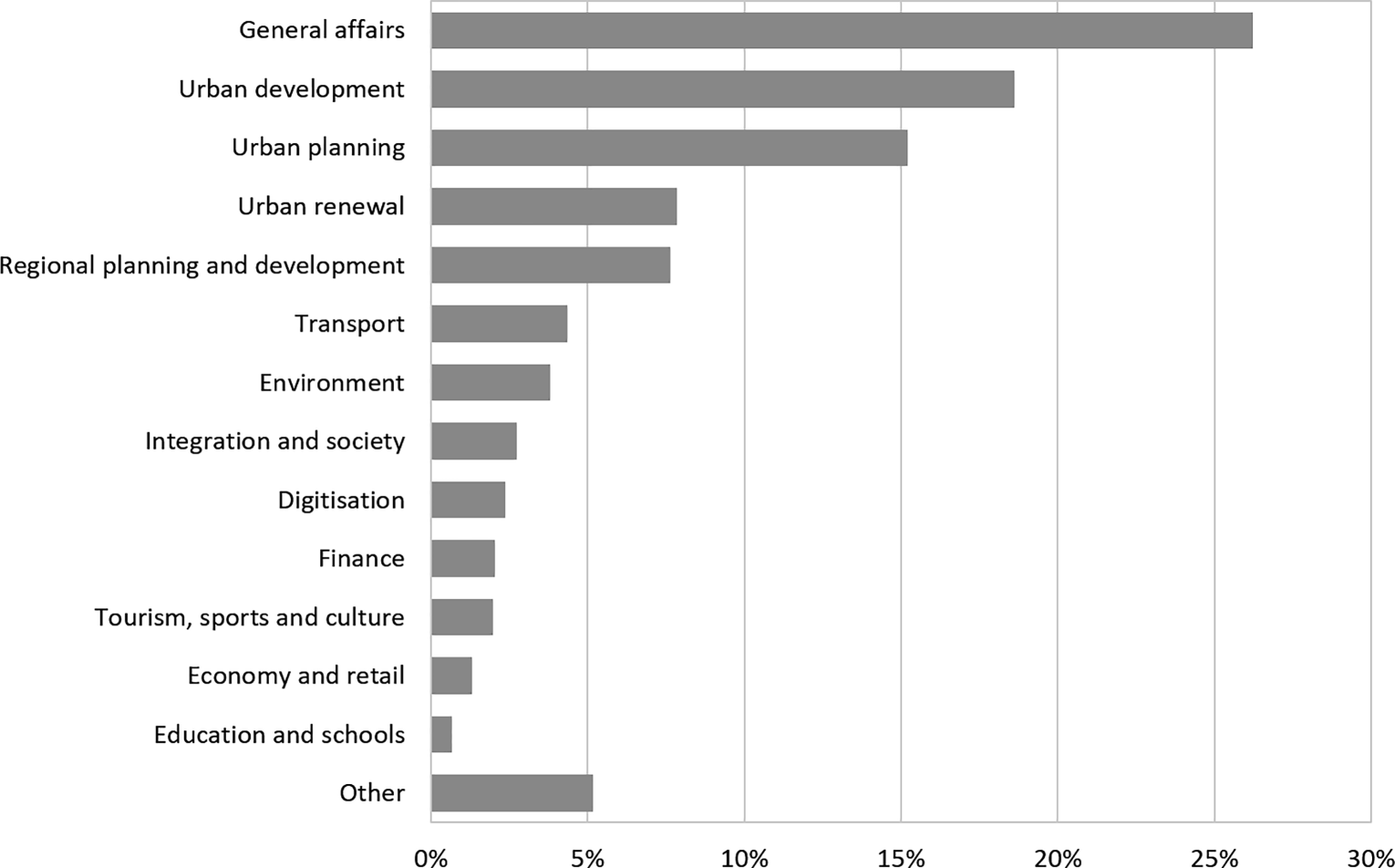
It appears that over 25 % of the digital participation formats identified cannot be clearly categorised, but deal with rather general matters. This is because many cities, especially small ones, have a central contact point for citizen suggestions or criticism, which are then forwarded to the appropriate departments. Many cities refer to such tools as problem-reporting with a central web page tab. Beyond general aspects, many participation processes relate to urban development, urban planning and urban renewal. Here, the focus is predominantly on urban development concepts and formal participation in the context of land-use and development plans. Furthermore, participation takes place in the context of master plans, conversions, inner city redevelopment, village development, etc. Specific contents of sectoral planning that are also dealt with are transport, environmental issues, social topics, digitalisation and financial aspects. While transport is often associated with cycling concepts, public transport, concepts for e‑mobility or holistic mobility concepts for cities, in the area of digitalisation citizens are involved in digital strategies, broadband supply or smart city concepts. Other rather subordinate topics are tourism, the economy and education, whereby specific actors (tourists, entrepreneurs, children and parents) are addressed in particular and no broad participation is usually sought.
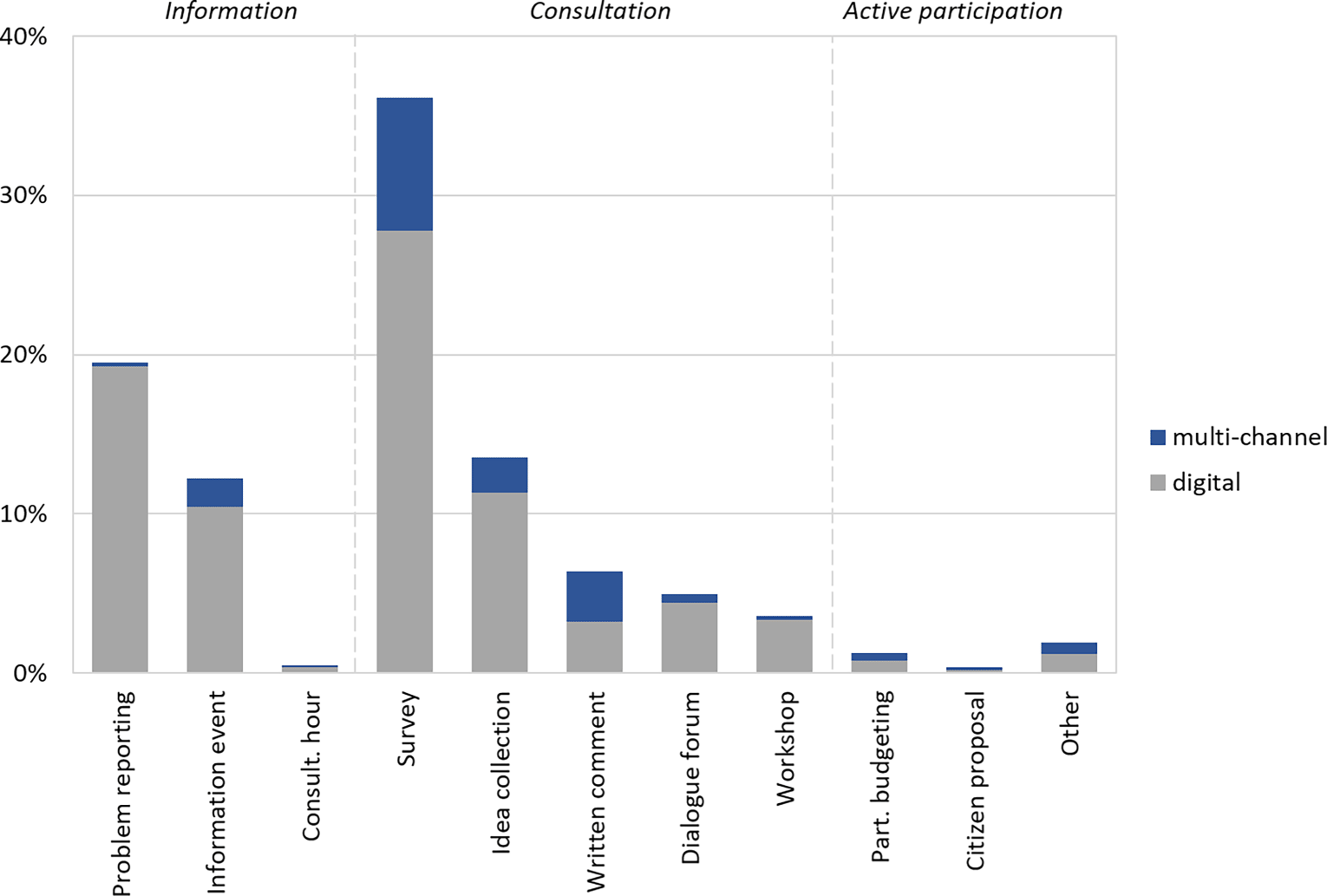
Firstly, the aforementioned problem-reporting is a very low-threshold method of digital citizen participation, which by its nature is classified as the lowest intensity level of information. In a very large share of the cities and districts studied, this takes place exclusively digitally. Citizens’ meetings or information events take place purely online and as multi-channel on-site formats with live streaming. In addition, we identified a few digital or multi-channel public consultation hours of mayors or administrations. Overall, most formats took place at the consultation level, where citizens can actively contribute their ideas. Here, the survey method plays the most important role.
Almost 40 % of all methods recorded are surveys – a predominant number exclusively online. However, there are surveys that can also be answered postally or face-to-face. Other methods of consultation are idea collections, dialogue forums and workshops. In the case of written comments, which are mainly used for formal participation, there is a large percentage of hybrid options, because written comments are a well-established tool and have been carried out offline for decades, thus the offline version will continue to exist. Methods of active participation are generally very rare, as was also reflected in digital participation. Only very few processes gave citizens the digital option of actively shaping the planning process, e.g. through voting, petitions or taking part in the design process via 3D-models, Artificial Intelligence, interactive maps or gamified elements. One example of active participation is participatory budgeting, whereby citizens can shape parts of the municipal budget with their own project ideas and a subsequent voting process.
In addition, we focus on methods used in the fields of urban development, planning and renewal to analyse whether there are variations in the use and intensity of the methods between the fields. The clear difference between urban development/renewal and urban planning is striking. Urban development and urban renewal show a very similar use of methods, with surveys making up the largest share and about a quarter of both being idea collections. However, in urban planning the share is two-thirds written comments, i.e. predominantly formal participation while surveys account for only two percent. Although urban development and urban renewal are very similar in their use of methods, more information events take place in urban renewal, so the overall intensity of participation is slightly lower here.
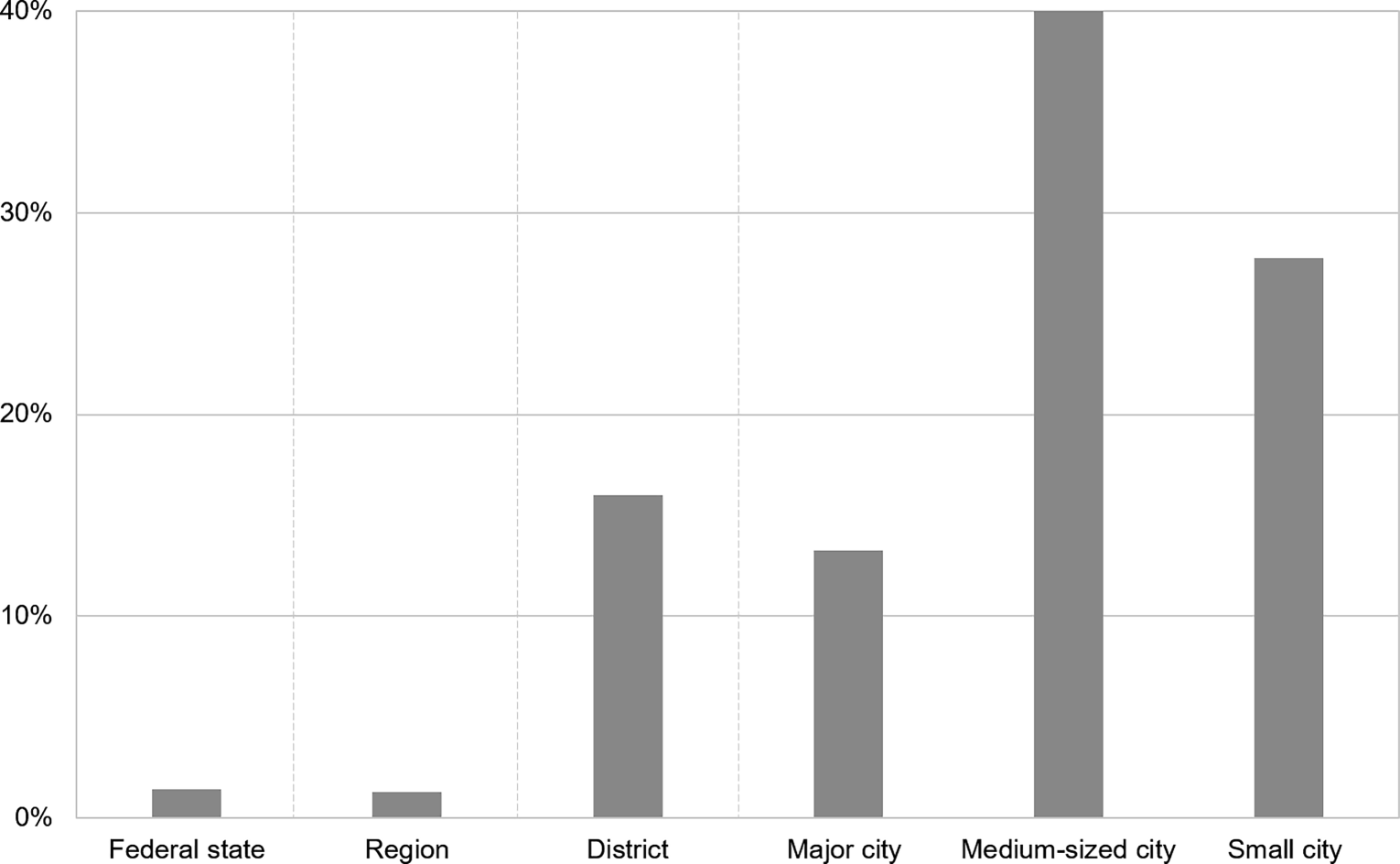
While 67.7 % of all German cities are small towns with less than 20,000 inhabitants, their share of all processes was below average at 27.8 %. In addition, it is apparent that only 2.7 % of all processes surveyed were initiated by states and regions.
To further test the variance in the digital participation density between the different spatial location types of German districts and independent cities, examining the concentration of population and employment, we conducted a Kruskal-Wallis test. The results confirm that significantly more digital processes per 100,000 inhabitants were carried out in very central districts and independent cities than in peripheral and very peripheral locations. There are no significant differences between other location types. In addition, significantly more digital participation processes were conducted in urban districts (independent large cities and urban districts with high population densities and high shares of population in large and medium-sized cities, see BBSR 2023) than in rural districts.
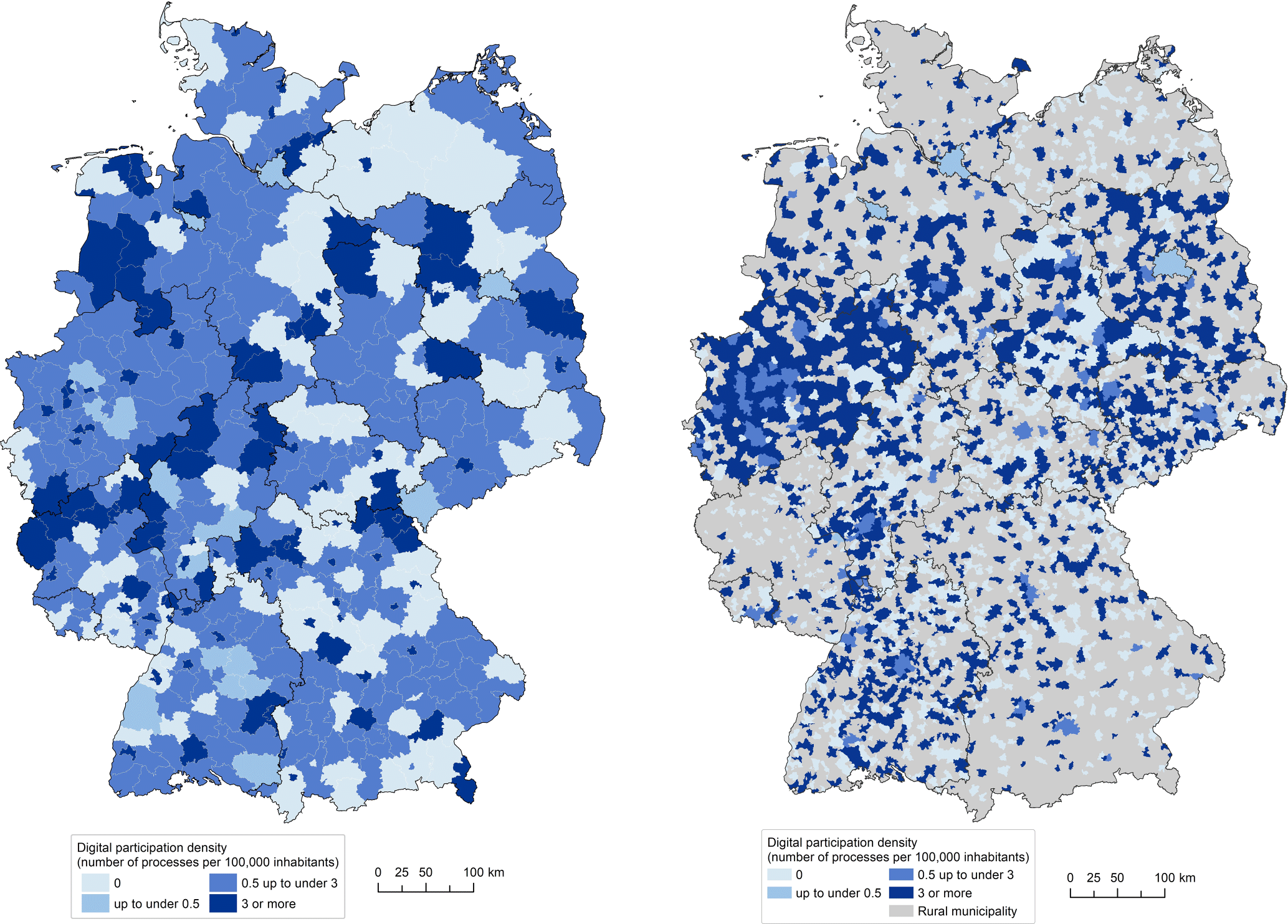
We also checked how the processes are distributed across the states. The share of districts and independent cities that conducted at least one digital participation process is highest in Lower Saxony, North Rhine-Westphalia, Hesse and Baden-Wuerttemberg, at over 80 %. In contrast, the coverage in Mecklenburg-Western Pomerania is the lowest at 37.5 %. In comparison, the district level participation density is highest in Rhineland-Palatinate (2.9). Schleswig-Holstein (2.5), Lower Saxony (2.7), Bavaria (2.5) and Brandenburg (2.3) also have an above-average density. The lowest density is evident in Hamburg, Berlin and Saarland. However, a Kruskal-Wallis test found no significant differences between the states.
We subsequently discuss the urban level, i.e. all German cities above 5,000 inhabitants or that are administratively independent, as illustrated in Fig. 5 (right). All other municipalities are shown in grey. A total of 1,156 of 2,057 cities (56.2 %) carried out at least one digital participation process. Thus, the lightest colour shows 43.8 % of all cities surveyed that have no digital participation. Looking at the differences between the states, a low coverage with digital participation processes at the urban level is evident in Rhineland-Palatinate, Bavaria and Mecklenburg-Western Pomerania, quantified with shares of less than 50 %. Apart from the city-states Berlin, Hamburg and Bremen, we found particularly high digital participation coverage in Lower Saxony, North Rhine-Westphalia and Brandenburg with over 70 %. Schleswig-Holstein (11.27), Lower Saxony (11.88), North Rhine-Westphalia (11.44), Hesse (10.98), Brandenburg (15.02) and Saxony (12.91) show the highest average values above 10 processes per 100,000 inhabitants in the state comparison. Beside the city-states and Saarland, Mecklenburg-Western Pomerania and Thuringia have the lowest digital participation densities below five.
Using a Kruskal-Wallis test for group differences regarding digital participation density, significant differences between the states emerge. Furthermore, there are significant disparities between the spatial location types. Thus, cities in very peripheral locations have significantly lower digital participation densities than very central or central cities. We also identified significant group differences with regard to the spatial structure type. Cities with an urban settlement structure with at least 50 % urban surroundings have significantly higher densities of digital participation than only partly urban and rural cities. At the urban level, we additionally tested the variance between the different city size types (small city under 20,000 inhabitants, small medium-sized city with 20,000 to 50,000 inhabitants, large medium-sized city with a population between 50,000 and 100,000, major city with 100,000 or more inhabitants), which again confirms significant differences in the digital participation density. Here, small towns have a higher digital participation density than medium-sized cities. In addition, small medium-sized cities present significantly more processes per 100,000 inhabitants than major cities.
Name | 1 | 2 | 3 | 4 | 5 | 6 |
|---|---|---|---|---|---|---|
Foreign | 0.144** | 0.147*** | 0.148** | 0.149*** | 0.195** | 0.138** |
Migration | 0.090* | 0.084* | 0.083* | 0.085* | 0.075 | 0.088* |
Graduates_highschool | 0.024 | 0.012 | 0.010 | 0.013 | 0.021 | 0.021 |
Leavers_without_qual | -0.118 | -0.137 | -0.138 | -0.133 | -0.118 | -0.114 |
Stud | -0.001 | -0.003 | -0.003 | -0.002 | -0.003 | -0.001 |
Employ | -0.141*** | -0.148*** | -0.141** | -0.116* | -0.147*** | -0.133** |
Unemploy | 0.070 | 0.052 | 0.059 | 0.069 | -0.003 | 0.059 |
GDP | 0.025** | 0.027** | 0.027** | 0.025** | 0.027** | 0.024** |
Pub_dept | 0.000 | 0.000 | 0.000 | 0.000 | 0.000 | 0.000 |
Highspeed_int | 0.008 | 0.013 | 0.012 | 0.010 | 0.011 | 0.011 |
Turnout | -0.127* | -0.112 | -0.114 | -0.118* | -0.116* | -0.121* |
Controls | Yes | Yes | Yes | Yes | Yes | Yes |
The variable Highspeed_int is not significant across all six models. The partial lack of broadband availability in more rural districts therefore does not represent an obstacle to digital participation according to the analysis. We can reject Hypothesis 1 and state that the availability of broadband internet does not increase the digital participation density in the districts. The same applies to Hypothesis 2 and the variable Pub_dept. We expected that indebted districts are less likely to offer digital participation. However, the analysis shows non-significant results for all models. Thus, it can be emphasised that the level of debt of a district does not significantly restrict digital participation and leads us to reject Hypothesis 2.
Models 1 and 4‑6 show that low turnouts (in the federal election 2021) have a significant positive impact on digital participation offerings. We therefore found that Hypothesis 3 can be accepted at least partially for 4 out of 6 models with a high significance level. This shows that voter turnout may be a determinant of digital participation intensity. Furthermore, in districts with higher shares of the vote for the conservative party CDU/CSU, increased opportunities for digital citizen participation can be observed. The shares of the vote for the liberal party FDP have the contrary effect. Here, high vote shares are associated with lower participation densities.
Referring to H4, the education indicators are negligible. The density of digital participation is not significantly explained by the density of students (Stud), the share of unqualified persons (Leavers_without_qual) or the share of high school graduates (Graduates_highschool). It can thus be stated that digital participation is offered independently of the educational level of the population. Weak but significant effects exist between the target variable and the predictor Migration. Higher migration rates are associated with more pronounced digital participation (models 1‑4 and 6). In addition, the variable Foreign is significant across all 6 models. While the GDP has a significant positive effect on the density of digital participation offerings, high employment rates (Employ) have a significant negative effect on the target variable. Digital participation processes are therefore used largely in districts with a high share of population with no German citizenship, high migration and low employment rates, and can therefore reach population groups that are underrepresented in traditional citizen participation. We can thus partly confirm H4.
The aim of the paper was to map the digital participation landscape in Germany on the local level and to give insights into the spatial distribution of the processes. Furthermore, we intended to analyse which determinants condition the use of digital participation. On this basis, the paper aims to contribute to the understanding of and the scientific debate on digital participation in spatial planning and development. Before summarising and discussing the results, we highlight the limitations of the paper.
First, we note that the analyses are based on a primary survey of digital and multi-channel participation processes and thus we cannot avoid including false negatives, which means that processes that we could not identify on the websites with our approach are not included in the dataset. We found differences in the storage or availability of expired participation processes and varying accuracy of the search terms. This also includes a bias due to the fact that there are differences in the quality and adequacy of the presentation of the administrations’ websites, which in some cases lead to problems of findability. Furthermore, it should be emphasised that several people carried out the data collection. Thus, we cannot preclude different ways of searching, identifying or processing, despite our agreement on the exact approach. As the data collection took place between June and September 2022, the time period can potentially influence the results. Overall, we observed a general increase in digital or multi-channel participation processes from 2020 onwards. Presumably, a large proportion of the available participation processes were conducted in digital or multi-channel format due to the Covid-19 contact restrictions. A further limitation resulting from the approach is that it is not possible to determine how many people are reached with the respective processes, how much time they invest and how many contributions arise from this. Thus, the efficiency of the processes is not measurable. In this light, we answer the research questions and subsequently provide a research outlook.
We could elaborate that the digital participation landscape differs between the district level and the urban level. Thus, we identified that 21.1 % of the districts and 43.8 % of the cities offered no digital participation and that there was thus wider coverage in the districts. Content-wise, the focus is on the planning areas of urban development, renewal and planning, in addition to general matters that cannot be assigned to any specific portfolio. Furthermore, the topics of environmental and transport planning are relevant, inter alia. Methodologically, information and consultation processes in particular play a central role. This low participation density is described by Bastos, Fernández-Caballero, Pereira et al. (2022: 10) as a general participation issue. Problem reporting tools, information events in the (partly) virtual space, idea collections and surveys are methods that were most frequently analysed. We also considered whether the processes were exclusively digital or combined with analogue elements, investigating what is at the centre of current and future participation practice (Turken/Eyuboglu 2021: 179). Here we found a large share of multi-channel processes in surveys and in written comments, most of which refer to formal planning. Looking at the spatial distribution of digital participation processes in districts and independent cities (district level), it is evident that the density of processes (number of processes per 100,000 inhabitants) is significantly higher in central locations and urban districts and in independent cities. At the urban level, partly urban and rural cities as well as cities in peripheral locations also have significantly lower digital participation density.
The multiple linear regression models showed that we can reject H1 and H2, as we assumed that the availability of broadband internet has a positive effect on digital participation offerings and that public debt conversely has a negative effect on digital participation in the districts, but no significant results emerge in the models for either variable. We found that a low turnout has a significant positive effect on digital participation density. Therefore, we confirm H3 and assume that administrations are motivated to increase low political interest of citizens through digital participation offerings, as Nyseth, Ringholm and Agger (2019: 14) indicate. The share of population without German citizenship, migration rates and gross domestic product per capita consistently have a significant positive effect on the digital participation density. In addition, the employment rate has significant negative effects on digital participation. Educational variables do not significantly influence digital participation. Therefore, we verify H4: the general issue of the social selectivity of participation could potentially be solved through its digitalisation, as underrepresented population groups and citizens who do not participate without digital participation can be activated. The results indicate that this may motivate the administrations into providing more digital participation.
The findings of the paper provide a comprehensive overview of the current state of the spatial distribution and determinants of digital and multi-channel citizen participation in Germany. They thus can be a basis for further in-depth studies. On the one hand, the study provides a database for quantitative primary surveys, which could focus on developments of digital participation formats, their relevance, resource requirements, outputs and impacts for planning processes at the local level from the perspective of decision-makers and participants. Thus, besides the participation density in spatial units, more specific indicators such as the number of participants and contributions, the duration of participation, interactions, etc. could be measured in order to examine the intensity and effectiveness of participation. Specific differences between analogue and digital participation formats should also be discussed. On the other hand, qualitative empirical research should be conducted in order to examine open questions and the hypotheses investigated and conclusions reached here in greater detail by means of in-depth interviews, observations and discourse analyses. Investigation should focus on how results from digital participation are embedded in the wider planning process, which institutional and actor-related settings determine the success of digital participation, and which learning processes are initiated. On this basis, future research should investigate whether digital participation in practice can solve fundamental problems of conventional participation in planning processes and thus contribute to understanding the relevance of participatory planning. In the future, the development of new technologies and tools for digital participation, such as digital co-design and Artificial Intelligence approaches for gamification, should be addressed and constantly monitored.
References
| Akmentina, L. (2023): E‑participation and engagement in urban planning: experiences from the Baltic cities. In: Urban Research and Practice 16, 4, 624–657. https://doi.org/10.1080/17535069.2022.2068965 |
| Al-Dalou, R.; Abu-Shanab, E. (2013): E‑Participation levels and technologies. http://icit.zuj.edu.jo/icit13/Papers%20list/Camera_ready/E-Technology/656.pdf (28.11.2023). |
| Amado, M.P.; Santos, C.V.; Moura, E.B.; Silva, V.G. (2010): Public Participation in Sustainable Urban Planning. In: International Journal of Human and Social Sciences 5, 2, 102–108. |
| Antoniou, V.; Potsiou, C. (2021): Design and development of geographic citizen science: technological perspectives and considerations. In: Skarlatidou, A.; Haklay, M. (eds.): Geographic citizen science design: No one left behind. London, 38–54. |
| Arnstein, S.R. (1969): A Ladder of Citizen Participation. In: Journal of the American Institute of Planners 35, 4, 216–224. https://doi.org/10.1080/01944366908977225 |
| Bastos, D.; Fernández-Caballero, A.; Pereira, A.; Rocha, N.P. (2022): Smart City Applications to Promote Citizen Participation in City Management and Governance: A Systematic Review. In: Informatics 9, 4, 1–29. https://doi.org/10.3390/informatics9040089 |
| BBSR – Bundesinstitut für Bau‑, Stadt- und Raumforschung (2015): Raumgliederungen auf Kreisbasis. Raumtypen: Lage. https://www.bbsr.bund.de/BBSR/DE/forschung/raumbeobachtung/downloads/downloadsReferenz2.html (22.05.2023). |
| BBSR – Bundesinstitut für Bau‑, Stadt- und Raumforschung (2021): INKAR (Indikatoren und Karten zur Raum- und Stadtentwicklung). Bonn. |
| BBSR – Bundesinstitut für Bau‑, Stadt- und Raumforschung (2023): Laufende Raumbeobachtung – Raumabgrenzungen. https://www.bbsr.bund.de/BBSR/DE/forschung/raumbeobachtung/Raumabgrenzungen/deutschland/kreise/siedlungsstrukturelle-kreistypen/kreistypen.html;jsessionid=AE2B9B5CE0B6DE312F455327A9C0EC42.live21322 (22.05.2023). |
| Brake, A. (2008): Internetbasierte Befragung – ein Instrument für den Weg in eine aktive Bürgergesellschaft? In: Kersting, N. (ed.): Politische Beteiligung: Einführung in dialogorientierte Instrumente politischer und gesellschaftlicher Partizipation. Wiesbaden, 65–79. = Bürgergesellschaft und Demokratie 28. https://doi.org/10.1007/978-3-531-91071-0_3 |
| Caddy, J. (2005): Evaluating public participation in policy-making. Paris |
| Carvajal Bermúdez, J.C. (2022): New methods of citizen participation based on digital technologies. Dissertation, Bauhaus-Universität Weimar. https://doi.org/10.25643/bauhaus-universitaet.4712 |
| Damurski, L. (2012): E‑Participation in Urban Planning. Online Tools for Citizen Engagement in Poland and in Germany. In: International Journal of E‑Planning Research 1, 3, 40–67. https://doi.org/10.4018/ijepr.2012070103 |
| Dean, R.J. (2018): Counter-Governance: Citizen Participation Beyond Collaboration. In: Politics and Governance 6, 1, 180–188. https://doi.org/10.17645/pag.v6i1.1221 |
| Die Bundeswahlleiterin (2022): Bundestagswahl 2021. Ergebnisse nach kreisfreien Städten und Landkreisen. https://www.bundeswahlleiter.de/bundestagswahlen/2021/ergebnisse/weitere-ergebnisse.html (22.05.2023). |
| Donders, M.; Hartmann, T.; Kokx, A. (2014): E‑Participation in Urban Planning: Getting and Keeping Citizens Involved. In: International Journal of E‑Planning Research 3, 2, 54–69. https://doi.org/10.4018/ijepr.2014040104 |
| Ertiö, T.-P. (2015): Participatory Apps for Urban Planning – Space for Improvement. In: Planning Practice and Research 30, 3, 303–321. https://doi.org/10.1080/02697459.2015.1052942 |
| Evans-Cowley, J.; Hollander, J. (2010): The New Generation of Public Participation: Internet-based Participation Tools. In: Planning Practice and Research 25, 3, 397–408. https://doi.org/10.1080/02697459.2010.503432 |
| Fathejalali, A.; Jain, A. (2019): Mobile participation (mParticipation) in urban development: The experience of FlashPoll app in Berlin (Germany). In: Information Polity 24, 2, 199–222. https://doi.org/10.3233/IP-180096 |
| Freschi, A.C.; Rony, M.; Norbjerg, J. (2009): eParticipation in the institutional domain: a review of research: analytical report on eParticipation research from an administration and political perspective in six European countries. Bergamo. |
| Graziano, T. (2020): Citizen e‑Participation in Urban Planning: Achievements and Future Challenges in a Mediterranean City. In: Khosrow-Pour, M. (ed.): Megacities and Rapid Urbanization: Breakthroughs in Research and Practice. Hershey, 582–600. https://doi.org/10.4018/978-1-5225-9276-1 |
| Hanninger, L.-M. (2023): Status quo der digitalen Transformation in niederbayerischen Kommunen. In: Ahrens, D. (ed.): Smart Region: Angewandte digitale Lösungen für den ländlichen Raum: Best Practices aus den Modellprojekten „Digitales Dorf Bayern“. Wiesbaden, 81–103. https://doi.org/10.1007/978-3-658-38236-0_6 |
| Hayes, A.F.; Cai, L. (2007): Using heteroscedasticity-consistent standard error estimators in OLS regression: An introduction and software implementation. In: Behavior Research Methods 39, 4, 709–722. https://doi.org/10.3758/BF03192961 |
| Holtkamp, L.; Bathge, T. (2012): Lokale Bürgerbeteiligung in der Haushaltskrise. In: Der moderne Staat. Zeitschrift für Public Policy, Recht und Management 5, 1, 47–64. https://doi.org/10.3224/dms.v5i1.04 |
| Hovik, S.; Giannoumis, G.A. (2022): Linkages Between Citizen Participation, Digital Technology, and Urban Development. In: Hovik, S.; Giannoumis, G.A.; Reichborn-Kjennerud, K.; Ruano, J.M.; McShane, I.; Legard, S. (eds.): Citizen Participation in the Information Society: Comparing Participatory Channels in Urban Development. Cham, 1–23. https://doi.org/10.1007/978-3-030-99940-7_1 |
| Jiang, H.; Geertman, S.; Witte, P. (2019): Smart urban governance: An urgent symbiosis? In: Information Polity 24, 3, 245–269. https://doi.org/10.3233/IP-190130 |
| Kaczorowski, W. (2014): Die smarte Stadt – Den digitalen Wandel intelligent gestalten. Handlungsfelder, Herausforderungen, Strategien. Stuttgart. https://doi.org/10.5771/9783415052178 |
| Kang, M. (2014): Understanding Public Engagement: Conceptualizing and Measuring its Influence on Supportive Behavioral Intentions. In: Journal of Public Relations Research 26, 5, 399–416. https://doi.org/10.1080/1062726X.2014.956107 |
| Kubicek, H.; Aichholzer, G. (2016): Closing the Evaluation Gap in e‑Participation Research and Practice. In: Aichholzer, G.; Kubicek, H.; Torres, L. (eds.): Evaluating e‑Participation: Frameworks, Practice, Evidence. Cham, 11–45. = Public Administration and Information Technology 19. https://doi.org/10.1007/978-3-319-25403-6_2 |
| Lahode, C.; Schaumann, E. (2022): Cooperative Planning Strategies in Urban Development Processes. In: Coors, V.; Pietruschka, D.; Zeitler, B. (eds.): iCity. Transformative Research for the Livable, Intelligent, and Sustainable City. Cham, 283–293. https://doi.org/10.1007/978-3-030-92096-8_18 |
| Lebezova, E.M.; Ovcharenko, L.A. (2022): A model of citizens’ digital participation in the Smart Environment. In: Journal of New Economy 23, 3, 62–85. https://doi.org/10.29141/2658-5081-2022-23-3-4 |
| Legard, S.; Hovik, S. (2022): The Impact of Digital Participation on Democratic Urban Governance. In: Hovik, S.; Giannoumis, G.A.; Reichborn-Kjennerud, K.; Ruando, J.M.; McShane, I.; Legard, S. (eds.): Citizen Participation in the Information Society: Comparing Participatory Channels in Urban Development. Cham, 167–190. https://doi.org/10.1007/978-3-030-99940-7_8 |
| Macintosh, A. (2004): Characterizing E‑Participation in Policy-Making. In: Proceedings of the Thirty-Seventh Annual Hawaii International Conference on System Sciences. https://doi.org/10.1109/HICSS.2004.1265300 |
| Mandarano, L.A.; Meenar, M. (2015): e‑Participation: Comparing Trends in Practice and the Classroom. In: Planning Practice and Research 30, 4, 457–475. https://doi.org/10.1080/02697459.2015.1017933 |
| Martini, M.; Fritzsche, S. (2015): E‑Participation in Germany: New Forms of Citizen Involvement between Vision and Reality. In: Fraenkel-Haeberle, C.; Kropp, S.; Palermo, F.; Sommermann, K.-P. (eds.): Citizen Participation in Multi-level Democracies. Leiden, 121–160. = Studies in Territorial and Cultural Diversity Governance. |
| Mello Rose, F. (2022): Civil Society Involvement in Smart Cities. Citizen Participation or User Co-Creation? Dissertation, HafenCity Universität Hamburg. |
| Meschede, C. (2020): Urban Governance for Sustainable Development: Information Dissemination, Open Data, and Citizen Participation. Dissertation. Heinrich-Heine-Universität Düsseldorf. |
| Morais, M. (2022): Citizen Participation in Urban Policy: Lessons Based on Berlin and Sao Paulo Experiences. Berlin. = WZB Discussion Paper SP V 2022-101. |
| Muehlhaus, S.L.; Eghtebas, C.; Seifert, N.; Schubert, G.; Petzold, F.; Klinker, G. (2023): Game.UP: Gamified Urban Planning Participation Enhancing Exploration, Motivation, and Interactions. In: International Journal of Human-Computer Interaction 39, 2, 331–347. https://doi.org/10.1080/10447318.2021.2012379 |
| Münster, S.; Georgi, C.; Heijne, K.; Klamert, K.; Noennig, J.R.; Pump, M.; Stelzle, B.; van der Meer, H. (2017): How to involve inhabitants in urban design planning by using digital tools? An overview on a state of the art, key challenges and promising approaches. In: Procedia Computer Science 112, 2391–2405. https://doi.org/10.1016/j.procs.2017.08.102 |
| Neumann, M.; Linder, F.; Desmarais, B. (2022): Government websites as data: a methodological pipeline with application to the websites of municipalities in the United States. In: Journal of Information Technology and Politics 19, 4, 411–422. https://doi.org/10.1080/19331681.2021.1999880 |
| Novy, J.; Peters, D. (2012): Railway Station Mega-Projects as Public Controversies: The Case of Stuttgart 21. In: Built Environment 38, 1, 128–145. |
| Nyseth, T.; Ringholm, T.; Agger, A. (2019): Innovative Forms of Citizen Participation at the Fringe of the Formal Planning System. In: Urban Planning 4, 1, 7–18. https://doi.org/10.17645/up.v4i1.1680 |
| Sierra, R.; Ott, K. (2022): Citizen participation in the long-term process of high-level radioactive waste disposal: Future tasks and adequate forms of participation. In: TATuP – Zeitschrift für Techikfolgenabschätzung in Theorie und Praxis 31, 3, 44–50. https://doi.org/10.14512/tatup.31.3.44. |
| Silva, C.N. (2020): Introduction: Smart Digital Technologies and the ‘Ladder’ of Citizen-Responsive Urban E‑Planning. In: Silva, C.N. (ed.): Citizen-Responsive Urban E‑Planning: Recent Developments and Critical Perspectives. Hershey, 1–12. https://doi.org/10.4018/978-1-7998-4018-3.ch001 |
| Sippel, H.-J. (2015): Auf dem Weg zu einer (neuen) politischen Kultur der Beteiligung. In: Sommer, J. (ed.): Kursbuch Bürgerbeteiligung 1. Berlin, 22–47. |
| Sobaci, M.Z. (2016): Social Media and Local Governments: An Overview. In: Sobaci, M.Z. (ed.): Social Media and Local Governments: Theory and Practice. Cham, 3–21. https://doi.org/10.1007/978-3-319-17722-9_1 |
| Stein, V.; Pentzold, C.; Peter, S.; Sterly, S. (2022): Digitalization and Civic Participation in Rural Areas. A Systematic Review of Scientific Journals, 2010-2020. In: Raumforschung und Raumordnung | Spatial Research and Planning 80, 3, 251–265. https://doi.org/10.14512/rur.112 |
| Stelzle, B.; Naumann, F.; Holmer, T.; Jannack, A.; Noennig, J.R. (2020): A minimal viable process and tools for massive participation in urban development. In: International Journal of Knowledge-Based Development 11, 1, 80–97. https://doi.org/10.1504/IJKBD.2020.106839 |
| Taylor, N. (2012): Urban Planning Theory since 1945. London. |
| Turken, A.O.; Eyuboglu, E.E. (2021): E‑participatory Approaches in Urban Design. In: Journal of Contemporary Urban Affairs 5, 2, 169–182. https://doi.org/10.25034/ijcua.2021.v5n2-2 |
| Walk, H. (2008): Partizipative Governance. Beteiligungsformen und Beteiligungsrechte im Mehrebenensystem der Klimapolitik. Wiesbaden. https://doi.org/10.1007/978-3-531-90803-8 |
| Wiktorska-Swiecka, A. (2023): Towards a New Normal in Participatory Governance in Berlin during COVID-19. A “Lost Year” or a “New Beginning”? In: Lissandrello, E.; Sorensen, J.; Olesen, K.; Steffansen, R.N. (eds.): The ‘New Normal’ in Planning, Governance and Participation: Transforming Urban Governance in a Post-Pandemic World. Cham, 217–228. https://doi.org/10.1007/978-3-031-32664-6_17 |
| Wirtz, B.W.; Kubin, P.R.M. (2021): E‑Government in Deutschland: Entwicklung, Barrieren und Verbesserungsansätze. In: Verwaltung und Management 27, 6, 285–294. https://doi.org/10.5771/0947-9856-2021-6 |
Footnotes
| 1 | Stuttgart 21 is a large-scale Deutsche Bahn project to convert Stuttgart’s main railway station, which was subject to massive protests in the noughties, peaking in 2010, due to inter alia a lack of democratic legitimacy, planning deficits and high costs (Novy/Peters 2012: 128–129; Martini/Fritzsche 2015: 123). |