
Spatial planning and regional development policies constitute a field of public policy whose legitimacy is highly contested and conflictual due to its focus on distribution and the utilisation of spatial resources. Conflicts and controversies are articulated in various forms of formal or informal participation and reveal any lack of acceptance. This field is an example of how legitimacy paradigms and acceptance-fostering legitimation approaches emerge, evolve, become challenged and are finally modified.
Modified or new directions in conceptual thinking in planning and regional studies are often presented as “turns” (Daimer/Hufnagl/Warnke 2012; Mattila 2018; Benner 2024), implying a long-awaited solution or relief through significant difference from the previous direction. In the post-World War II period, spatial planning and regional development policies were conducted within a rational legitimacy paradigm based on the representative-democratic legitimation approach (Kühn 2021: 149). Once the most pressing post-war needs and demands had been met by the early 1970s, the question of what the public interest actually was and how it could be translated into planning and development policy started to become an object of negotiation, and the communicative legitimacy paradigm emerged (Healey 1992). Since the early 2000s, a radically pluralistic legitimation approach has been discussed within the agonistic perspective on democracy in general, and planning and development in particular (Hillier 2003, Kühn 2021).
Without denying the strengths of each individual paradigm, the persistence of conflicts in spatial planning and regional development justifies more pragmatic thinking in the spirit of John Dewey (primacy of practice, action and experience; Dewey 1903) and Richard Rorty (primacy of community, language, intersubjective agreement; Rorty 1979). Furthermore, the notion of complementarity may be of greater relevance, particularly as there are obvious connections between the paradigms that are often overlooked when viewed side by side. So, Healey (1992: 146) pointed out that Habermas’ thinking was intended to reconstitute the ‘incomplete’ project of modernity, not to replace it, because any kind of planning is impossible, irrelevant or oppressive in the postmodern era. In the same manner of complementarity, Mouffe (2005: 31) advocated a consensus, in line with Habermas. But a processual path to a “conflictual consensus” must be paved agonistically in the field of radical negativity (Hillier 2003: 42).
Against the background of the close structural connection between legitimacy and acceptance, our qualitative study is intended to both conceptually and empirically enrich discussion about the complementary perspective on acceptance-fostering legitimation processes. To this end, we intend to clarify aspects that condition the pragmatic composition of rational, communicative and agonistic legitimation approaches in particular planning or development projects. Based on 20 semi-structured interviews, the study examines the protest against the liquefied natural gas (LNG) terminal on the island of Rügen in north-eastern Germany. It indicates that in a reported state of emergency, strong recourse to the rational legitimation approach with its restrictions on participation overshadowed communicative and agonistic needs and demands for broader participation and led to a severe crisis of acceptance for the infrastructure project. In order to draw up a spatially and temporally sensitive composition of legitimation approaches in (if necessary, accelerated) projects in regional planning and development, assessment of the scope of (possible) conflicts, observation of conflict dynamics and implementation of shared acceptance-fostering legitimation arenas are considered to be essential.
The study’s findings are relevant in light of increasing ambiguity and conflicts surrounding spatial planning and regional development generally and distinct transformation processes particularly. The conflict around the LNG terminal on Rügen is different from those affecting the industrial developments of Tesla in Brandenburg (Kühn 2023) and Northvolt in Schleswig-Holstein, the blockades to the expansion of electric power lines and the questioning of the significant enlargement of areas designated for wind energy, to name just a few. Nonetheless, a striking similarity seems to exist: a low level of acceptance of (accelerated) planning processes as a result of substantially disbalanced and spatially and temporally insensitive practices of legitimation. The notion of the complementarity of different legitimation approaches can substantially enrich, for example, the concept of responsible and reflexive governance (Owen/Macnaghten/Stilgoe 2012; de Geus/Wittmayer/Vogelzang 2022) in the spirit of “constructive hybridity” (Torfing/Loklindt Christensen/Sørensen 2024: 57).
The paper is structured as follows. After a brief outline of the structural connection between legitimacy and acceptance, Section 2 ascertains the main aspects of the transition from rational to communicative and further to agonistic legitimation approaches from a participation perspective and summarises the current discussion on the systemic perspective. A short introduction of the case and the method of empirical inquiry in Section 3 is followed by the empirically based tracing and analysis of the elements and perception of different local legitimation approaches in Section 4. The causes of the crisis of acceptance under consideration here and core aspects of the composition of rational, communicative and agonistic legitimation approaches are critically discussed in Section 5.
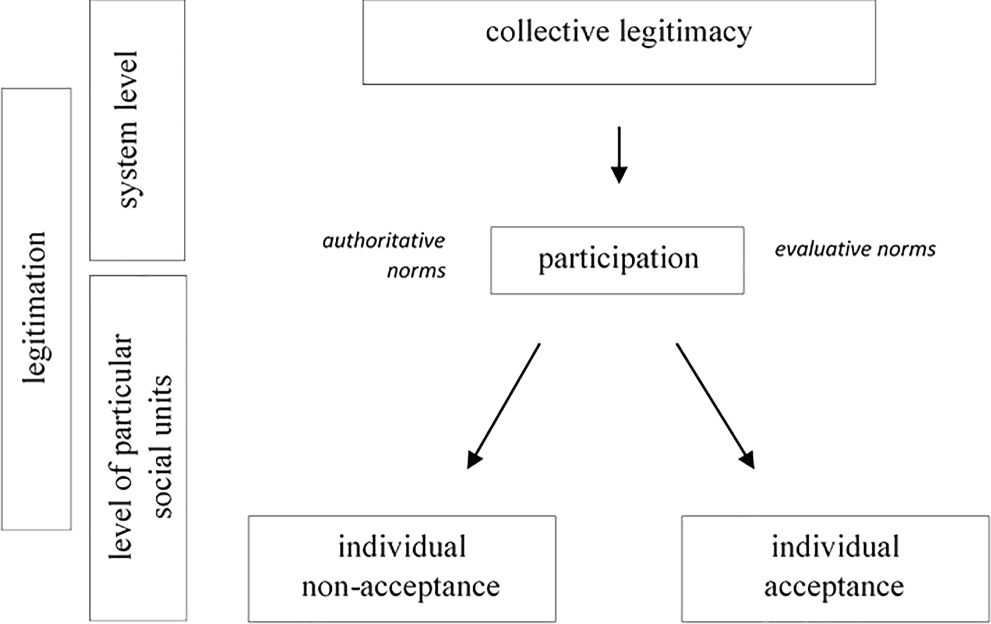
Conflicts and controversies during the negotiation of any public interest are inextricably linked with the issue of legitimacy (Hechter 2009). According to Suchman (1995: 574), legitimacy is “a generalised perception or assumption that the actions of an entity are desirable, proper, or appropriate within some socially constructed system of norms, values, beliefs, definitions”. The definition by Berger, Ridgeway, Fisek et al. (1998: 380) is consistent with Suchman’s: legitimacy is “a process by which cultural accounts from a larger social framework in which a social entity is nested are construed to explain and support the existence of that social entity, whether that entity be a group, a structure of inequality, a position of authority, a social practice”. While Zelditch (2001: 7) also notes that any larger, pre-given social framework of norms, values, beliefs, practices and procedures is decisive for the conflictual character of any process of social validation or legitimation, Bekkers and Edwards (2007: 36–37) and Marquez (2016: 21–22) suggest the main sources of legitimacy are rooted in the lawfulness and the authoritative norms of a decision and are related to the expressed recognition of a decision as good, right or fair by a community or in evaluative norms.
The latter source of legitimacy and the quoted definitions point to strong interconnections between legitimacy and acceptance in the sense of desirability, propriety or appropriateness. According to Upham, Oltra and Boso (2015: 107), “acceptance is a favourable or positive response (including attitude, intention, behaviour and – where appropriate – use) [relating to a proposed or in situ technology or socio-technical system], by members of a given social unit (country or region, community or town and household, organisation)”. The perceptions and behaviours of individuals, which form the focal point of acceptance research, cannot be understood in isolation from the individuals’ backgrounds, i.e. the individual order, which is made up of the unique configurations of their relations with the object of acceptance, encompassing imprints, experiences, values, traits and beliefs (Alsheimer/Schnell/Chlebna et al. 2025: 2).
The notion of rational planning and decision-making was introduced in the late 1940s by the Chicago School and laid the foundation for the rational legitimacy paradigm as a conceptual model underlying theory and practice in spatial planning and development. This induced pressure to make public administrations more efficient and less corrupt by legitimising them through, for example, the use of empirical enquiry, information processing and technical analysis (Forester 1982: 68; Healey 1997: 23; Hillier 2002: 43–44). As a result, the core of the rational legitimation approach to planning and development became characterised by politically set legal objectives and technically backed solutions. Here, the representative-democratic legitimation approach was largely accepted as such and involved no further participatory means beyond voting at the ballot box.
The European tradition of rational planning and development was primarily legitimised by legal rules being in place to govern administrative processes (Healey 1997: 22). This tradition of rational legitimacy was theoretically influenced by the ‘American’ debate between holistic and incrementalistic perspectives on planning and development. The former focused on a systemic approach, all-encompassing plans and centralised guidance and control, even though the mismatch between needs and capacities soon became evident and began to challenge legitimation processes. The latter instead advocated small but steady progress, planned and conducted in a moderate, remedial manner of “muddling through” (Healey 1997: 24; Lindblom 1959). Incrementalists considered policy as the outcome of a give-and-take among numerous societal ‘partisans’ who must be enabled to deal with medium or large-scale issues with numerous variables, alternatives and multidimensional value compositions (Lindblom 1959: 80, 86, 88).
Lindblom’s (1965) differentiation between incremental analysis (a method for dealing with professional problems of public management) and incremental politics (or partisan mutual adjustment (PMA), a method for the political processes of public government) (Mäntysalo/Balducci/Kangasoja 2011: 258) can be regarded as a starting point towards a communicative legitimacy paradigm. The core idea of partisan mutual adjustment is that partisans/interest groups must be given opportunities to fill the knowledge gap that exists between value-free technical analysis and value-guided politics.
Jürgen Habermas’ theory of communicative action led to a stabilisation of the communicative legitimation approach and paved the way towards a “communicative turn” in the early of 1990s (Healey 1992: 144). From the processual perspective of legitimation, the promise of communicative rationality is what brings diverse actors together to reflect on their background assumptions about the world, to question them and to collectively negotiate new norms of acting (Hillier 2002: 32). In this sense, additional aspects of moral appreciation and aesthetic experience in trust-based self-reflection were meant to shape new forms of the search for inter-subjective truth, powered by Habermas’ (1971: 137) guideline of “the forceless force of the better argument”. In general terms, the communicative turn postulates that knowledge for, principles of and ways of action are actively constituted by the members of an inter-communicating community, situated in the particularities of time and space. This further means that knowledge cannot be pre-formulated but has to be specifically created anew in communication, through the exchange of perceptions and understandings and by drawing on the stock of life experiences and previously consolidated cultural and moral knowledge available to participants (Healey 1992: 151–153). It thus follows that the role of deliberative participation has increased significantly (Gutmann/Thompson 2004; Goodin/Dryzek 2006).
Today, the communicative legitimation approach is seriously challenged. Drawing on a great amount of relevant literature, Innes and Booher (2015: 200–207) concisely summarise these challenges through juxtaposing the looming contradictions between community knowledge and science, communicative power and state power, collaboration and conflict, and process and outcome. As regards epistemological interest, communicative processes of legitimation are challenged by critical-emancipatory demands that need to be confronted and integrated with technical-instrumental and practical-interpretive approaches (Innes 1998: 59; Innes/Booher 2015: 202). Furthermore, serious challenges to communicative legitimation arise from the overarching relevance of consensus, which suppresses the very notion of conflict and difference and brings any form of communication and collaboration under suspicion (Allmendinger/Tewdwr-Jones 2002: 11; Innes/Booher 2015: 203–206).
A radically pluralistic, agonistic approach to legitimation provides valuable lines of argumentation to address the above challenges. First, it recognises the indispensable role of conflict in social and political life and the conflictual nature of the public interest. As Mouffe (2013: 7) puts it, conflict cannot and should not be eradicated in liberal democratic societies, since the specificity of pluralist democracy involves precisely the recognition and legitimation of conflict. From this perspective, a conflict always provides an opportunity to problematise existing power relations with the aim of reconfiguring them and must be transferred from the uncompromising (friend/enemy) antagonistic to the compromising (supporter/opponent) agonistic dimension. Based on post-structuralist philosophical assumptions, the agonistic approach to legitimacy advocates recognition of the ontological dimension of radical negativity (i.e., ‘us’/‘them’ antagonism) and urges abandoning the search for consensus without exclusion and the hope for a perfectly reconciled and harmonious society (Laclau/Mouffe 1985; Mouffe 2013: xi; Hansen 2014: 286–287).
Regarding the important role of participation, there are, for example, telling re-examinations of Lindblom’s partisan mutual adjustment, criticised for corporatism, where access to decision-making processes is not evenly distributed among interested parties. It is more readily accessible for those who are already organised and influential, so that incremental politics always builds on existing power relations (Mäntysalo/Balducci/Kangasoja 2011: 258). Mäntysalo, Balducci and Kangasoja (2011) see Peter Galison’s concept of a trading zone as a possibility to overcome these weaknesses and enrich the agonistic legitimation approach. Based on observations of collaboration between different groups of scientists, Peter Galison pointed out, first, the importance of conditions for exchange across different systems of meaning. Second, he underlined that these conditions are set through exchange languages for mutual out-talking and thin descriptions for the exchanged information. The third component of a trading zone is a locality, as “in the trading zone […] there are knots, local and dense sets of connections that can be identified with partially autonomous actions and beliefs” (Galison 1999: 149; Galison 2010).
The idea of a ‘solution for now’ (Pløger 2021; Pløger 2023) is also worth considering from the perspective of reconfiguring power relations. This kind of thinking goes back to the notions of ‘unfinished planning’ (Mathiesen 1974), ‘temporary resting’ (Healey 2009), “work in progress” (Innes/Booher 2015: 206) in the spirit of ‘planning for the time being’, ‘the best argument for now’ and ‘coming back to issues’. Therefore, any practice and action should be based on a process that is informed by a continuous oscillation between theory (analysis) and practice (action) (Mathiesen 1974; Pløger 2021: 1302).
Legitimacy paradigm | Rational | Communicative | Agonistic |
|---|---|---|---|
Legitimation approach | representative-democratic | deliberative | radically pluralistic |
Role of participation | low | high | high |
Type of rationality | instrumental | communicative | conflictual |
Type of knowledge | technical-instrumental | practical-interpretive | critical-emancipatory |
Conflict management | technocratic | participative, consensus-orientated | conflictual consensus |
A complementary view of different legitimacy paradigms has been fruitfully discussed recently (Bond 2011; Innes/Booher 2015; Mattila 2018; Mäntysalo/Mattila/Hirvola 2023). Bond (2011: 163), for example, favoured a two-pronged approach involving the co-optation of certain principles of the communicative legitimacy paradigm into a post-structural agonistic paradigm. Based on the notion of radical negativity, a systematic consideration integrates the two spaces of legitimation, both normatively and analytically. First, the principles of equality, liberty and reciprocity form the core of the democratic ethos and agonistic space. There, they are conceived from a non-foundational perspective that advocates a geographically and historically situated, discursive and contested attribution of meaning (Benhabib 1996). Second, different styles of speech, argumentation, reasoning and social learning are elements of an analytical space. In this case, the analysis focuses on how different articulations are made or performed, what influences them, and how or whether they anchor realms of meaning in a particular spatio-temporal setting (Bond 2011: 177–178).
Significant potential for complementarity has also been analysed from the perspective of institutional gaps. As Mäntysalo, Mattila and Hirvola (2023: 438) argue, the institutional gap of communicative planning lies in the focus on situational deliberative processes, which tends to overlook the role of public norms that condition and legitimise these processes. In contrast, agonistic planning is linked to the dimension of democratic institutions but in an overly critical way. While this approach points to the need for institutional reform to better engage marginalised actors and forms of political action, it struggles to capture the dynamic interplay between institutional reform and stabilising policy action. A conceptual impulse to address these gaps in a complementary way is found in the systemic turn in deliberative democracy theory (Mansbridge/Bohman/Chambers et al. 2012). Whereas deliberative democracy theorists have usually avoided including non-deliberative forms of political action in their theorisation, such as protesting and other forms of direct action, the systemic view takes a broader look at such instances from the perspective of the democratic system. Instead of focusing on their democratic qualities as isolated events or arrangements, this approach examines them as subsystems that influence the democratic system as a whole (Mansbridge/Bohman/Chambers et al. 2012; Mäntysalo/Mattila/Hirvola 2023).
no | date* | interview partner | level** | label | no | date* | interview partner | level** | label |
|---|---|---|---|---|---|---|---|---|---|
1 | 22.01. | district assembly | R | I1 | 11 | 22.02. | environment protection | FS | I11 |
2 | 25.01. | Bundestag | F | I2 | 12 | 28.02. | district assembly | R | I12 |
3 | 26.01. | planning authority | R | I3 | 13 | 02.03. | citizens’ initiative | L | I13 |
4 | 06.02. | district assembly | R | I4 | 14 | 06.03. | environment protection | R | I14 |
5 | 06.02. | district assembly | R | I5 | 15 | 11.03. | federal state government | FS | I15 |
6 | 13.02. | municipality Binz | L | I6 | 16 | 13.03. | citizens’ initiative | R | I16 |
7 | 13.02. | environment protection | FS | I7 | 17 | 21.03. | administrative district office | R | I17 |
8 | 15.02. | environment protection | FS | I8 | 18 | 25.03. | citizens’ initiative | R | I18 |
9 | 16.02. | district assembly | R | I9 | 19 | 02.04. | municipality Binz | L | I19 |
10 | 20.02. | district assembly | R | I10 | 20 | 02.04. | Bundestag | F | I20 |
Second, due to the limited accessibility of stakeholders at state and federal state levels for research interviews, two public videos were empirically included in the dataset: one referring to the debate in the German Bundestag concerning the inclusion of the port of Mukran in the current LNG legislation (7 July 2023) and one related to the hearing of the anti-LNG petition in the petition committee of the Bundestag (8 May 2023). Third, numerous published statements, position papers, open letters, etc. were taken into analytical consideration as they enrich main lines of argumentation and broaden the perspective on involved stakeholders. For this purpose, a profound screening of local, regional and federal media reports about the project was continuously carried out (weekly keyword search in Google News: ‘LNG’, ‘LNG Rügen’, ‘Rügen’). This also helped to capture the dynamics of the legitimation process and served as a background to an in-depth understanding of conflictual perspectives on the issue of legitimacy.
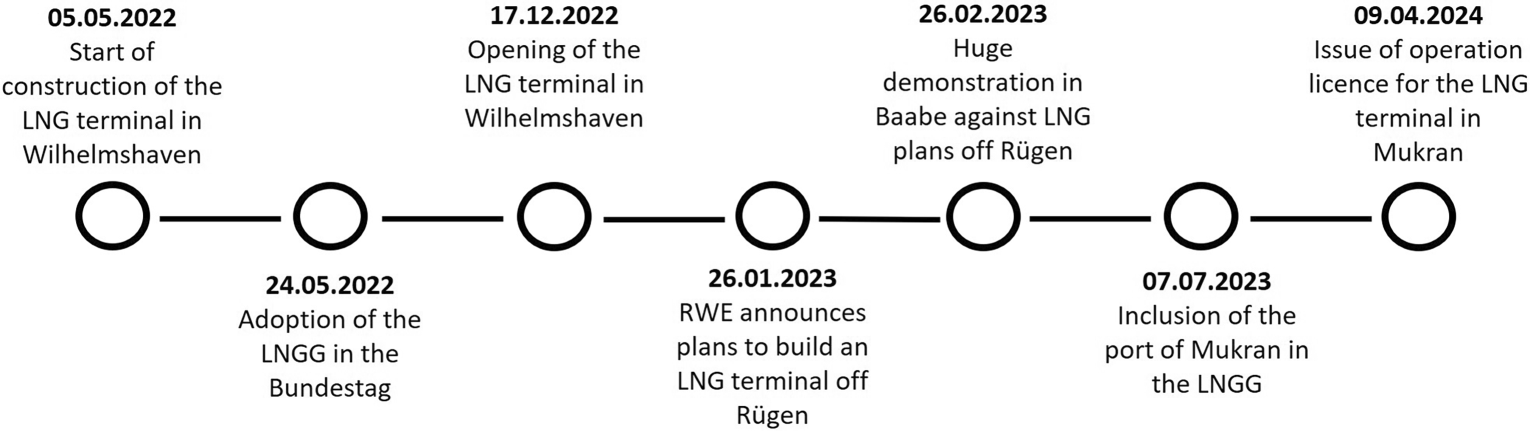
The protest against the LNG terminal in the port of Mukran has been long-lasting and multifarious. As its starting point, a demonstration with 2,500 participants − large by local standards – was held in Baabe, initiated by several local and regional citizens’ action groups (North German Broadcasting, 26 February 2023). Further demonstrations followed and environmental protection groups gained leadership in these activities. Additionally, a professional media campaign “Rügen gegen LNG” (“Rügen against LNG”) was launched by the municipality of Binz, the touristic flagship town on the island. In general, regional and some federal media played a significant role in reporting about the protests and in doing so served as one of the few platforms for exchange. Another form of protest was realised in the signing of petitions and appeals made to the Bundestag. Especially the second petition (ID146339) gained significant momentum as around 95,000 citizens expressed their protest by signing it. Opponents of the project were also mobilised through the collection of signatures in Sassnitz, which neighbours Binz and in whose territory the LNG terminal was supposed to be constructed. There, two polling initiatives were organised in accordance with the municipal constitution of the federal state of Mecklenburg-Western Pomerania. In addition, open letters, common declarations, resolutions of the responsible district assembly (Western Pomerania-Rügen) and of the city council (Bürgerschaft) of Stralsund, minor and major interpellations, and ‘no’ votes from the region at the vote in the Bundestag were also used as a means to protest against the LNG plans. Last but not least, numerous legal actions were taken against the granting of permissions for the construction of elements of the LNG terminal or their commissioning, whereby the municipality Binz and the association “Deutsche Umwelthilfe” (Environmental Action Germany) appeared to bear the procedural and financial outlay.
In what follows next, we trace the connection between the theoretical discussion and empirically recorded elements of different legitimation approaches through the perspective on participative opportunities in the region of study. Thereupon, perceptions of the contribution of these different approaches to acceptance of the project among regional actors is analysed. We show how communicative and agonistic needs and demands for a broader scope of participation have been overshadowed by strong recourse to the rational legitimation approach that restricts participation, as a result fuelling the protest and hindering acceptance of the project.
The Emergency Plan for Natural Gas for the Federal Republic of Germany issued by the Federal Ministry for Economy and Climate Protection on 12 September 2022 (BMWK 2022) and the new LNG legislation passed on 19 May 2022 and renewed on 7 July 2023 (LNGG) were supposed to rationally justify the need for the accelerated construction of the LNG terminal in the port of Mukran on Rügen in 2023. While the former was challenged by several scientific reports during the conflict, which thus redeemed opponents’ discursive participatory right in the discussion about the gas shortage, the latter relied on a formal restrictive participation framework aimed at acceleration.
According to the Emergency Plan, the alert level of ‘emergency’ was brought in at the end of June 2022. It was put in force in case of “a disruption to the gas supply or an unusually high demand for natural gas that leads to a significant deterioration in the gas supply situation” (BMWK 2022: 12; authors’ translation). However, “the market is still able to cope with this disruption or demand for gas on its own without the need to take non-market-based measures”. It was also noted that “the declaration of the alert level is primarily a political decision in the sense of a declaratory measure” (BMWK 2022: 12; authors’ translation). Concretely, the Federal Network Agency (Bundesnetzagentur) stated that “the gas supply in Germany is stable, security of supply is guaranteed, the Agency considers the risk of tight gas supply to be low, economical gas consumption remains important” (authors’ translation; to note: LNG in Lubmin was no longer operational, LNG in Mukran was not yet in operation).2
The justification used in the Emergency Plan started to be challenged in late 2022 and early 2023 after gas supplies from Russia halted due to the destruction of the Nord Stream 1 pipeline but increased demand during the heating season of 2022/2023 was successfully covered from other sources, also by the first LNG terminals in Wilhelmshaven and Lubmin. Subsequently, rational legitimation of the need to renew the LNGG in 2023 was broadened by arguments of necessary overcapacity and commitments to other European countries in accordance with EU regulations. While the authorisation process and construction works were in progress in Mukran during 2023, gas supply in Germany stabilised, the utilisation rate of the first terminals remained at around 60 % (Lubmin 20 %, according to the Team Consult’s LNG Marktradar), an additional terminal in Brunsbüttel was commissioned and the storage rate recorded long-term average levels. The German Institute for Economic Research (Deutsches Institut für Wirtschaftsforschung, DIW) reported in February 2024 and underpinned the report by an additional modelling calculation later in May 2024: “2023 has already led to a normalisation of the gas markets. It is time to put the expansion measures for fossil natural gas infrastructure to the test. The oversized LNG infrastructure expansion is not necessary to avoid a potential gas shortage and should therefore not be pursued any further” (von Hirschhausen/Barner/Holz et al. 2024: 6). Thus, the emergency-based arguments of the federal government were criticised for being too theoretical in the face of actual interventions (I7), not verifiable and correctable in view of the dynamics on the gas market (I10) and further condemned for overemphasising overcapacity and neglecting potential savings (I14). Simultaneously, financial expenditure had already been incurred (e.g. chartering of a floating storage and regasification unit, FSRU) (I14, I12).
Regarding the issue of acceleration, the first package of LNG legislation was passed in May 2022 to permit the construction of LNG infrastructure. As expansion plans were pursued regardless of the protest and empirical evidence, the second LNGG package was passed in July 2023 and included the port of Mukran as a mandatory LNG location.
While those in favour of the LNG project praised the following aspects of the new law as effective acceleration measures, they were met with irritation and resistance by opponents. First, the ‘particular urgency’ stipulated in § 3 LNGG could not be substantiated with facts and forecasts as shown above, and the ‘overriding public interest’ is explicitly related to Germany, contrary to the arguments about the supply security of other Central and Eastern European countries. Second, the waiver of an environmental impact assessment, which is permitted in § 4 LNGG, gave rise to major concerns in several respects (I7, I9, I14, I18). Investigations by the Thünen Institute on the endangered herring stock showed, for example, that the impact of constructing the necessary pipeline on the fish in winter is unclear and difficult to determine, contrary to the distinct no-impact assessments of the construction company.3 Third, timetables for public subscription and objection were drastically shortened from one month to one week and from two weeks to one week respectively (§ 5 LNGG). Although representatives of local authorities and environmental protection organisations were able to voice their objections in the authorisation process (I7, I8, I11, I14), these new limits on the scope of participation were severely criticised. “Even a month would still be short to go through the planning documents with over 2,000 pages, this acceleration law is simply an obstruction law for participation”, one interviewee said (I7). Moreover, the organisation of a public hearing (scoping) was no longer an obligation, but a matter of discretion for the responsible authority, and has indeed been skipped under the pressure of acceleration.
As a consequence of protesters’ demands for broader participation in the decision-making process, several participative elements of communicative legitimation were applied in 2023, whereby supporters and opponents could exchange arguments. First, meetings between representatives of chief executive bodies from the local, regional, federal state and federal levels were arranged to agree on the current state of affairs, corresponding responsibilities and scope for action. In April 2023, the Federal Chancellor, Olaf Scholz, as well as the Federal Minister of Economy and Climate Protection, Robert Habeck, visited the island and presented their arguments in favour of the need for the terminal on Rügen. Later, as the protest continued, the Federal Government’s Commissioner for Eastern Germany coordinated multilevel negotiations. Remarkably, he introduced elements of bargaining into the discussion by promising additional investments in the regional infrastructure (in a railway line, for example). Second, several informal communication formats were set up with the aim of information exchange and network building. Among those with the greatest response, an open festival was organised on 13 March 2023 by the initiative “RügenGegenLNG” and attended by about 3,500 visitors (North German Broadcasting, 13 March 2023). As a formal public hearing (scoping) was cancelled by the responsible authority, the municipality Binz and a broad alliance of civil society organisations conducted an alternative hearing on 23 May 2023 to discuss the possible repercussions of the LNG plans in the region. Despite being invited, the experts from the federal government did not participate in the event (I19). Third, petitioning was used as an instrument of communicative legitimation and the Petition Committee of the Bundestag had to actively deal with the protest. A public hearing was held on 8 May 2023 at which the opponents of the terminal were able to answer the questions of members of parliament and, thus, deliberatively influence the legislative process. A delegation from the Committee visited the island on 11 September 2023 and met with local and regional stakeholders.
If, as generally concepted, a process of communicative legitimation should genuinely aim to close knowledge gaps with contextually verified information and experience, the implementation of the process on Rügen must be regarded highly ambivalently. On the one hand, the initiators and supporters of the project showed a willingness to enter into dialogue with the opponents and, thus, to respond to the protest. From the perspective of the former, the communicative legitimation was constructive insofar as, for example, the initial location off Sellin was rejected and replaced with that at Mukran. Moreover, the original capacity of the terminal (four FSRU ships) was halved after RWE pulled out of the project at an early phase. On the other hand, numerous empirical findings indicate that elements of communicative legitimation were used rather in the sense of power-conscious mediating than in open-ended investigation (I1, I2, I10, I11). The combination of legislative and executive authority and the complicated and therefore barely communicable situation as regards legislative details or processes on the gas market (I15) left no room for an objective debate about the possible effects on the environment and the tourism industry (I4). Consequently, the change of the terminal’s location to Mukran was not seen as a concession by opponents, but as another uncontrollable technocratic decision due to the absence of an elaborated action plan (I1, I4). The elements of bargaining and offers introduced, although a reasonable instrument of acceptance-fostering per se (I6, I17), were characterised by one stakeholder as “top-down promised gifts” (I2). Acceptance of the project was further weakened communicatively by the dual role played by the federal state of Mecklenburg-Western Pomerania, which rejected the plan politically and facilitated it administratively. The contribution actually made to the process of communicative legitimation by the Petition Committee of the Bundestag also remains questionable. The visit by the committee delegation took place two months after the amendment to the LNGG and it then took another ten months for a statement (in favour of the project) to be issued (3 July 2024). According to one interviewee, this is pretty much contrary to expectations that a petition committee should be a guarantor of democratic, clean decision-making, also in the political arena (I10).
The emergence, maintenance and multiplication of the previously outlined protest against an LNG terminal on Rügen is the unambiguous expression of a geographically and historically situated critical-emancipatory demand for the pluralisation of discussion in this particular case of public interest. As part of particular lines of antagonistic opposition, this demand can also be regarded as the result of the interplay between local and regional discursive particularities, current federal policy implementations and the tensions that arise from them.
The first antagonistic tension arose between the rigorous environmental protection and energy policy of recent years and the heavy reliance on fossil fuels in response to the threat of gas supply shortage. Large parts of the north coast of Rügen and adjacent parts of the Baltic Sea are sensitive environmentally protected areas (I7, I11, I12). Moreover, the region of Western Pomerania and the state of Mecklenburg-Western Pomerania are important suppliers of renewable wind energy. Taken together, this means that the legislative approval of LNG regasification until 2043 is perceived locally as ignorance of and damage to this contribution to the transition to sustainability (I8) and as violation of the strong regional socio-cultural identity also characterised by its typical cultural landscapes (I6, I10, I11). The first LNG delivery for trial operation was loaded with fracking gas from the USA, which is banned in Germany by environmental protection policies (North German Broadcasting, 20 May 2024) and thus became a symbol of this tension.
Related to this, there is another acute antagonistic conflict between the further strengthening of the regional tourism industry and the diversification approach (I3). This already arose in the late 1980s, when it was hoped that the construction of the port in Mukran would provide additional impetus for development on the island, which was already dominated by tourism at the time. After reunification and the serious economic and social transformation in the 1990s, the tourism industry was able to achieve significant success in the 2000s and 2010s according to the State Statistical Office by advertising, for instance, the vastness, naturalness and tranquillity of the island. The stabilisation and recognition of the regional tourism industry has given the locals a sense of self-efficacy and shapes the regional identity nowadays (I6, I9, I18). Against this background, any discourse on the necessity of further transformations, for example towards diversification of the regional economy in the energy sector (LNG, hydrogen), is met with great scepticism and mistrust, although a problematisation of the high level of seasonality and low wage levels in the tourism industry is overdue, too. As one interviewee argued, the aspect of regional identity ought to be taken seriously, as people on the island know exactly what is constitutive to their existence and what is not (I17).
The critical-emancipatory demand of the protest on Rügen also manifests itself in the tension between participation and acceleration. Whereas the former takes time to achieve consensus in the spirit of communicative and conflictual rationality, the latter pushes for speed in regional planning and development. Although these two discourses are not always mutually exclusive, there are significant tensions regarding particular approaches to acceleration. While the LNGG symbolises the approach of restricted participation, alternative views on the acceleration process argue, for example, in favour of proper participation formats and communication techniques. In this regard, one interviewee warned against a “nice-to-have approach to democracy” that is discarded in times of crisis and undermines the essence of this democracy, which consists of participation, transparency, traceability and acceptance (I6). Moreover, authorities are seen as an acceleration factor in that they should be better staffed and processes should be de-bureaucratised. In order to render acceleration acceptable, it is argued that a promising approach would be to decouple it from the ‘emergency’ agenda and link it to other, locally embedded future-oriented investments (for example, construction of bicycle paths, social housing, environment protection measures) (I6, I14).
Hindering acceptance of the LNG project on Rügen, the outlined tensions have remained entangled in antagonism, as there has only been a marginal willingness to tame the conflict by constructive interaction with the protest. Rather, the protest was reacted to, and only when legal means were activated (right to petition according to Article 17 of the German constitution4; right to referendum according to § 20 of the municipal constitution of the federal state5). This is assessed by many interviewees as disappointing insofar as there are more or less concrete ideas and experiences on the island about how to constructively tame pluralism in an agonistic way, ranging from a more open attitude to referendums (I2, I20) and petitions (I2, I6) to the strengthening of interest groups (I4). A remarkable example in this respect is the citizens’ initiative “Lebenswertes Rügen” (Livable Rügen). As part of the so-called Alliance of Protest (a prototype of a new we-identity according to Chantal Mouffe), it has brought together different people and perspectives beyond the usual division into right and left, in line with its mission statement of tolerance, democracy and respect. This also indicates a more pragmatic approach to a conflict where “tension generates warmth and warmth is usually good” (I1).
Viewed from a systemic perspective of complementarity, we argue that the strong recourse to the rational legitimation approach has restricted participation and thus overshadowed communicative and agonistic needs and demands for broader participation, leading to a severe crisis of acceptance of the LNG infrastructure project on Rügen. Based on the empirical findings, we further demonstrate the overuse of the rational legitimation approach and, concurrently, the neglect of communicative and agonistic approaches probably caused by a certain degree of disillusionment, described above in theory and widely evident in practice after the (also legally anchored) participation offensive of recent years. Aspects of spatiality and temporality are also taken into account.
The LNGG as the main element of rational legitimation significantly restricted formal communication channels and exacerbated informal ones. Although the complexity of the application documents could be handled professionally with enormous effort (for example, by environmental protection organisations; I7, I8, I11), they proved to be inaccessible to the interested general public. As one political stakeholder pointed out, the problem of long distances in the region has persisted due to bureaucratic regulations regarding the centralised recording of objections (I1). This is remarkable in view of the fact that a notable attempt was still being made in 2011 with the Grid Expansion Acceleration Act to push acceleration with precisely such communicative and participatory legitimation approaches (§ 9 NABEG)6, a hitherto hardly imaginable intensification of public participation with at least seven, and in practice even more, levels of participation (Durner 2023: 482). The increasing legalisation of planning today means that it can be agonistically challenged and reviewed in court, as numerous lawsuits against the approval of individual parts of the LNG terminal have shown (Poscher 2013; Durner 2023; Guckelberger 2023).
The disbalanced application of legitimation approaches on Rügen becomes comprehensible by broadening the analytical perspective, as the LNG terminal there was not supposed to be the very first one. As regards spatiality, it is noteworthy that, despite several environmental concerns, the opening of Germany’s first major LNG terminal in Wilhelmshaven in December 2022 was not accompanied by broad protest because the port there has a historical, profoundly industrial character. As this is part of the regional identity, the intervention in the cultural and historical landscape was met with sufficient acceptance there. None of this can be found in the port in Mukran, which has been running at a loss for many years and has so far operated only two ferry connections, a few fisheries and a few service providers for offshore wind platforms. In this sense, previous endeavours, for example by the state, to further develop the port industrially were perceived and discussed very controversially and a consensus on the extent of industrialisation desirable in Mukran has not been reached. That is why the deepening of the navigation channel and the laying of the 50-km-long pipeline meant a significant technical intervention in the naturally dominated and touristically cultivated cultural landscape.
The timing of the LNG expansion was also not able to foster acceptance. When the situation on the gas market was unclear in the summer and autumn of 2022 and the saving and efficiency improvement potentials were difficult to assess, the LNGG had a positive legitimising effect in Wilhelmshaven (and also in the industrial port of Lubmin). The amendment of the LNGG in May 2023 and its implementation up to late 2024 shows, however, signs of temporal blindness in the legislative process, as the assessment and perception of the impending gas shortage in Germany had changed significantly within the year.
In light of the increasing scrutiny directed towards the nature of public interest in spatial planning and development, we believe that fostering acceptance urgently requires a move towards equally complex solutions for complex problems. Thereby, difficulties in overcoming complexity must not overshadow the wealth of legitimising approaches that exist in practice, or that have at least been described in theory. We argue in favour of a pragmatic systemic perspective on the question of legitimation, in which rational, communicative and agonistic elements productively complement one another in the spirit of “constructive hybridity” (Torfing/Loklindt Christensen/Sørensen 2024: 57) and are not played off against each other. We consider the following aspects to be essential for weighing up a spatially and temporally sensitive composition of acceptance-fostering legitimation approaches for (if necessary accelerated) regional planning and development projects.
First, conflicts must be anticipated and their scope must be assessed. A profound screening and objective analysis of particularities of time and space should therefore be the very first step, as no protest comes out of nothing. These particularities manifest themselves, for example, in locally and regionally situated discourses, which are always strongly linked to experiences from the past. The handling of particular opportunities and risks in terms of proactive conflict management should also be conceived through the future-oriented expectations of different stakeholder groups. In retrospect, it can be argued that expectations of conflict should have led to a significantly different approach to introducing the LNG project with respect to the issue of legitimation on Rügen. The introduction of the project should not have involved presenting existing plans to the local mayors and a subsequent fact-poor media dissemination of the topic, but rather should have been resolved as a consultative exploration of interests, controversies and the possibilities pertaining to them. The attempt to compensate for the omission of this step after the articulation of the protest proved to be less productive because of the already fragile condition of trust, which in turn highlights the limited appropriate timeframe for assessing the scope of the conflict.
Second, conflict dynamics should be precisely observed, registered and taken into account as technical-instrumental, practical-interpretive and critical-emancipatory elements of legitimation evolve, influence one another and shape alternative paths or goals for action. It is obvious that it is extremely complex to capture these dynamics, especially in geographically multiscalar processes. However, consideration of the social and economic costs of neglecting or simplifying this complexity is also justified. From this perspective, it seems clear that there were several unused windows of opportunity that could have been utilised to reconfigure the composition of legitimation elements in this case. For example, the delegation of the Petition Committee could have carried out its on-site visit before the law was amended in the Bundestag. It could have initiated a more open exchange with all those affected locally instead of only with those specifically invited and could have worked towards introducing the final recommendation into discussion of the law, too. In addition, an open-ended bargaining process about very local needs in the sense of benefit redistribution could have been deliberative, exploratory and binding. In this sense, reflexive self-investigation on the part of the actors involved could encourage a willingness to respond to new alternatives and advance the capacity of fault-tolerant, empowerment-nurturing, mutual learning.
The latter urgently needs, third, shared acceptance-fostering legitimation arenas where exchanges of knowledge, experiences, assertions and proposals can take place to abolish uncertainty about the meaning of the agreement or disagreement (Mäntysalo/Balducci/Kangasoja 2011: 263). Exemplifying and practising the values of trust, respect, transparency and honesty could shift the discourse towards a more positive attitude to conflicts as such and as a source of recognition of the liberty, equality and reciprocity of every individual.
The practical operationalisation issues of such arenas would be challenging, though, as the researched case proves. It is not easy to say in retrospect how such a conflict arena should have been organised on Rügen and the interviewees were also unsure about this. In terms of communicative and agonistic legitimation, it seems that the strong negative connotation of the concept of conflict leads to a remarkable paradox. While any form of protest against the LNG project is considered relevant and thus valorised, in reflections on how the conflict could have been resolved, the main responsibility and the initiative for action is often handed back to the federal government. This devalues the protest and highlights the weakness of a proactive, constructive and holistic approach to the conflict. While external operators and moderators would probably suffer from a lack of trust due to their position as outsiders, a broadly accepted compromise would be required in the region with regard to the design, working and accountability of such legitimation arenas. It is therefore probably unavoidable and even advisable that in the early phases actors who are already democratically legitimised should play a special role and carry responsibility for addressing the issue and taking appropriate initiative.
The overall goal of the study was to both conceptually and empirically enrich discussion about the complementary perspective on acceptance-fostering in regional planning and development. To this end, the protest against the LNG terminal on the island of Rügen was considered from the perspective of the participative opportunities of different legitimation approaches. The theory-led and analytical-descriptive differentiation has revealed the co-existence of such approaches and the disbalances in their application, which caused protest and conflict. First, we traced the connection between theoretical discussion and empirically recorded elements of legitimation approaches. Then, an analysis of the perception on their acceptance fostering effects on site was conducted. Finally, the conditions required for a spatially and temporally sensitive composition of acceptance-fostering approaches to legitimation were brought up for discussion.
We consider an assessment of the scope of (possible) conflicts as the very first step for such a complementary composition. This would further take advantage of the way in which an observation of conflict dynamics can prevent opportunities to advance acceptance remaining unused. Additionally, the creation of a shared legitimation arena would complete such a composition and operationalise it.
Further research is needed especially in areas of spatial planning and development with a particularly high level of tension between legitimacy and acceptance, a situation which arises from the increasing conflictual and contested nature of public interest and which poses significant challenges, for example, to the necessary transition to sustainable paths in planning and development in years to come. Today, when the LNG terminal on Rügen is formally in regular operation but is barely feeding gas into the grid due to low demand, concerns about the increasingly frequent use of meta terms like ‘emergency’, ‘shortage’ and ‘acceleration’ in legitimation processes are serious. One should be aware of the considerable risks of a self-referential legitimising use of these terms as well as the opportunities pertaining to their rational, communicative and agonistic foundations. Transformation to a sustainable economy is a field with generally conflictual perspectives on the issues of social justice and democratic accountability. Very different types of rationality and legitimation could have an accelerating effect here compared to approaches of legislatively fixed uniformity and contingency-based generalisation.
References
| Allmendinger, P.; Tewdwr-Jones, M. (2002): The Communicative Turn in Urban Planning: Unravelling Paradigmatic, Imperialistic and Moralistic Dimensions. In: Space and Polity 6, 1, 5–24. https://doi.org/10.1080/13562570220137871 |
| Alsheimer, S.; Schnell. T.; Chlebna, C.; Rohe, S. (2025): Competing terms for complementary concepts? Acceptance and legitimacy. In: Renewable and Sustainable Energy Reviews 207, 114960. https://doi.org/10.1016/j.rser.2024.114960 |
| Baxter, P.; Jack, S. (2008): Qualitative Case Study Methodology: Study Design and Implementation for Novice Researchers. In: The Qualitative Report 13, 4, 544–559. https://doi.org/10.46743/2160-3715/2008.1573 |
| Bekkers, V., Edwards, A. (2007): Legitimacy and democracy. A conceptual framework for assessing governance practices. In: Bekkers, V.; Dijkstra, G.; Edwards, A.; Fenger, M. (eds.): Governance and the Democratic Deficit. Assessing the Democratic Legitimacy of Governance Practices. London, 35–60. |
| Benhabib, S. (ed.) (1996): Democracy and Difference. Princeton. |
| Benner, M. (2024): An ideational turn in economic geography? In: Progress in Economic Geography 2, 1, 100014. https://doi.org/10.1016/j.peg.2024.100014 |
| Berger, J.; Ridgeway, C.L.; Fisek, H.M.; Norman, R.Z. (1998): The Legitimation and Delegitimation of Power and Prestige Orders. In: American Sociological Review 63, 3, 379–405. https://doi.org/10.2307/2657555 |
| Bitektine, A.; Haack, P. (2015): The “macro” and the “micro” of legitimacy: toward a multilevel theory of the legitimacy process. In: Academy of Management Review 40, 1, 49–75. https://doi.org/10.5465/amr.2013.0318 |
| BMWK – Bundesministerium für Wirtschaft und Klimaschutz (2022): Notfallplan Erdgas für die Bundesrepublik Deutschland. Berlin. |
| Bond, S. (2011): Negotiating a ‘democratic ethos’: moving beyond the agonistic-communicative divide. In: Planning Theory 10, 2, 161–186. https://doi.org/10.1177/1473095210383081 |
| Daimer, S.; Hufnagl, M.; Warnke, P. (2012): Challenge-oriented policy-making and innovation systems theory: reconsidering systemic instruments. In: Fraunhofer Institute for Systems and Innovation Reseach ISI (ed.): Innovation system revisited. Experiences from 40 years of Fraunhofer ISI research. Karlsruhe, 217–234. |
| de Geus, T.; Wittmayer, J.M.; Vogelzang, F. (2022): Biting the bullet: Addressing the democratic legitimacy of transition management. In: Environmental Innovation and Societal Transitions 42, 201–218. https://doi.org/10.1016/j.eist.2021.12.008 |
| Dewey, J. (1903): Studies in Logical Theory. Chicago. |
| Durner, W. (2023): Juristische Perspektiven auf die Idee der agonistischen Planung. In: Raumforschung und Raumordnung | Spatial Research and Planning 81, 5, 478–492. https://doi.org/10.14512/rur.1662 |
| Forester, J. (1982): Planning in the face of power. In: Journal of the American Planning Association 48, 1, 67–80. https://doi.org/10.1080/01944368208976167 |
| Galison, P. (1999): Trading zone: coordinating action and belief. In: Biagioli, M. (ed.): The science studies reader. New York, 137–160. |
| Galison, P. (2010): Trading with the Enemy. In: Gorman, M.E. (ed.): Trading Zones and Interactional Expertise: Creating New Kinds of Collaboration. Cambridge, 25–52. https://doi.org/10.7551/mitpress/9780262014724.003.0003 |
| Goodin, R.E.; Dryzek, J.S. (2006): Deliberative Impacts: The Macro-Political Uptake of Mini-Publics. In: Politics and Society 34, 2, 219–244. https://doi.org/10.1177/0032329206288152 |
| Guckelberger, A. (2023): Beschleunigung per Gesetz – über Sinn und Sinnhaftigkeit der Legalplanung. In: Natur und Recht 45, 6, 361–369. https://doi.org/10.1007/s10357-023-4195-9 |
| Gutmann, A.; Thompson, D.F. (2004): Why deliberative democracy? Princeton. |
| Habermas, J. (1971): Vorbereitende Bemerkungen zu einer Theorie der kommunikativen Kompetenz. In: Habermas, J.; Luhmann, N. (eds.): Theorie der Gesellschaft oder Sozialtechnologie – Was leistet die Systemforschung? Frankfurt am Main, 101–141. |
| Hansen, A.D. (2014): Laclau and Mouffe and the ontology of radical negativity. In: Distinktion: Scandinavian Journal of Social Theory 15, 3, 283–295. https://doi.org/10.1080/1600910X.2014.973895 |
| Healey, P. (1992): Planning through Debate. The Communicative Turn in Planning Theory. In: Town Planning Review 63, 2, 143–162. https://doi.org/10.3828/tpr.63.2.422x602303814821 |
| Healey, P. (1997): Collaborative Planning. Shaping Places in Fragmented Societies. London. https://doi.org/10.1007/978-1-349-25538-2 |
| Healey, P. (2009): The Pragmatic Tradition in Planning Thought. In: Journal of Planning Education and Research 23, 3, 277–292. https://doi.org/10.1177/0739456X08325175 |
| Hechter, M. (2009): Legitimacy in the Modern World. In: American Behavioral Scientist 53, 3, 279–288. https://doi.org/10.1177/0002764209338793 |
| Hillier, J. (2002): Shadows of power. An allegory of prudence in land-use planning. London. |
| Hillier, J. (2003): Agon’izing over consensus: why Habermasian Ideals cannot be ‘Real’. In: Planning Theory 2, 1, 37–59. https://doi.org/10.1177/14730952030020010 |
| Innes, J.E. (1998): Information in Communicative Planning. In: Journal of the American Planning Association 64, 1, 52–63. https://doi.org/10.1080/01944369808975956 |
| Innes, J.E.; Booher, D.E. (2015): A turning point for planning theory? Overcoming dividing discourses. In: Planning Theory 14, 2, 195–213. https://doi.org/10.1177/1473095213519356 |
| Kuckartz, U. (2019): Qualitative text analysis: a systematic approach. In: Kaiser, G.; Presmeg, N. (eds.): Compendium for Early Career Researchers in Mathematics Education. Cham, 181–197. https://doi.org/10.1007/978-3-030-15636-7_8 |
| Kühn, M. (2021): Agonistic planning theory revisited: The planner’s role in dealing with conflict. In: Planning Theory 20, 2, 143–156. https://doi.org/10.1177/1473095220953201 |
| Kühn, M. (2023): Planungskonflikte und Partizipation: die Gigafactory Tesla. In: Raumforschung und Raumordnung | Spatial Research and Planning 81, 5, 538–556. https://doi.org/10.14512/rur.1698 |
| Laclau, E.; Mouffe, C. (1985): Hegemony and Socialist Strategy. Towards Radical Democratic Politics. London. |
| Lindblom, C.E. (1959): The Science of “Muddling Through”. In: Public Administration Review 19, 2, 79–88. https://doi.org/10.2307/973677 |
| Lindblom, C.E. (1965): The intelligence of Democracy. Decision Making Through Mutual Adjustment. New York. |
| Longhurst, R. (2016): Semi-structured Interviews and Focus Groups. In: Clifford, N.; Cope, M.; Gillespie, T.; French, S. (eds.): Key Methods in Geography. London, 143–156. |
| Mansbridge, J.; Bohman, J.; Chambers, S.; Christiano, T.; Fung, A.; Parkinson, J.; Thompson, D.F.; Warren, M.E. (2012): A systemic approach to deliberative democracy. In: Parkinson, J.; Mansbridge, J. (eds.): Deliberative Systems. Deliberative Democracy at the Large Scale. Cambridge, 1–26. https://doi.org/10.1017/CBO9781139178914.002 |
| Mäntysalo, R.; Balducci, A., Kangasoja, J. (2011): Planning as agonistic communication in a trading zone. Re-examining Lindblom’s partisan mutual adjustment. In: Planning Theory 10, 3, 257–272. https://doi.org/10.1177/1473095210397147 |
| Mäntysalo, R; Mattila, H.; Hirvola, A. (2023): Institutional Gaps in Agonistic and Communicative Planning Theories. Critical Implications of the ‘Systemic’ Turn in Deliberative Democracy Theory. In: Raumforschung und Raumordnung | Spatial Research and Planning 81, 5, 437–448. https://doi.org/10.14512/rur.1676 |
| Marquez, X. (2016): The Irrelevance of legitimacy. In: Political Studies 64, 1 S, 19–34. https://doi.org/10.1111/1467-9248.12202 |
| Mathiesen, T. (1974): The Politics of Abolition. Oslo. |
| Mattila, H. (2018): The “Aesthetic Turn” as a Bridge between Communicative and Agonist Planning Theories. In: Architectural Research in Finland 2, 1, 94–113. |
| Mouffe, C. (2005): On the Political. Thinking in Action. London. https://doi.org/10.4324/9780203870112 |
| Mouffe, C. (2013): Agonistics. Thinking the world politically. London. |
| Owen, R.; Macnaghten, P.; Stilgoe, J. (2012): Responsible research and innovation: From science in society to science for society, with society. In: Science and Public Policy 39, 6, 751–760. https://doi.org/10.1093/scipol/scs093 |
| Pløger, J. (2021): Conflict, consent, dissensus: The unfinished as challenge to politics and planning. In: Environment and Planning C: Politics and Space 39, 6, 1294–1309. https://doi.org/10.1177/2399654420985849 |
| Pløger, J. (2023): Agonism, decision, power. The art of working unfinished. In: Raumforschung und Raumordnung | Spatial Research and Planning 81, 5, 449–460. https://doi.org/10.14512/rur.1668 |
| Poscher, R. (2013): Wozu Juristen streiten. Eine agonistische Theorie juristischer Meinungsverschiedenheiten. In: Juristen Zeitung 68, 1, 1–11, https://doi.org/10.1628/002268813804755308 |
| Rorty, R. (1979): Philosophy and the Mirror of Nature. Princeton. |
| Suchman, M.C. (1995): Managing Legitimacy: Strategic and Institutional Approaches. In: Academy of Management Review 20, 3, 571–610. https://doi.org/10.2307/258788 |
| Torfing, J.; Loklindt Christensen, S.; Sørensen, E. (2024): Coping with conflicts, dilemmas and paradoxes through constructive hybridisation. In: Røiseland, A.; Sørensen, E.; Torfing, J. (eds.): Advancing Co-creation in Local Governance. Cheltenham, 47–60. https://doi.org/10.4337/9781802202236 |
| Upham, P.; Oltra, C.; Boso, A. (2015): Towards a cross-paradigmatic framework of the social acceptance of energy systems. In: Energy Research and Social Science 8, 100–112. https://doi.org/10.1016/j.erss.2015.05.003 |
| von Hirschhausen, C.; Barner, L.; Holz, F.; Kemfert, C.; Kunz, N.; Präger, F.; Steigerwald, B. (2024): Gasversorgung in Deutschland stabil: Ausbau von LNG-Infrastruktur nicht notwendig. Berlin. = DIW aktuell 92. |
| Zelditch, M. (2001): Processes of Legitimation: Recent Developments and New Directions. In: Social Psychology Quarterly 64, 1, 4–17. https://doi.org/10.2307/3090147 |
Footnotes
| 1 | LNG-Beschleunigungsgesetz (LNGG) of 24 May 2022 (BGBl. I p. 802), last amended by Article 6 of the Act of 3 July 2024 (BGBl. 2024 I No. 225). |
| 2 | https://www.bundesnetzagentur.de/DE/Gasversorgung/aktuelle_gasversorgung/start.html (03.07.2025). |
| 3 | https://www.sueddeutsche.de/wirtschaft/umwelt-forscher-schauen-heringsgebiet-vor-lng-standort-genauer-an-dpa.urn-newsml-dpa-com-20090101-240210-99-938626 (03.07.2025). |
| 4 | Basic Law for the Federal Republic of Germany in the corrected version published in the Federal Law Gazette Part III, Section 100‑1, last amended by Article 1 of the Law of 22 March 2025 (Federal Law Gazette 2025 I No. 94). |
| 5 | Kommunalverfassung für das Land Mecklenburg-Vorpommern (Kommunalverfassung – KV M‑V) in the version published on 16 May 2024. |
| 6 | Netzausbaubeschleunigungsgesetz Übertragungsnetz (NABEG) of 28 July 2011 (BGBl. I S. 1690), last amended by Article 5 of the Act of 8 May 2024 (BGBl. 2024 I Nr. 151). |